Summary
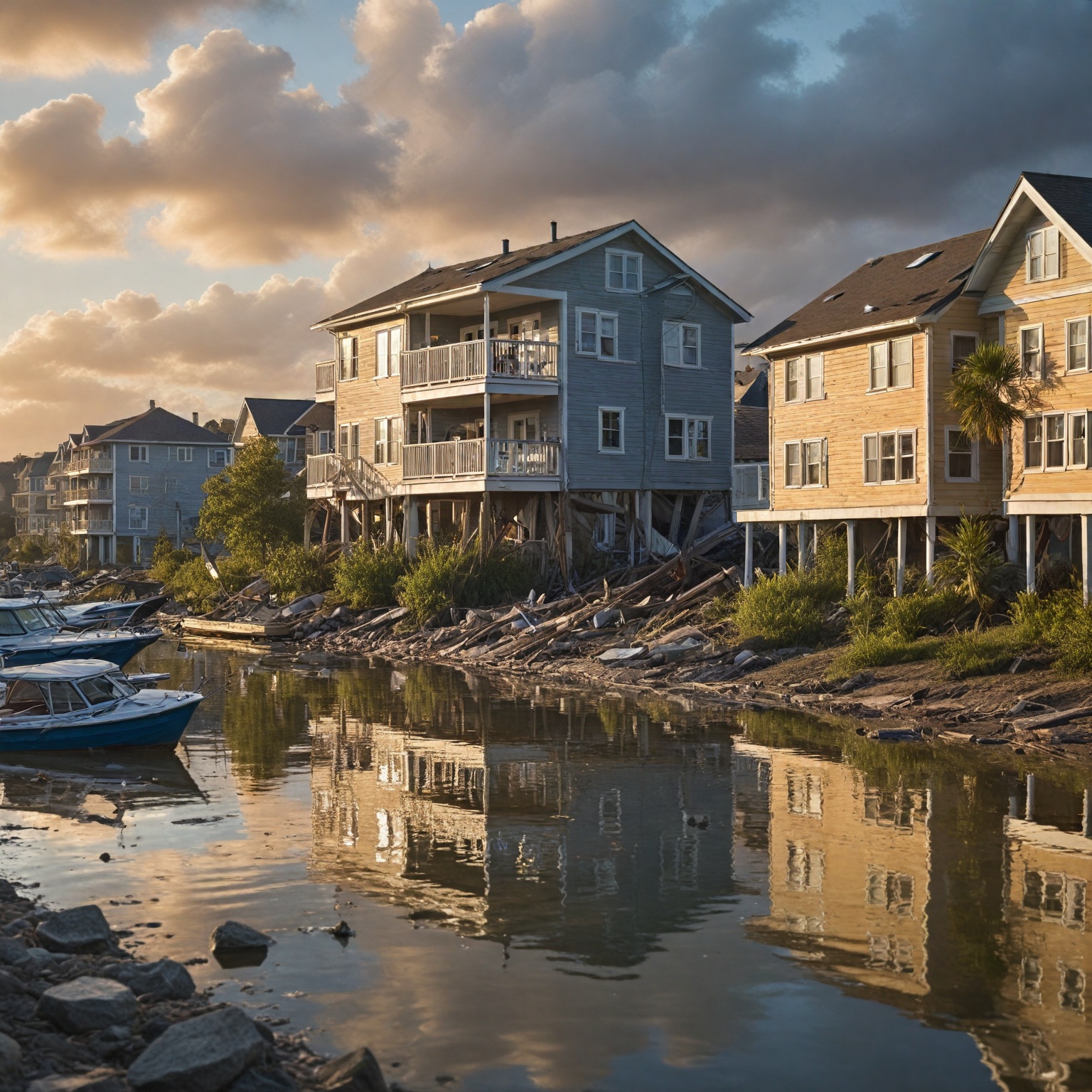
“Unveiling the Impact of Climate Change on Real Estate Values and Insurance Expenses” explores the intersection of climate change, property values, and insurance costs. Climate change, causing increased frequency and intensity of natural disasters and rising sea levels, has direct implications on real estate values and the insurance industry. Such environmental changes could reverse the rising trend in home values in coastal states, pose potential losses to property, and increase the financial risks for insurance companies due to increased payouts related to extreme weather events. The article emphasizes the need for understanding these changes, suggesting a more sustainable future relies on proactive strategies from individuals, communities, and companies. It further underscores the crucial role of insurance companies in managing climate risks and the urgent need for ongoing research and adaptation.
Understanding Climate Change
Climate change has wide-ranging effects and has emerged as a significant force reshaping our daily lives. One of the most concerning impacts of climate change is the increasing frequency and intensity of natural disasters. Wildfires, floods, storms, heat, and drought can pose substantial health and safety dangers and cause costly damages to property. The increased occurrence and severity of these natural disasters are the result of climate change.
Sea levels are also rising due to climate change. This increase in sea levels is largely due to ice sheet and glacier meltwater and the thermal expansion of seawater. An interagency report, led by the National Oceanic and Atmospheric Administration, projected that U.S. sea levels will rise at the same rate in the next 30 years as they did in the previous 100 years. This sea-level rise will contribute significantly to more coastal destruction and increased economic damages.
These environmental changes have direct implications for property values and the insurance industry. For instance, although home values in coastal states have been rising, the trend may reverse soon due to the increasing risks associated with climate change. Real estate property could indeed be underwater in the future due to the effects of climate change. Furthermore, insurance companies need to improve their risk estimation in the context of natural disasters, which could help reduce inspection costs and improve the affordability of insurance products. However, the changing climate and the resulting market shifts will only increase insurance companies’ exposure.
Ignoring the potential impacts of climate change will not make the reality fade away. It is, therefore, crucial to understand these changes and plan accordingly, both on a community level and individually. It is also essential to understand the coastal system, where climate change, human habitation of the coast, property markets, and policies interact in complex ways. This understanding is an important first step toward charting a more sustainable future.
Impact of Climate Change on Real Estate Values
Climate change significantly impacts real estate valuations as the rise in sea levels, extreme weather conditions, and other related risks become more pronounced . Notably, the real estate industry, particularly in coastal communities, has already experienced tangible changes due to warming oceans and rising sea levels .
Real estate firms are heavily investing resources to calculate the probable impacts of climate change on their property portfolios. These impacts include severe weather conditions and sea level rise, both of which could drastically affect property values . In the United States alone, the frequency of natural disasters has doubled from an average of 7 to 8 per year between 1980 and 2021 to 15 in 2022. These disasters, intensified by climate change, could cause property losses to rise by over 60 percent by 2040 .
In addition to transient price effects, changes in neighborhood compositions due to local disaster shocks could have long-lasting impacts on real estate values. These changes could alter the distribution of rents linked to local economic opportunities and amenities .
Location-specific factors, like land subsidence in Galveston, Texas, and land rebound outpacing sea level increases in Juneau, Alaska, illustrate that the effects of sea level rise can vary significantly from region to region . Despite rising home values in coastal states like Florida, some predict a potential reversal in this trend due to increasing climate change risks . Events like Hurricane Sandy in 2012 and updated projections from the Intergovernmental Panel on Climate Change in 2014 have amplified concerns about flood risk, particularly among Florida homebuyers .
The potential “Coastal Housing Crisis” looming in the future will likely be characterized by increasing home prices and mortgage debt in flood-prone zones, coupled with regular flooding that makes these areas less desirable or even unlivable . Furthermore, the threat of wildfires, particularly in California, may also negatively impact residential real estate values . Given these diverse challenges, the influence of climate change on real estate values is a critical issue requiring ongoing research and proactive strategies.
Impact of Climate Change on Insurance Expenses
Climate change has had a considerable effect on insurance expenses, forcing insurers to pay out larger claims due to more extreme weather events. This, in conjunction with the rising costs of materials and construction, has led to an increase in insurance premiums. The focus of climate change’s effects on insurance has been primarily on property and crop damage, but there are also growing concerns about life and long-term carrier liabilities.
The continuous climate change drastically affects the insurance industry, resulting in increased financial risks from payouts and claims related to extreme weather conditions such as floods and fires. This has necessitated a shift in insurers’ policy and program management strategies, with many introducing new risk management protocols to better manage potential losses.
Property insurance plays a crucial role in reducing household exposure to severe weather risks and aiding in recovery following disasters. However, escalating climate risks have led insurers to invest in sophisticated methods for classifying and pricing complex disaster risks. These risks are particularly pronounced in coastal regions, where homeowners have experienced substantial increases in insurance premiums.
The National Flood Insurance Program’s (NFIP) new risk rating system has led to an expected rate increase for 77 percent of current policy holders. When homeowners are unable to get insurance from private companies, they can opt for limited temporary coverage through Fair Access to Insurance Requirements (FAIR) plans. This option, offered by 33 states and Washington D.C., caters to homeowners whose properties are considered high risk.
Several coverages may assist with rebuilding or repairing homes damaged by fires, including coverage for construction materials, costs of complying with building codes, temporary repairs to prevent further damage, debris removal, and landscape restoration, among others. California homeowners, in particular, may have fire coverage through the state’s FAIR Plan, as the private insurance market has increasingly declined to provide fire coverage for homes in high-risk areas.
Climate change is also altering the insurance landscape for commercial properties. Property owners can undertake a variety of approaches to mitigate rising commercial property insurance costs and protect their investments. This includes conducting regular risk assessments, understanding current and future location risks, incorporating climate risk assessments into due diligence processes for new acquisitions, and diversifying investments across different regions.
Insurers also need to reevaluate their investment-allocation strategies as the economy transitions toward long-term decarbonization. Insurance companies can incentivize risk reduction by offering discounted premiums to real estate companies that invest in reducing carbon footprint and improving the resiliency of buildings. As climate change presents numerous challenges to the real estate market, it underscores the need for adaptation, strategic responses, and reevaluation of property development, investment, and insurance strategies.
Financial regulators can play a key role in managing climate-related risk by issuing supervisory guidance to insurance companies. While such guidance documents are typically non-binding and do not carry the full force of law, they are nonetheless a commonly used and effective tool regulators employ to ensure the safety and soundness of the firms they supervise. These measures can help the public better understand the potential risks and the steps necessary to manage them.
The Effect of Rising Sea Levels
Rising sea levels, primarily caused by climate change factors such as ice sheet and glacier meltwater and the thermal expansion of seawater, pose a significant risk to real estate, particularly in coastal areas. With 40% of the U.S. population residing within 60 miles of coastlines, a large portion of people will be directly impacted by sea level rise.
Impact on Real Estate Values
The expected increase in sea level is forecasted to have a significant effect on property values. Rising water levels amplify coastal flooding, storm surges, and saltwater intrusion, which can erode coastlines and infrastructure. The risk and extent of damage, particularly in areas prone to extreme weather events such as hurricanes and cyclones, can lead to a decrease in property values. Housing markets, especially in coastal regions, are predicted to become more susceptible to flooding in the future, with risk levels varying by location.
Effect on Insurance Expenses
The escalation in the frequency and severity of extreme weather events due to climate change is heightening the risk for insurance companies. The larger claims resulting from these extreme events are leading insurance firms to increase premiums to maintain profitability. Rising material and construction costs, as well as overall housing market inflation, are also contributing to the increase in insurance prices. Furthermore, state regulators and the Federal Insurance Office are suggested to take actions to monitor and mitigate these risks. They could do so by issuing supervisory guidance to insurance companies on managing climate risks and by collecting and analyzing comprehensive data on the scope and severity of the effect that climate change has on insurance markets. Future insurance cost forecasts incorporate both historic growth rates of property insurance expenses and patterns for extreme weather events.
The Impact of Extreme Weather Events on Real Estate Values
Rising ocean temperatures are predicted to boost the frequency and severity of hurricanes and other climate-related events, posing unprecedented risks to the real estate market. The potential impacts on property values, investment strategies, and notably, the insurance landscape, are vast and multifaceted. As key players in the management and mitigation of associated risks, insurance companies are expected to play a critical role in the response to these climate change-related events.
Big real estate firms are reportedly investing considerable resources into assessing climate risk and its potential impacts on property portfolios. These impacts encompass everything from increasingly extreme weather to a rise in sea levels. Indeed, the links between climate change and real estate prices are the subject of ongoing academic study.
Flooding represents a significant risk, particularly in coastal lowlands. Studies have observed decreases in property value following flooding events, a trend reflected in cities along coastal areas and rivers that are increasingly facing flood-related problems. The risk is further heightened by rising sea levels and warming ocean temperatures that amplify the destructiveness of tropical cyclones and hurricanes. This is illustrated by the increased frequency of high-tide flood events in coastal cities such as New York, Washington, and Miami since 2000. In the wake of hurricanes, local economies are affected not just physically, but also through a range of behavioural and market responses including changes in disaster risk perceptions, migration, and employment opportunities.
In regions prone to wildfires, such as California, a similar trend is seen. The intensity of these events has increased recently, leading to large and destructive fire seasons between 2018 and 2021. Past research indicates that wildfires negatively impact residential real estate values of properties located near but generally not inside burned areas in southern California. Furthermore, while insurance can help mitigate some of the costs associated with these fire episodes, it does little to improve the adverse effects on property values.
Despite available national models and regional scale level predictions, the local situation always needs to be considered in order to properly assess the risk. Therefore, as climate change continues to fuel extreme weather events, understanding and adapting to its impact on real estate values becomes an urgent priority for property owners, investors, insurers, and policy-makers alike.
The Role of Insurance Companies in Managing Climate Risks
Insurance companies play a pivotal role in managing climate risks, mainly through risk pooling and risk management related to climate change. Institutions such as the Caribbean Catastrophe Risk Insurance Facility Segregated Portfolio Company (CCRIF) and the Munich Climate Insurance Initiative (MCII) are actively involved in this sphere. The CCRIF operates as an insurer for a vast portion of the Caribbean, providing insurance against catastrophic weather events. Simultaneously, the MCII was established by insurers, climate research organizations, the World Bank, and United Nations-associated agencies, responding to the growing understanding that insurance solutions can contribute to climate change adaptation.
Insurers help clients concentrate on risk management related to climate change, including the prevention of environmental harm. A lack of protection against such harm or failure to disclose it may result in lawsuits, thus insurance industry groups are investigating the effects of climate change on the industry. To understand their risk exposure to climate change, insurance companies may adopt climate-specific stress-testing, beyond traditional catastrophe models, to understand the impact of climate-related risk on their portfolios. Advanced analytics techniques can be used to project how various acute and chronic hazards are likely to affect insurers over time.
In managing these risks, insurance companies have substantial liabilities on their balance sheets stemming from payouts of insurance policies they sell. Despite the significant role that insurance companies play in the economy and their highly interconnected role in the financial system, state insurance regulators across the United States have not adopted a consistent or robust approach to assessing and addressing climate-related financial risk. The report calls for a holistic and forward-looking approach to addressing climate-related financial risk in insurance markets to avoid future economic crises.
Specific Case Studies Highlighting the Impact of Climate Change on Real Estate and Insurance
Climate Change and Real Estate Values
The impact of climate change on real estate prices is being increasingly noted. Climate change is leading to more frequent and intense storms and flooding, significantly impacting the real estate sector both physically and financially. For instance, a case study in Florida conducted by McKinsey indicated the significant impacts of climate on the real estate market. Common flood areas, such as those in coastal states like Florida and Texas, face rising insurance costs and declining market values. Properties in these areas were overvalued by $44 billion in 2021, according to the Sierra Club, and actuarial firm Milliman later estimated those properties at $520 billion.
Climate Change and Insurance Expenses
As climate risks escalate, insurers are investing in more sophisticated methods to classify and price complex disaster risks. However, property insurance premiums will need to increase in high hazard areas to reflect climate risk exposure. This escalation of insurance costs is critical for reducing household exposure to severe weather risks and aiding in recovery when disaster strikes.
Insurance companies also face potential liability claims related to injuries occurring on properties due to climate-related disasters. These claims are becoming more time-consuming and costly to settle, thus increasing temporary living expense coverage costs.
Florida, specifically, has a legal environment that encourages litigation related to insurance claims, leading to higher claims costs for insurers and consequentially increased premiums to cover potential legal expenses and settlements. This is in addition to potential sustainability suits, with awards potentially being substantial due to the large scale impact of environmentally harmful activities.
Life and health insurers are advised to increase their focus on quantifying key risks using a climate scenario analysis approach. This proactive approach will allow for a better understanding of potential vulnerabilities in cash flows, facilitating the formulation of measures that safeguard both individual health and financial well-being.
Methodologies and Tools Used by Insurance Companies to Assess and Manage Climate Risks
The insurance industry incorporates risk management strategies relating to climate change, which include avoiding harm to the environment. Insurers that fail to protect against or disclose such harm may face legal implications . Various insurance industry groups are studying the effects of climate change on the sector, acknowledging that a changing climate can result in underestimated future risk exposure .
Insurers often encounter difficulties in assessing risks related to catastrophic events attributable to climate change due to the rarity and thus the limited historical data of these events. Traditional actuarial analyses may not be sufficient for assessing these risks . However, catastrophe models, which simulate plausible catastrophic event scenarios, are changing how insurance companies assess and price natural disaster risks .
Physical risks, such as damage caused by hurricanes, sea-level rise, drought, and wildfires, are directly related to climate change and shifting weather patterns . These events can increase the costs of maintaining, repairing, and reconstructing damaged or destroyed structures, increase property insurance prices, and lead to post-event business and economic productivity losses . As a result, insurance companies, real estate developers, governments, and other stakeholders share the responsibility of dealing with the impacts of climate change .
Insurance companies can incentivize risk reduction by offering discounted premiums to real estate companies that invest in reducing the carbon footprint and improving the resiliency of buildings . By embracing sustainable practices and collaborations, stakeholders can mitigate the impact of climate change on the real estate market, inspiring a more secure and sustainable future .
Certain governments, like the Netherlands Ministry of Infrastructure and the Environment and Climate Adaptation Services, are working on a standard approach to assess physical climate risks for real estate portfolios . This standard approach aims to create a level playing field, providing transparency about the methods and data used, and the underlying assumptions .
The content is provided by Avery Redwood, Brick By Brick News