Summary
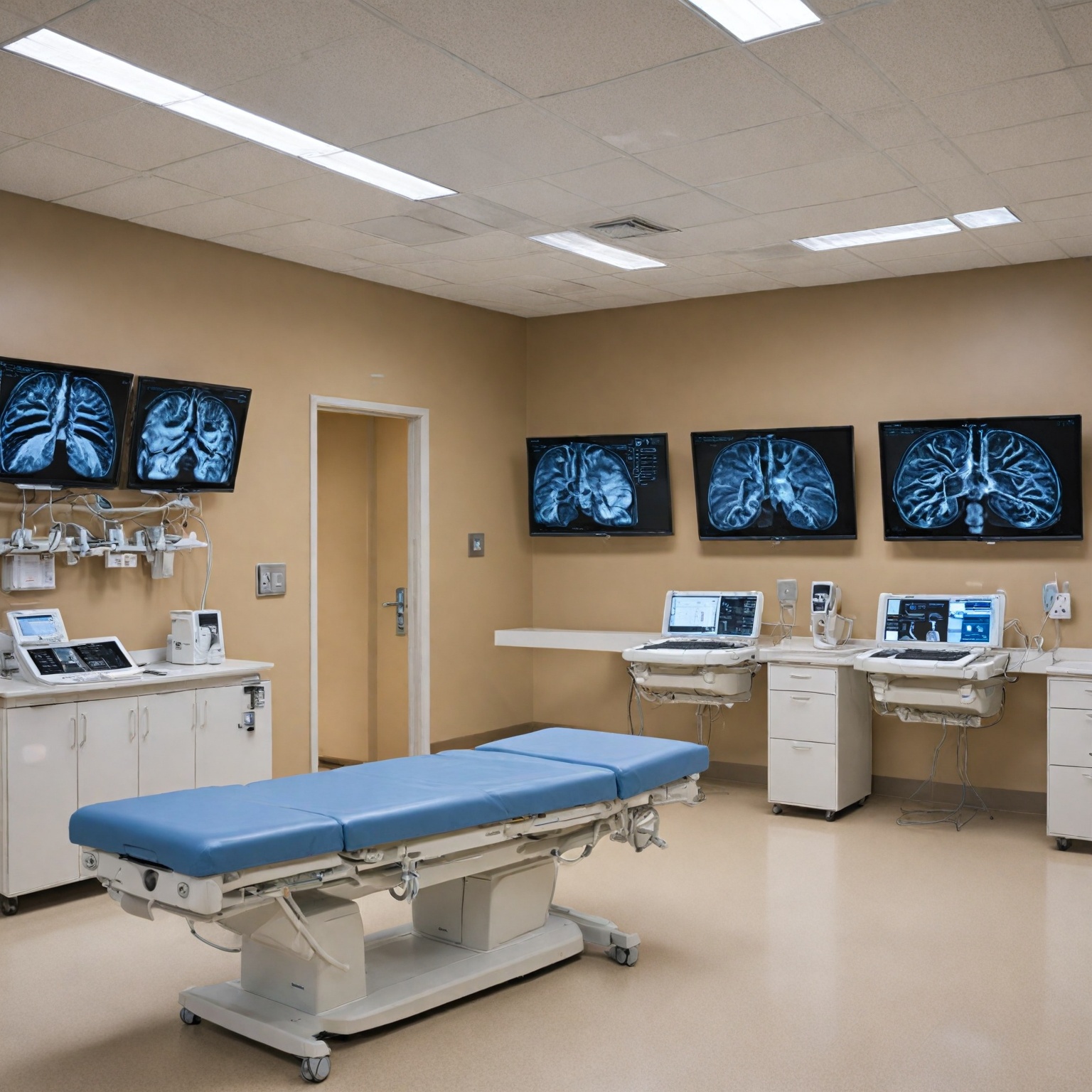
The diagnostic imaging centers industry in the United States is a rapidly expanding sector driven by advances in medical imaging technologies, demographic shifts, and evolving healthcare delivery models. Valued at approximately $26 billion in 2024, the industry supports early and accurate diagnosis of chronic and acute conditions such as cancer, cardiovascular disease, and neurological disorders, making it a critical component of modern healthcare. Key technological innovations—including computed tomography (CT), magnetic resonance imaging (MRI), ultrasound, and the integration of artificial intelligence (AI)—have significantly enhanced diagnostic precision, efficiency, and patient outcomes.
The industry is marked by a notable transition from hospital-based inpatient imaging to outpatient diagnostic centers, a shift driven by value-based care initiatives emphasizing cost reduction and patient convenience. Major providers like RadNet, Inc. and Akumin, Inc. dominate the competitive landscape, leveraging strategic acquisitions and technological investments to expand their reach nationwide. This trend is complemented by the growing role of AI in radiology workflows, which augments radiologists’ capabilities by improving image interpretation accuracy and streamlining clinical operations, while also prompting changes in workforce training and professional roles.
Despite its growth, the industry faces significant challenges, including declining reimbursement rates, stringent regulatory requirements, and ongoing concerns about radiation exposure from imaging procedures. Additionally, the fragmented market structure and cost pressures require providers to continuously innovate and optimize operations to maintain profitability. Efforts to address disparities in access and to implement sustainable practices further shape the sector’s future development.
Looking ahead, the U.S. diagnostic imaging centers industry is projected to grow steadily at a compound annual growth rate of around 4.3% through 2030, fueled by continued technological advancements, demographic trends such as an aging population, and expanding insurance coverage. The integration of AI and emerging imaging modalities, alongside strategic market consolidation and increased outpatient service delivery, position the industry for transformative changes that promise improved diagnostic capabilities and enhanced patient care.
Industry Overview
The diagnostic imaging centers industry in the United States is experiencing robust growth, driven by technological advancements, increasing demand for early and accurate disease diagnosis, and a shift toward outpatient care settings. Valued at approximately USD 150.2 billion in 2024, the market is projected to grow at a compound annual growth rate (CAGR) of 4.3% from 2025 to 2030, propelled by rising prevalence of cancer, cardiac disorders, and heightened awareness of medical imaging technologies.
Technological innovation plays a central role in the industry’s expansion. Continuous advancements in imaging modalities—such as computed tomography (CT), magnetic resonance imaging (MRI), ultrasound, and nuclear medicine—have improved diagnostic accuracy, speed, and safety. The emergence of artificial intelligence (AI), machine learning, and 3D imaging further enhance the capabilities of imaging systems, enabling more precise disease detection and better patient outcomes. Additionally, advanced MRI techniques, including multinuclear imaging, MR spectroscopy, and MR fingerprinting, are being developed to support diagnosis and therapy for complex conditions like traumatic brain injury, stroke, and multiple sclerosis.
The industry is in a mature growth stage characterized by steady, incremental innovation and increasing investments from both private and government organizations in research and development. Diagnostic imaging centers benefit from demographic and geographic factors, with population hubs in the Southeast and West regions of the U.S. supporting higher demand for medical services. A notable trend is the shift of imaging services from inpatient hospital settings to outpatient diagnostic centers, driven by value-based healthcare models that emphasize cost reduction and patient convenience.
MRI holds a considerable market share due to its extensive use in detecting neurological disorders and tumors, while ultrasound maintains a stable share owing to its widespread availability and non-ionizing radiation characteristics. CT scans are particularly valued for pre-surgical planning, cardiovascular disease assessment, and detection of abdominal abnormalities with high accuracy, making them indispensable tools in various medical specialties.
Radiologists play a crucial role within the industry by providing timely, precise imaging interpretations that guide clinical decision-making, enhance multidisciplinary communication, and ensure radiation safety. The integration of AI into radiology has been gradually accepted, with professionals recognizing its potential to augment diagnostic workflows and improve patient care.
Drivers of Industry Growth
The growth of the U.S. diagnostic imaging centers industry is propelled by several key drivers, including demographic shifts, technological advancements, regulatory influences, and expanding healthcare coverage.
A primary factor fueling demand is the rapidly aging population, which increases the prevalence of chronic diseases and the need for early and accurate diagnosis. As individuals age, their medical needs grow, leading to higher patient volumes in diagnostic imaging centers seeking early detection and treatment options. The rise in chronic disorders such as cancer, with an estimated 1,958,310 new cancer cases and 609,820 cancer-related deaths in the U.S. in 2023, further amplifies demand for imaging services.
Technological innovation plays a crucial role in enhancing the capabilities and efficiency of diagnostic imaging. Continuous advancements in modalities such as Magnetic Resonance Imaging (MRI), Computed Tomography (CT), Positron Emission Tomography (PET), and hybrid imaging systems like PET/CT and PET/MRI provide higher resolution, better sensitivity, and improved diagnostic accuracy. Additionally, the integration of artificial intelligence (AI) and machine learning into imaging workflows is revolutionizing the field by automating tasks, improving diagnostic consistency, and enabling radiologists to focus on complex decision-making. AI-powered computer-aided detection (AI-CAD) systems are increasing accuracy while reducing false positives and streamlining operations, thus supporting the industry’s expansion.
Regulatory frameworks imposed by agencies such as the U.S. Food and Drug Administration (FDA) ensure that imaging technologies meet stringent safety and efficacy standards. Although regulatory compliance can prolong product development timelines, it also drives innovation by encouraging the adoption of safer, more effective imaging solutions.
Broader insurance coverage and rising healthcare expenditure have led to increased patient referrals to diagnostic imaging centers. In 2023, approximately 36.3% of Americans were covered under public health insurance, contributing to the growth of diagnostic services. Hospitals remain the dominant setting for imaging services, benefiting from patient preference for consolidated care that combines diagnosis and treatment under one roof. The expansion of insurance reimbursement and introduction of new imaging services by major providers further stimulate industry growth.
Collectively, these factors contribute to the U.S. diagnostic imaging centers industry’s steady revenue growth, projected to reach approximately $26.3 billion in 2024, supported by ongoing innovation, demographic trends, and expanding access to care.
Major Companies and Competitive Landscape
The diagnostic imaging centers industry in the United States is characterized by a mix of large, established corporations and emerging players innovating through new business models and technological advancements. Among the most influential companies in the sector are RadNet, Inc., Akumin, Inc., Touchstone Medical Imaging, and Canon’s Medical Group, each playing a pivotal role in shaping the competitive landscape.
RadNet, Inc. stands out as the largest provider focused exclusively on outpatient imaging services, operating approximately 398 diagnostic imaging centers nationwide and conducting imaging procedures for around 10 million outpatients annually. As the only publicly traded company with a national chain of imaging centers, RadNet continues to expand its footprint through strategic acquisitions, such as the recent purchase of DeepHealth, Inc., enhancing its capabilities and geographic reach. The company also reported significant backlogs in patient volume in 2023, underscoring strong demand and utilization trends.
Akumin, Inc. holds a substantial market share just behind RadNet and is recognized for its emphasis on innovation and launching new platforms that improve patient access to both diagnostic and interventional radiology services. Touchstone Medical Imaging, another major player, grows through acquisitions and operates an extensive network of outpatient centers, leveraging economies of scale to remain competitive.
In addition to these providers, major equipment manufacturers like Canon’s Medical Group contribute to the industry’s advancement by supplying cutting-edge diagnostic imaging technologies including CT, MRI, X-ray, and ultrasound machines. Canon is pioneering photon-counting CT technology, which aims to reduce patient radiation exposure, and has experienced notable growth in its medical business segment.
The industry’s competitive dynamics are further influenced by consolidation trends, with private equity groups and health systems increasingly interested in joint ventures and acquisitions to achieve scale and operational efficiencies. Despite being highly fragmented, the sector is witnessing a shift from hospital-based inpatient imaging to outpatient diagnostic testing facilities (IDTFs), which offer cost-effective and patient-convenient alternatives.
Role and Evolution of Radiologists
Radiologists have long been central to the diagnostic imaging process, delivering precise and timely imaging reports that enhance communication among various medical specialists and guide critical clinical decisions, thus fostering a holistic, patient-centered approach to healthcare. Traditionally, radiologists have served as valued consultative partners, offering expertise in selecting and interpreting appropriate imaging studies, ensuring radiation safety, and providing insights that significantly influence patient management.
The evolution of radiology has been marked by continuous technological advancements, beginning with Wilhelm Roentgen’s discovery of X-ray technology in 1895 and progressing to the sophisticated imaging modalities in use today. A transformative milestone in this progression is the integration of artificial intelligence (AI) into radiology workflows, especially through the development of AI-enhanced computer-aided detection (AI-CAD) systems. These systems have revolutionized diagnostic imaging by improving diagnostic accuracy, reducing false positives, and enhancing workflow efficiency across multiple modalities including ultrasound, endoscopic ultrasonography, CT, MRI, and PET/CT.
Beyond diagnostics, AI assists radiologists in selecting the most suitable imaging tests tailored to individual patient profiles, optimizing image quality, accelerating image acquisition, and predicting patient prognosis and treatment responses. One significant application of AI is in the automated labeling of medical images, a previously labor-intensive task requiring radiologist expertise. As AI technologies mature, radiologists increasingly collaborate with decision support systems that suggest diagnoses, flag test results, and automate clinical documentation, shifting their roles toward broader clinical integration.
This technological shift necessitates that radiologists acquire new competencies in data science, statistics, and AI ethics to safely and effectively interact with AI tools, accurately interpret algorithmic outputs, and communicate AI-driven treatment plans to patients. Consequently, the radiologist’s role is expanding beyond traditional image interpretation to encompass comprehensive application and oversight of AI technologies within clinical practice.
Parallel to these developments, radiographers—the professionals responsible for acquiring diagnostic images—are also adapting to AI-driven changes. While radiographers have embraced automated technologies for years, there is a growing impact of AI on their roles and responsibilities across imaging modalities. The profession has demonstrated adaptability to technological innovation, balancing the integration of AI with the maintenance of core clinical skills and patient care quality.
Technological Innovations Driving Growth
The growth of the U.S. diagnostic imaging centers industry is being propelled by rapid technological innovations that enhance diagnostic accuracy, efficiency, and patient outcomes. Key advancements include the integration of Artificial Intelligence (AI), machine learning, and 3D imaging technologies, which collectively improve imaging systems’ capabilities and expand their clinical applications.
AI and machine learning have revolutionized image analysis by enabling automated feature extraction, anomaly detection, and predictive diagnostics that were previously difficult or impossible to achieve through manual interpretation alone. For instance, deep learning models inspired by architectures like AlexNet have paved the way for AI tools that assist radiologists by providing second opinions and increasing diagnostic consistency across modalities such as radiographs, CT scans, and MRI images. Specific AI-driven innovations include iCad’s ProFound AI for enhanced breast cancer detection in tomosynthesis imaging and Intel and Siemens’ cardiac MRI segmentation models that promise real-time cardiovascular diagnoses.
Additionally, advances in sensor miniaturization and computing power have allowed researchers to augment traditional imaging techniques with novel multisensory data. NYU Langone radiology researchers are developing flexible and intelligent imaging technologies that capture detailed metabolic information using multi-tuned coils and customized post-processing methods, offering new insights beyond conventional MRI acquisitions.
The convergence of AI-driven imaging with 3D modeling and printing technologies is also transforming surgical planning and intervention. These technologies provide personalized and precise tools that improve patient outcomes and redefine surgical practice, marking a new era of innovation in healthcare delivery.
Moreover, next-generation scanners capable of acquiring up to 512 images per half-second with extensive coverage enable advanced perfusion imaging, allowing simultaneous evaluation of tissue viability and coronary arterial function. Large-area detectors under testing aim to examine entire anatomical regions, such as the abdomen, in a single pass, further enhancing diagnostic speed and comprehensiveness.
Economic and Regulatory Influences
The U.S. diagnostic imaging centers industry is significantly shaped by both economic trends and regulatory frameworks. Medical imaging products and technologies must comply with stringent safety and efficacy standards imposed by agencies such as the U.S. Food and Drug Administration (FDA) and the European Medicines Agency (EMA). These regulations contribute to a lengthy and costly process for introducing new imaging technologies to the market, impacting innovation and operational dynamics within the industry.
Economically, rising healthcare expenditure has led to increased referrals to diagnostic imaging centers, thereby fueling demand for imaging services. This growth is further influenced by demographic and macroeconomic factors, including policy changes and reimbursement trends, which together create a complex environment for industry operators. Notably, Medicare reimbursement rates for diagnostic imaging have shown varying trends over the years. Between 2011 and 2021, studies have examined shifts in Medicare payments for common imaging procedures, revealing challenges associated with reimbursement policies.
Commercial reimbursement rates for imaging services typically surpass Medicare payments, benefiting radiology more than many other specialties. For example, commercial payments average approximately 1.8 times higher than Medicare rates for radiology services, with some studies indicating ratios as high as 2.4 times when compared to Medicare Advantage reimbursements. This discrepancy contributes to shifting patient preferences, as more Medicare beneficiaries—often responsible for a 20 percent co-pay—are increasingly opting for outpatient facilities over hospital-based imaging services due to cost considerations. This trend parallels the behavior of private payors and commercial insurance plans that similarly direct patients away from hospitals, emphasizing site neutrality in reimbursement policies.
Despite reimbursement challenges and regulatory complexities, the industry continues to attract investment interest, particularly from health systems pursuing joint ventures and private equity groups. Strong healthcare utilization trends observed in 2023 underscore the sector’s potential for growth, supported by an outpatient prospective payment system (OPPS) schedule that now commands over a 30 percent premium relative to the Physician Medicare fee schedule. This payment spread further incentivizes shifts in care settings and influences the competitive landscape of diagnostic imaging services.
Market Trends and Investment Dynamics
The U.S. diagnostic imaging centers industry has experienced significant growth, driven by several key market trends and investment dynamics. The market, valued at approximately US$26.5 billion in 2023, is expected to grow at a compound annual growth rate (CAGR) of 5.5% through 2028, reaching an estimated US$34.6 billion. This growth is propelled by demographic factors such as an aging population and an increase in chronic diseases, including cancer and cardiovascular conditions, alongside technological advancements and healthcare utilization trends.
One of the prominent trends shaping the industry is the shift of diagnostic imaging volumes away from inpatient hospital settings toward outpatient centers. This transition aligns with broader healthcare movements toward value-based care and cost reduction, as outpatient imaging services offer greater patient convenience at lower costs. Health systems are responding by implementing “systemness” strategies, coordinating imaging services across networks of hospitals and outpatient sites to enhance quality, efficiency, and patient access. Investments are being made in smaller, high-performance imaging equipment suitable for clinics and mobile units, enabling expanded reach to rural and underserved populations while maintaining clinical parity with major academic centers.
Investment activity remains robust, fueled by private equity, hospitals, and large imaging center networks actively acquiring assets and consolidating market share. Not-for-profit health systems are increasingly partnering in joint ventures with large imaging providers, many of which have private equity backing, underscoring the sector’s attractiveness despite challenges such as reimbursement pressures. The Vizient Capital Asset Management solution has also supported health systems in achieving superior financial performance in recent years
Case Studies and Impact on Patient Outcomes
Medical imaging has had a profound impact on early disease detection and patient outcomes. For instance, low-dose lung computed tomography (CT) allows physicians to detect tumors as small as a grain of rice, significantly improving survival rates by reducing lung cancer deaths by 20 percent. This early detection capability exemplifies how advancements in imaging technology have transformed healthcare over the past three decades, enabling earlier interventions that enhance patient prognosis.
The integration of artificial intelligence (AI) and 3D modeling in medical imaging further enhances diagnostic accuracy and surgical precision. A notable example is the use of 3D-printed surgical guides in coronary artery bypass graft (CABG) procedures. These guides, developed through AI-driven imaging and 3D printing workflows, improve surgical outcomes by providing personalized, biocompatible tools tailored to the patient’s anatomy. A case study demonstrated the successful application of this approach in a clinical setting, highlighting the potential of combining imaging innovations with surgical practice to elevate patient care. Beyond cardiology, AI applications in radiology, pathology, and ophthalmology are accelerating diagnosis and improving early disease detection, thereby contributing to better health outcomes.
Moreover, healthcare centers like Southern New Hampshire Medical Center are pioneering the use of robotic surgical assistants alongside enhanced imaging and AI-assisted diagnostics. These technologies are reshaping the clinical landscape by improving diagnostic accuracy and supporting surgeons during complex procedures, ultimately benefiting patient recovery and outcomes.
Efforts to ensure equitable access to advanced imaging technologies are also pivotal in improving patient outcomes across diverse settings. Many imaging providers are committed to expanding clinical expertise beyond major academic centers by investing in training, technology, and outreach programs targeting under-imaged populations. This drive towards parity aims to make the benefits of modern diagnostic tools widely accessible, helping to close disparities in healthcare outcomes.
Despite the many benefits, concerns remain regarding the risks associated with imaging technologies, particularly the radiation exposure from CT scans. Experts emphasize the importance of balancing the benefits of early diagnosis with potential long-term risks, advocating for informed discussions between radiologists, patients, and families about the benefits and risks of imaging procedures.
Challenges and Limitations
The U.S. diagnostic imaging centers industry faces several significant challenges that impact its growth and operational efficiency. One of the primary obstacles is the continuous decline in reimbursement rates for imaging procedures. Over the past decade, reimbursement cuts have been particularly severe for cross-sectional imaging modalities such as MRI, CT, and ultrasound, with decreases of -60.6%, -44.4%, and -31.3% respectively. These reductions have placed considerable financial strain on providers, especially small and medium-sized healthcare facilities, as they simultaneously confront rising equipment costs.
In addition to reimbursement pressures, the industry contends with competitive threats from potential substitutes and the bargaining power of both buyers and suppliers. Despite no single company holding a market share exceeding 5%, businesses must focus on key success factors to maintain favorable purchasing and selling conditions within this fragmented market environment.
Regulatory requirements also present a major limitation. Diagnostic imaging products are subject to rigorous safety and efficacy standards imposed by agencies such as the U.S. Food and Drug Administration (FDA) and the European Medicines Agency (EMA). These regulations often lead to lengthy and costly processes for bringing new technologies to market, which can hinder innovation and delay access to advanced imaging solutions.
Cost efficiency remains a critical challenge as well. For instance, the operating expenses per procedure vary significantly across modalities, with CT scans being more cost-effective compared to MRIs. This cost disparity influences provider preferences and profitability, particularly in nonhospital settings where margins may be tighter.
Moreover, there is an ongoing need for the industry to address equity and accessibility issues. Efforts are underway to invest in training, technology, and programs aimed at reaching under-imaged populations to ensure that the benefits of modern diagnostic imaging are broadly accessible, though disparities still exist.
Lastly, sustainability concerns are becoming increasingly important. Imaging suppliers and providers are adopting practices to reduce energy consumption, minimize waste, and promote renewable energy usage. Federal programs and industry support are assisting these initiatives, but the transition towards greener and more sustainable radiology practices remains a complex and evolving challenge.
Future Outlook and Market Projections
The U.S. diagnostic imaging centers industry is projected to experience steady growth over the coming decade, with revenues expected to expand at a compound annual growth rate (CAGR) of approximately 4.25% from 2024 to 2030. The market size was estimated at over $140 billion in 2023, reflecting its significant economic impact and robust demand for imaging services. This growth trajectory is underpinned by a combination of technological advancements, evolving healthcare delivery models, and increasing demand for early and accurate disease diagnosis.
The industry is currently in a mature growth stage characterized by steady innovation and rapid adoption of advanced imaging modalities such as MRI, CT, and PET-CT. Emerging technologies, particularly in artificial intelligence (AI) and machine learning, are expected to play a transformative role in shaping the future landscape. AI-integrated computer-aided detection (AI-CAD) systems are enhancing diagnostic accuracy, reducing false positives, and improving workflow efficiencies, thereby enabling radiologists to focus on complex decision-making tasks. Generative AI, for example, is poised to revolutionize workflows by automating report drafting and administrative tasks, fostering a more interactive and efficient diagnostic process.
Market dynamics are also shifting with a notable migration of imaging volumes from traditional hospital settings to outpatient (OP) centers, where growth is outpacing the overall radiology market. This trend is supported by health systems’ strategic efforts to develop coordinated “systemness” across networks of hospitals and outpatient sites, aiming to enhance quality and operational efficiency. Additionally, investments in smaller-footprint, high-performance imaging equipment and mobile diagnostic units are expanding access to underserved and rural populations, further broadening market reach.
Workforce considerations remain critical as diagnostic imaging volumes increase. Efforts to strengthen the pipeline of radiology technologists through educational programs and recruitment initiatives are vital to meeting demand. Moreover, adopting workforce-enhancing technologies will be essential to maintain operational efficiency and cost-effectiveness.
Economic and demographic factors, including the prevalence of public health insurance covering over a third of the U.S. population in 2023, contribute to shaping service utilization patterns. The hospital in-patient segment currently dominates the market due to patient preference for comprehensive diagnosis and treatment in a single setting. However, the expansion of freestanding imaging centers and outpatient facilities is anticipated to diversify the market landscape further.
The content is provided by Sierra Knightley, Brick By Brick News