Summary
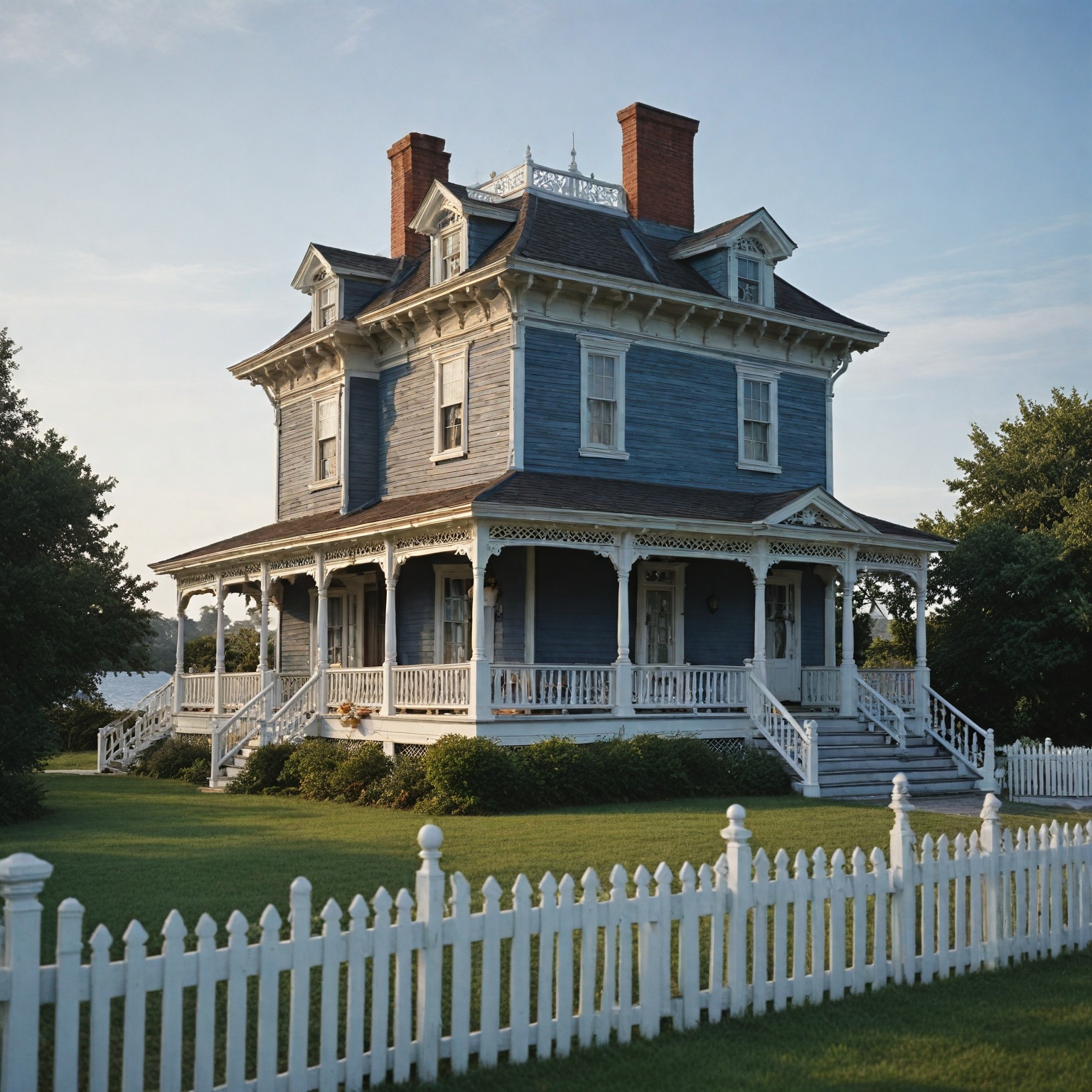
Widow’s walks are distinctive rooftop platforms, typically surrounded by railings and often featuring a small enclosed cupola, that emerged as a notable architectural element in 19th-century North American coastal homes. Predominantly found along the Atlantic coast and in New England, these structures were originally incorporated into the residences of wealthy sea captains, merchants, and professionals during the post-Revolutionary War and War of 1812 era. Their design was influenced by Italianate architecture and maritime aesthetics, reflecting both practical needs and the coastal communities’ deep connection to seafaring livelihoods.
While widow’s walks are popularly romanticized as vantage points where sailors’ wives watched anxiously for the return of their loved ones from sea—hence the evocative name—historians debate the accuracy of this narrative, suggesting the platforms were more commonly used for functional purposes such as fire prevention by allowing access to chimneys. Despite this controversy, the symbolic image of the “widow’s walk” has become ingrained in American folklore and coastal cultural identity, especially in New England.
Architecturally, widow’s walks are characterized by flat, railed platforms that sometimes resemble ship crow’s nests, connecting their form to maritime tradition. Over time, their presence expanded beyond New England to southern port cities like Charleston and Savannah, as well as to inland Victorian-era homes in the Midwest and Great Lakes regions, where they often signified wealth rather than serving maritime functions. In contemporary architecture, widow’s walks have been reinterpreted with modern materials and design sensibilities, maintaining their historic charm while providing panoramic outdoor living spaces.
The widow’s walk remains a culturally resonant feature, symbolizing a blend of practical utility, maritime heritage, and romantic myth. Its enduring presence in restored historic homes and new coastal constructions alike highlights the intersection of architectural history, regional identity, and the storytelling tradition that surrounds America’s seafaring past.
Historical Background
Widow’s walks are railed platforms located atop the roofs of homes, often featuring a small enclosed cupola. Their origins trace back to the early 19th century, particularly along the Atlantic coast where sea captains and merchants amassed wealth during the Revolutionary War and the War of 1812. These affluent individuals constructed large private homes incorporating widow’s walks as both a practical and decorative architectural feature.
The design of widow’s walks was influenced by Italianate architecture, which was popular in many early North American coastal communities. While the terms “cupola” and “widow’s walk” are sometimes used interchangeably, they differ in structure and origin. The widow’s walk typically functioned as an elevated platform, possibly used to observe the sea, symbolizing the connection between the home and maritime livelihood.
Widow’s walks have become emblematic of New England coastal architecture, where many 19th-century homes of well-to-do captains, governors, and physicians still preserve this feature. Historically, these platforms have been romantically linked to the image of seamen’s wives or companions watching anxiously for their loved ones’ safe return from sea—hence the evocative name “widow’s walk.” Although this narrative may be more myth than fact, it has ingrained itself into American legend and cultural memory.
Beyond New England, widow’s walks occasionally appear in southern port cities such as Charleston, South Carolina, and Savannah, Georgia, reflecting the influence of America’s seafaring heritage on local architecture. They are also found, albeit less frequently, in Victorian-era homes of the Midwest and Great Lakes regions, often as a symbol of wealth rather than maritime function. In modern times, some upscale coastal residences incorporate widow’s walks to blend historic inspiration with contemporary luxury.
Architectural Characteristics
Widow’s walks are traditionally characterized as flat, four-sided platforms surrounded by a wraparound railing atop a building’s roofline, designed to offer expansive views, particularly of the water. Their appearance is often likened to the crow’s nest on a ship’s mast, reflecting the maritime influence on their design. This similarity is reinforced by the fact that many of the detailed woodwork and paneling in Georgian and Federal houses, including widow’s walks, were crafted by ship carpenters accustomed to working on lavish captain’s cabins.
Widow’s walks have been a prominent decorative feature in Italianate architecture, a style that flourished in many early North American coastal communities during the Age of Sail. They are considered a variation of the Italianate cupola, with the larger form known as the belvedere—an ornate, often open-ended platform designed to maximize views, akin to gazebos or pavilions. These structures were not only aesthetic but functional, frequently built around chimneys to provide access for homeowners to pour sand or water down in the event of chimney fires, thereby protecting the residence from burning.
In contemporary architecture, widow’s walks have been reimagined with modern materials such as glass or iron railings, featuring cleaner lines and seamless access from upper-level living spaces. However, building codes typically require railings to be at least 36 inches tall for safety, which can influence their proportions and appearance on smaller homes. While their original purpose as lookouts for returning ships has largely faded, widow’s walks continue to serve as valuable outdoor living spaces, offering panoramic views and contributing historic character to both restored and newly constructed coastal homes.
Practical Uses and Functions
Widow’s walks, often seen as decorative rooftop platforms surrounded by low railings, served several practical and utilitarian purposes in the 19th century. One of the primary functions was related to fire safety. Given that many homes of the era were heated with wood and featured multiple chimneys, rooftop fires were a common and dangerous occurrence. The widow’s walk provided homeowners with a stable platform from which they could pour sand or water down the chimneys to extinguish fires before they spread further. Buckets of sand and water were frequently stored nearby for this purpose, and the platform gave direct access to chimney openings, facilitating firefighting efforts. Tragically, some firefighters lost their lives after falling from these scaffolds, which may have contributed to the term “widow’s walk”.
In coastal communities, widow’s walks also held maritime significance. Known alternatively as captain’s walks or lookouts, these platforms allowed homeowners—especially those of sea captains and ship owners—to observe harbor activities, including the arrivals and departures of ships. For families of seafaring men, the platform provided a vantage point to watch for the return of loved ones, enabling them to prepare welcome parties or brace for tragic news in the event of storms at sea. However, some historians caution that there is little concrete evidence to suggest that widow’s walks were regularly used to scan the horizon for incoming vessels, suggesting that this romanticized function may be more folklore than fact.
Widow’s walks were particularly prevalent in coastal regions with strong maritime histories, such as New England, Charleston, South Carolina, and Savannah, Georgia, where seafaring traditions influenced local architecture. They also occasionally appeared inland in Midwestern and Great Lakes homes, often as a symbol of wealth and status rather than functional necessity. Despite their historical practicality, widow’s walks today are sometimes incorporated into modern coastal home designs as a nod to historic style combined with contemporary luxury.
Cultural Significance and Symbolism
Widow’s walks have long transcended their architectural function to become powerful symbols embedded in maritime culture and folklore. Originating in the 18th century as rooftop lookout platforms, their image has been romanticized as places where seamen’s wives or companions would vigilantly watch the horizon, longing for the safe return of their loved ones lost at sea. This nostalgic vision has fueled a collective mythology, making the widow’s walk an almost mythical structure that evokes themes of hope, loss, and endurance.
Although historians debate the factual accuracy of these romantic associations, suggesting that the original purpose of widow’s walks was likely more practical—such as aiding in firefighting or monitoring harbor activity—the cultural narrative remains deeply rooted in American coastal communities. The term “widow’s walk” itself is part of a larger “language of the sea,” reflecting the maritime heritage that permeated the lives and architecture of coastal towns.
Today, although less common in new construction, widow’s walks continue to be incorporated into high-end coastal homes, blending historic inspiration with modern luxury while honoring the enduring cultural legacy of these distinctive rooftop platforms. Thus, widow’s walks embody a rich tapestry of symbolic meanings—combining practical origins with romanticized maritime lore—cementing their place not only in architectural history but also in the cultural imagination of seafaring communities and beyond.
Regional Differences in Design and Cultural Context
Widow’s walks exhibit notable regional variations in both design and cultural significance, largely influenced by local history, available materials, and architectural trends. In New England, particularly in historic coastal towns such as Cape Cod, Nantucket, Newport, and coastal Maine, widow’s walks are a defining feature of 19th-century seaside architecture. These rooftop platforms, often bounded by low fences, crowned stately Italianate and Greek Revival homes and symbolized the maritime heritage of the area. They were frequently used by sea captains and their families to watch for incoming ships, a practice rooted in the whaling and shipping industries that flourished in the region during the early 1800s.
In contrast, West Coast examples, especially in cities like San Francisco, reflect a different architectural approach influenced by local materials and tastes. The accessibility of redwood, a soft wood native to the area, enabled builders to incorporate more elaborate, ornate details into Victorian-era homes. Here, widow’s walks served both ornamental and practical purposes, complementing steep roofs, decorative gingerbread trim, and asymmetrical designs typical of the period. The feature became a symbol of prosperity and social standing, blending form and function in a distinctive way unique to the region’s architectural identity.
Further south, in port cities such as Charleston, South Carolina, and Savannah, Georgia, widow’s walks appear less frequently but still hold cultural significance due to the regions’ seafaring histories. These Southern examples often reflect a blending of historic inspiration with local building traditions, occasionally adopting cleaner, more contemporary interpretations in newer constructions. Meanwhile, in some Midwest and Great Lakes homes, the Victorian-era widow’s walk emerged more as a status symbol than a maritime necessity, indicating wealth and sophistication rather than serving a functional lookout purpose.
Across these regions, the widow’s walk continues to evolve. Historic districts often see restoration efforts aimed at preserving these architectural features for their character and outdoor living potential, while modern architects reinterpret widow’s walks with contemporary materials like glass and iron railings, integrating seamless access from upper-level living spaces. This regional diversity underscores the widow’s walk’s transformation from a practical maritime lookout into a versatile architectural element embedded with cultural and historical meaning.
Myths, Legends, and Local Traditions
Widow’s walks have long been enveloped in a romantic and somewhat mythical aura that transcends their architectural function. Originating as lookout platforms on coastal homes, these structures have come to symbolize the poignant image of a seaman’s wife or companion vigilantly watching the horizon, hoping for the safe return of her loved one lost at sea. Although the factual accuracy of this narrative is debated, it has nevertheless cemented widow’s walks in American legend and folklore as powerful emblems of love, loss, and longing.
This enduring symbolism has roots in the so-called “language of the sea,” where nautical expressions have permeated everyday vernacular but often lose their original context over time. The term “widow’s walk” itself has acquired an almost mythical status, evoking collective nostalgia for maritime communities and the emotional toll of seafaring life on those left ashore. The legend blends historical architecture with human sentiment, making widow’s walks a unique cultural icon especially associated with New England coastal towns.
In addition to their romantic associations, widow’s walks have also influenced cultural portrayals in literature and film. Victorian homes featuring these platforms, with their tall and imposing silhouettes, became popular settings for gothic stories and later, horror films. The widow’s walk, in particular, was often depicted as a place fraught with supernatural undertones, where themes of isolation and suspense were staged, further embedding the feature within the realm of eerie folklore and paranormal theatrics.
Local traditions have helped preserve the widow’s walk not only as an architectural element but also as a symbol of regional identity. Popularized in the early 19th century by prosperous sea captains whose wealth funded the construction of elaborate homes, the design was inspired by Italianate cupolas and soon became synonymous with New England coastal architecture. Today, many of these historic homes remain preserved with widow’s walks intact, serving as tangible reminders of the region’s maritime heritage and the romantic myths that accompany it.
Notable Examples and Historical Cases
Widow’s walks have been a distinctive architectural feature primarily associated with Northern American Victorian-era homes, especially those located along coastal regions where maritime activity was historically significant. These elevated platforms often appear on large private homes originally built by sea captains and wealthy merchants who prospered during the Revolutionary War and War of 1812 along the Atlantic coast. Such structures were sometimes referred to as belvederes and served as vantage points for enjoying expansive water views.
One notable example can be found in Saint John, New Brunswick, Canada, where a “widow’s watch” remains part of the city’s architectural heritage. While many of these features are linked to the romanticized notion that wives watched for their husbands’ ships returning from sea, historical evidence suggests that the practical use of widow’s walks may have been related more to firefighting, particularly for spotting chimney fires common in the 1800s when homes were heated by wood. Despite this, the symbolic and aesthetic significance of widow’s walks has endured, embedding them firmly in American architectural lore.
In contemporary times, restoration of original widow’s walks poses challenges due to structural concerns and modern safety standards. However, efforts to preserve or recreate these features continue, both to honor the historical character of Victorian homes and to provide observation decks offering panoramic views. Whether restored as functional spaces or purely decorative elements, widow’s walks remain evocative reminders of coastal communities’ maritime past and architectural heritage.
Modern Interpretations and Uses
In contemporary architecture, widow’s walks have evolved from their traditional origins to become both functional and aesthetic features that enhance modern homes. While historically associated with seafaring lore and practical use for spotting returning ships or extinguishing rooftop fires, today’s widow’s walks often serve as observation decks, providing homeowners with panoramic views of their neighborhoods or surrounding landscapes.
Architects designing new homes with widow’s walks frequently reinterpret the ornate Victorian elements using cleaner lines, modern materials such as glass or iron railings, and seamless access from upper-level living spaces. This approach allows the feature to blend with contemporary styles while preserving the outdoor living space appeal that widow’s walks offer. In historic districts, many homeowners invest in restoring dilapidated widow’s walks, reviving their original craftsmanship and character to enhance the roofline’s architectural distinction.
Additionally, widow’s walks have become symbolic elements that connect modern residences to a romanticized past. Though the popular narratives surrounding seafaring widows watching for lost husbands may be more myth than fact, the feature carries a lasting cultural resonance that blends nostalgia with practical use. Homeowners and designers alike embrace widow’s walks for their unique blend of history, decoration, and functionality, ensuring their continued presence in American domestic architecture.
The content is provided by Harper Eastwood, Brick By Brick News