Summary
“Unlock Your Dishwasher’s Full Potential: A Comprehensive Guide to Optimal Cleaning and Efficiency” is a comprehensive resource that provides in-depth insight into the workings of a dishwasher and offers expert advice on optimizing its usage for maximum cleaning results and energy efficiency. It highlights the pivotal role of not just a dishwasher’s design and features, but also the loading techniques and regular maintenance practices for achieving optimal cleaning outcomes. The guide provides an overview of the evolution of dishwasher technology, discusses common problems and their solutions, and underscores the sustainability aspects of dishwasher usage.
Through careful analysis, the guide emphasizes that dishwashers are not merely time-saving appliances; they are also instrumental in reducing energy and water consumption when used effectively. It details the optimal loading techniques, explains the appropriate use of detergents, and discusses the factors affecting the dishwasher’s washing time and efficiency. The guide also throws light on common problems with dishwasher performance and offers advice on how to troubleshoot and repair them.
In addition to providing practical advice, the guide also addresses the long-debated topic of the efficiency of dishwashers compared to handwashing, discussing both economic and environmental aspects. It further touches upon the sustainability aspects of dishwasher usage and offers suggestions for adopting eco-friendly practices. By unraveling the science behind a dishwasher and offering actionable advice, this guide aims to help users unlock their dishwasher’s full potential and utilize this essential appliance to its utmost capability.
The Science Behind a Dishwasher
A dishwasher’s function hinges upon several key components. Most dishwasher designs are equipped with a central spinning water sprayer, located at the bottom of the dishwasher tub. This plays a crucial role in cleaning, as the full force of its spray directly impacts the dishes, thereby improving the cleaning process.
However, a dishwasher’s efficiency is not solely dependent on its design or features; the way dishes are loaded into the machine also plays a significant role. Regardless of how advanced a dishwasher model may be, improper loading can prevent it from effectively cleaning the dishes. For optimal cleaning, it is recommended to position larger items on the sides or back of the bottom rack and ensure the dirtiest side of each dish faces towards the water source.
Moreover, the cleaning process is not merely about saving time; it also involves optimizing the dishwasher’s performance while reducing energy and water consumption. By understanding the factors affecting wash time, users can manage their cleaning schedules more effectively and utilize their kitchen appliances more efficiently. The right practices, such as correct preparation, proper loading techniques, and regular maintenance, can unlock the dishwasher’s full cleaning potential.
History and Evolution of Dishwashers
The invention of automatic dishwashers has significantly transformed household chores, with their history extending back over a century. Despite their longstanding presence, their efficiency compared to handwashing dishes has been a topic of continued debate, particularly in light of emerging eco-conscious models. Over time, dishwasher technology has seen a myriad of improvements, rendering them essential time- and labor-saving appliances.
In the early days of dishwasher invention, users often found residues on dishes or glasses covered in spots. However, the last decade has witnessed the introduction of various innovative features in ENERGY STAR certified models. These include soil sensors, improved water filtration, more efficient jets, and new dish rack designs. Such features have significantly reduced energy and water consumption while enhancing the performance of dishwashers.
However, not all products in the market deliver top quality. Several manufacturers do not disclose the ingredients used in their dishwasher detergents, complicating the process of identifying top-performing products. Despite this, countless cleaning experts continue to undertake research and product reviews to help users make informed choices.
Other factors such as the selected wash cycle, the dishwasher’s age, and load size also influence water consumption. Thus, minor adjustments and an understanding of these factors can optimize the dishwasher’s performance, contributing to water and energy savings.
How to Unlock Your Dishwasher’s Full Potential
Unlocking your dishwasher’s full potential involves understanding optimal loading techniques, regular maintenance practices, appropriate use of detergents, and being mindful of the factors affecting the dishwasher’s washing time and efficiency.
Optimal Loading Techniques
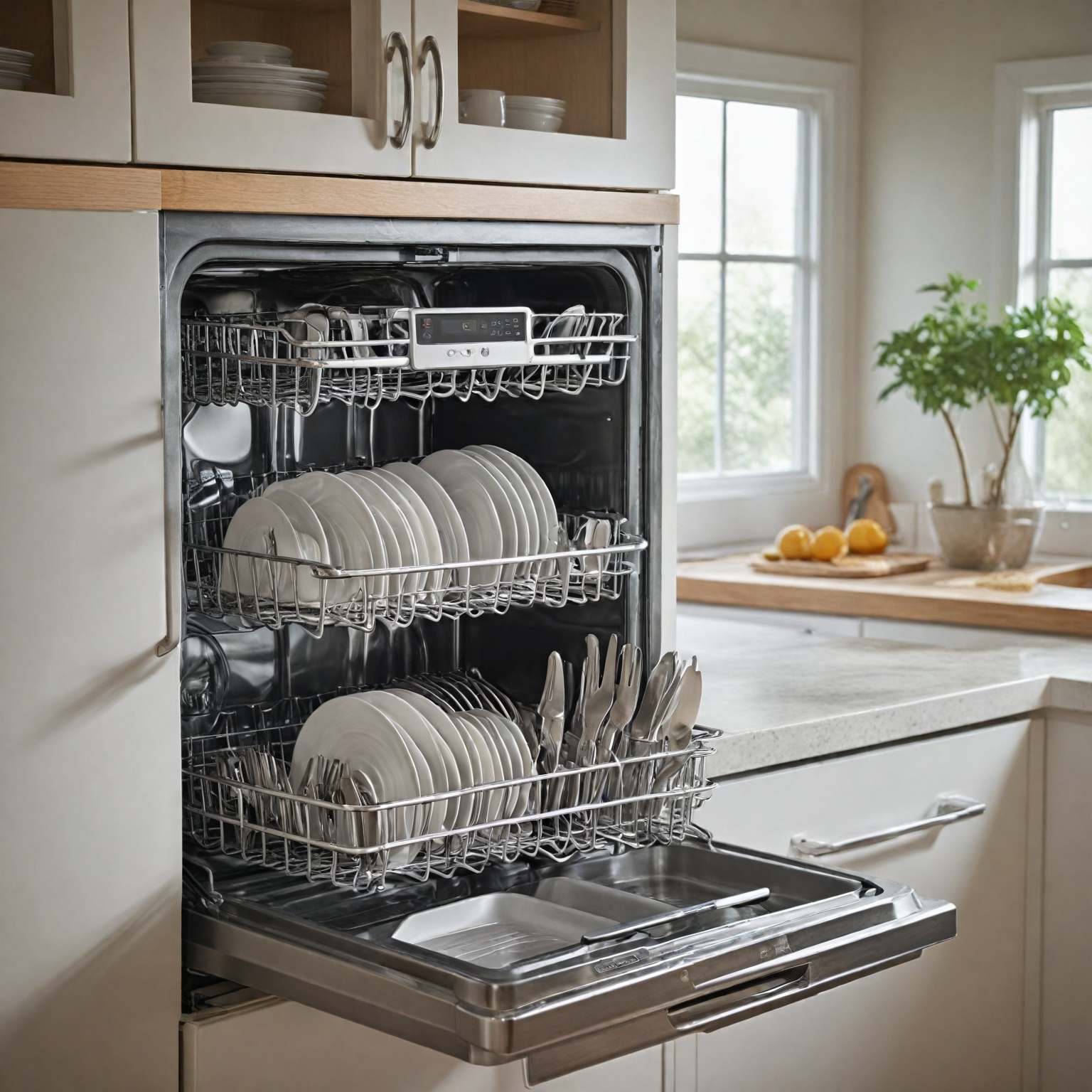
The loading technique plays a crucial role in achieving thorough cleaning. Dishes should be loaded in a way that allows water and detergent to reach all surfaces. Overcrowding and stacking should be avoided as it may block the dishwasher’s reach to some dishes. Larger items such as pots and pans should be placed on the bottom rack, while smaller items, such as cups and bowls, should be placed on the top rack. Sorting dishes by type on the same rack can prevent them from scratching each other during the cycle.
Regular Maintenance
Regular maintenance is key to a successful wash and extending the lifespan of the dishwasher. Food trapped in the filter can impair cleaning, while soil and grime buildup on the rubber seals and door can cause leaks. Therefore, it’s advisable to regularly clean the dishwasher, particularly the filter and seals. Besides, scraping off large food scraps before loading can prevent blockages in the filter and maintain the dishwasher’s efficiency.
Detergent Use
The choice and use of detergent can significantly affect the cleaning effectiveness and efficiency of the dishwasher. Dishwasher detergent, not regular dish soap, should be used to avoid excessive suds and poor cleaning results. Detergent packs, which contain a mixture of enzymes, degreasers, bleach, and rinse aids, have been found to be more effective than traditional gel detergents. Moreover, being mindful of the amount of detergent used can prevent residue buildup and ensure optimal cleaning efficiency. For those seeking eco-friendly options, Dirty Labs 2-in-1 Bio Enzyme Dishwasher Detergent + Booster, free of dyes, allergenic fragrance, and plastic packaging, is a recommended choice.
Factors Affecting Dishwasher Efficiency
Understanding factors affecting the washing time can help optimize the dishwasher’s performance and reduce energy and water consumption. Factors such as soil level, selected options, and water temperature can affect the cycle duration, with a typical cycle taking around 1 to 2 hours. Additionally, frequent use, the quality of the dishwasher, and the hardness level of the water used are some factors that can influence the dishwasher’s efficiency and lifespan. Optimizing water usage not only enhances cleaning performance but also leads to significant water and energy savings, hence contributing to environmental sustainability.
Troubleshooting and Repairing Common Dishwasher Problems
Many common issues with dishwasher performance can be improved through careful loading practices and maintenance. The dishwasher’s ability to clean effectively can be compromised by both internal and external factors, including the manner in which dishes are loaded. Even top-of-the-line models can underperform if not loaded correctly.
The first step in optimizing your dishwasher’s performance is to load dishes in a manner that allows water and detergent to reach all surfaces. Overcrowding should be avoided, as it can block water and detergent from reaching all areas of your dishes. This includes avoiding the stacking of dishes on top of each other. To ensure thorough cleaning, larger items such as pots and pans should be placed on the bottom rack, while smaller items like cups and bowls should be positioned on the top rack.
Most dishwasher designs feature a central spinning water sprayer located on the bottom of the dishwasher tub. To maximize cleaning efficacy, ensure the dirtiest side of each dish faces toward this water source. Larger items should be positioned on the sides or back of the bottom rack for optimal space utilization.
Despite best loading practices, not all dishwasher detergents are created equal, and some may not fully disclose their ingredients. While it has been suggested that even a partially loaded dishwasher is more efficient than handwashing, such claims should be approached with skepticism and considered in the context of the source of the information.
The key to unlocking the full potential of your dishwasher lies in proper preparation, loading techniques, and regular maintenance. Embrace these practices to achieve optimal cleaning results and efficient use of your machine.
Sustainability Aspects of Dishwasher Usage
Understanding and optimizing dishwasher usage can lead to significant water and energy savings. Modern dishwashers are designed with efficiency in mind, and taking factors such as selected wash cycle, the dishwasher’s age, and load size into consideration can greatly influence water consumption. In addition to this, regular maintenance, such as cleaning your dishwasher once a month, helps prevent the buildup of germs and maintains machine efficiency.
While dishwashing uses between 9 to 27 gallons of water, depending on washing methods, it’s important to note that washing dishes by hand can consume double the energy. Despite the increased energy usage of handwashing, it can be a cheaper option overall but loses out on total water usage, cleanliness, hygiene, convenience, and time.
Carbon Footprint of Dishwasher Usage
When it comes to carbon footprints, a professional mode dishwasher (65-70 degC) equals to 600g CO2e, including embodied carbon. If handwashing is practiced frugally, its carbon footprint could potentially be lower than that of dishwashing. However, this advantage is usually lost due to the way most people handwash.
Eco-friendly Practices
Adopting eco-friendly practices in dishwasher usage can have positive impacts on health and the environment. Eco-friendly detergents and cleaning materials are often less harsh on skin and respiratory systems, and such sustainable practices can inspire the adoption of more sustainable habits overall. Modern dishwashers utilize sensors and technology to optimize water usage based on the load size and level of soiling on dishes.
The use of eco-friendly, biodegradable dish soap reduces environmental impact and protects aquatic ecosystems by avoiding the introduction of harsh chemicals into water systems. In recent years, there has been an increase in the availability of economical and environmentally friendly dishwashing detergents, although their level of ‘greenness’ varies.
The content is provided by Jordan Fields, Brick By Brick News