Summary
The Russian economy is a complex and multifaceted system shaped by centuries of historical transformations, resource wealth, and evolving geopolitical dynamics. As the eleventh-largest economy by nominal GDP and the fourth-largest by purchasing power parity, Russia plays a significant role in global markets, particularly as a leading producer and exporter of oil, natural gas, and minerals. Its economic structure comprises a dominant services sector, a substantial industrial base including heavy industry and military manufacturing, and a relatively small but regionally important agricultural sector.
Historically, Russia’s economy transitioned from a predominantly agrarian and feudal system into a major industrial power during the Soviet era, marked by centralized planning, rapid industrialization, and collectivization of agriculture. The post-Soviet period introduced market reforms and greater integration into the global economy, although challenges such as bureaucratic inefficiencies, corruption, and regional disparities have persisted. Since 2014 and particularly after the 2022 invasion of Ukraine, Russia’s economy has faced intensified external pressures including comprehensive Western sanctions targeting key sectors like finance, mining, and energy, as well as restrictions on access to technology and international markets.
The economy’s heavy reliance on natural resource exports has long made it vulnerable to global commodity price fluctuations, hindering diversification efforts despite governmental initiatives to modernize and stabilize fiscal policy through instruments like the National Wealth Fund. Moreover, recent economic sanctions and geopolitical tensions have disrupted traditional trade relationships, notably with the European Union, compelling Russia to pursue import substitution, develop alternative markets, and maintain macroeconomic stability through capital controls and monetary policy adjustments.
Looking forward, Russia faces significant structural and external challenges, including high costs of credit and labor in non-military industries, limited integration into global value chains, and the need to balance high-speed economic growth with social stability. While industrial output shows signs of cautious growth, the effectiveness of ongoing fiscal reforms, adaptation to sanctions, and development of new economic partnerships will be critical in shaping the medium-term trajectory of the Russian economy.
Historical Background
The economic history of Russia before the Soviet era is marked by significant transformations beginning in the 18th century and accelerating in the late 19th and early 20th centuries. The abolition of serfdom in 1861 was a pivotal event that liberated 23 million serfs, creating the conditions necessary for the emergence of a wage labor market and capitalist modes of production. However, this reform initially led to volatile GDP per capita with no substantial increase in living standards, delaying sustained economic growth until the 1890s. Industrialization in the Russian Empire was gradual and uneven. By the late 19th century, under Tsar Nicholas II, the country experienced slow but steady industrial development, which expanded the urban middle class and industrial working class. This growth contributed to a more dynamic political atmosphere but also created social tensions as the working class became prone to grievances and revolutionary ideas. Key industries such as oil, textiles, minerals, and iron and steel saw notable growth, although the overall pace of Russian industrialization lagged behind Western European powers, including Germany, Britain, France, and the United States. Agriculture remained dominant, with over half the economy still devoted to farming by the early 20th century. Advances such as the introduction of new crops like sugar beets and expanded railway networks led to increased grain production and exports, improving peasant living standards somewhat before World War I. However, the subsistence nature of much Russian farming limited market participation and tax revenues, constraining broader economic development. On the eve of World War I, Russia’s national income was approximately 16.4 billion rubles, representing about 7.4% of the world total. Despite industrial growth, the country struggled to equip its massive military force adequately, revealing underlying economic weaknesses. The early 20th century also saw modernization efforts, with increased domestic production of industrial equipment between 1915 and 1917, marking a shift from reliance on foreign machinery.
Following the 1917 Revolution, the Soviet period introduced radical economic changes. The New Economic Policy (NEP) implemented in 1921 marked a temporary retreat from centralized socialism, allowing small-scale private enterprise and market mechanisms that led to agricultural recovery and economic stabilization by 1925. Later, Stalin’s Five-Year Plans from 1928 focused on rapid industrialization and collectivization of agriculture, transforming the USSR from an agrarian society into a major industrial power by the 1950s, despite significant social costs. Throughout these phases, the Russian economy evolved from a predominantly agrarian and feudal system into a complex industrialized state, albeit with persistent challenges such as regional disparities, political unrest, and lagging productivity compared to Western nations. This historical background sets the stage for understanding the contemporary dynamics and legacies influencing Russia’s economic development.
Economic Structure
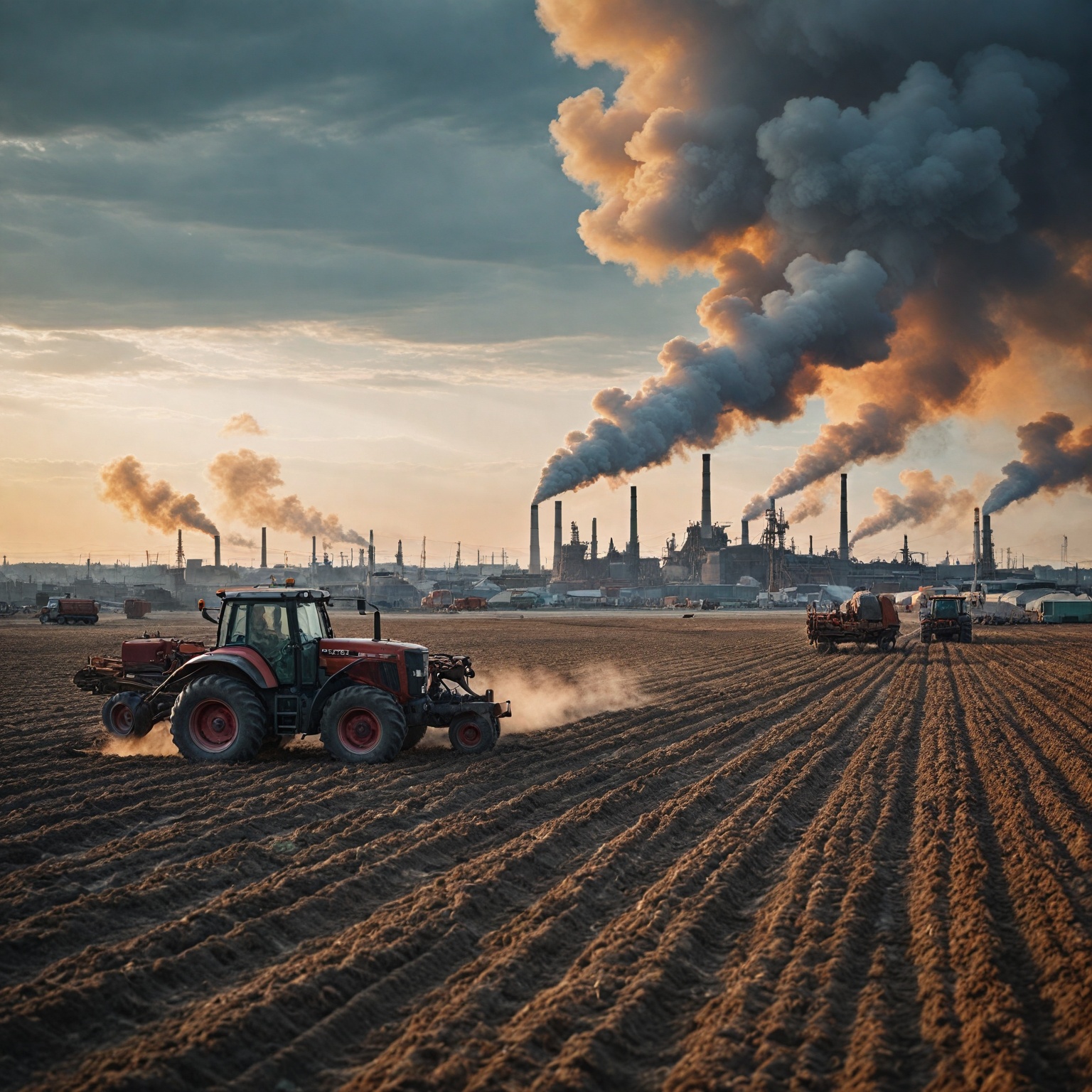
The Russian economy is characterized as an emerging, developing, high-income, industrialized, mixed market-oriented system with the eleventh-largest nominal GDP and the fourth-largest GDP by purchasing power parity (PPP) globally. Its economic structure is broadly divided into three primary sectors: agriculture, industry, and services. Agriculture comprises a relatively small portion of the economy, contributing about 5.6% to the GDP. The sector faces significant challenges due to harsh climatic and geographic conditions, which restrict arable land to limited regions of the country. However, climate change adaptation models suggest that increased arability in Siberia may open new agricultural opportunities during the 21st century, potentially triggering internal and external migration towards these areas. Approximately one-third of Russia’s sown land is dedicated to fodder crops, while the remainder is used for industrial crops, vegetables, and fruits. Additionally, Russia maintains one of the world’s largest fishing fleets, ranking sixth globally in fish tonnage caught, with 4.77 million tonnes harvested in 2018.
The industrial sector accounts for roughly 26.6% of GDP and includes diverse activities such as machine building, heavy industries, and the military-industrial complex. The machine building industry experienced a significant decline following the Soviet Union’s collapse due to capital shortages but has since recovered to become a leading supplier of machinery and equipment to other sectors. Heavy industry and the military-industrial complex have faced difficulties transitioning from a planned economy to market demands, necessitating enterprise closures and workforce reductions, which contributed to output declines in the 1990s. Nevertheless, arms manufacturing remains a principal growth contributor as of recent years, while other sectors like chemicals show modest expansion. Russia’s mining and metals sectors are dominated by major companies such as Norilsk Nickel and ALROSA, although sanctions imposed since 2022 have targeted parts of the mineral and mining industries.
A cornerstone of Russia’s economy is its fuel and energy complex (FEC), which represents one of the most vital industrial components and is a principal source of export revenues. Russia ranks as the world’s third-largest oil producer, accounting for approximately 11% of global oil output, and holds substantial reserves of natural gas, primarily controlled by Gazprom. The energy sector not only underpins other industries domestically but also historically served as a major energy supplier to the European Union until geopolitical tensions and sanctions disrupted these flows in 2022. The nuclear energy industry, led by the state conglomerate Rosatom, remains globally competitive and has largely escaped sanctions, continuing to play a significant role in both domestic energy production and international markets.
The services sector dominates the Russian economy, contributing approximately 67.8% to the GDP and employing over two-thirds of the population. This sector has expanded considerably since the Soviet era, growing from around 38% of GDP in 1991 to over 60% by the mid-2010s. It encompasses a broad range of activities including real estate, tourism, healthcare, marketing, finance, wholesale and retail trade, and entertainment. Retail trade is particularly significant, generating substantial revenue and accounting for around 60% of household incomes before taxes. The expansion of the service sector was partly a consequence of the decline in agriculture and industry during the post-Soviet transition, allowing services to accelerate their economic role.
Macroeconomic Indicators
The Russian economy has experienced notable fluctuations in recent years due to various internal and external factors. According to data from 2015, Russia’s nominal GDP stood at approximately $1.33 trillion, with the services sector constituting the largest share at around 60%, followed by industry at 36%, and agriculture contributing 4%. More recent statistics from 2023 adjust these proportions slightly, showing the agricultural sector at about 5.6% of GDP, industry at 26.6%, and services accounting for 67.8% of the economy. The limited role of agriculture is largely due to Russia’s harsh climatic and geographic conditions that restrict extensive land cultivation.
Economic growth indicators have shown mixed signals amid challenging conditions. The industrial output index for January–September 2024 compared to the same period in 2023 was recorded at 104.4 percent, indicating growth in industrial production when measured in ruble terms. However, this apparent growth is partly influenced by ruble inflation, which affects the perceived expansion of sectors such as the military-industrial complex.
Monetary policy in Russia has been actively managed to respond to both domestic needs and global economic pressures. The Bank of Russia incorporates monetary programme indicators alongside banking sector liquidity forecasts to guide policy decisions. Since mid-2022, central banks worldwide, including Russia’s, have tightened monetary policies in reaction to accelerated global inflation. This tightening began to produce disinflationary effects during 2023–2024, aiding in the stabilization of inflation rates. Despite these efforts, the Russian economy is forecasted to contract throughout most of 2022 and 2023 as it adjusts to altered external conditions and sustained sanctions.
Foreign exchange reserves and currency dynamics have played a crucial role in Russia’s macroeconomic stability. The accumulation and optimization of foreign exchange reserves, with a growing proportion held in gold, have provided an important buffer against unexpected economic shocks. Policies such as the mandatory sale of foreign currency by exporting companies and the management of currency flows have supported the ruble, especially through sales of foreign currencies like the Chinese yuan from the National Wealth Fund to cover budget shortfalls. Despite a significant reduction in cross-border transfers by 35% year-on-year in 2023, domestic retention and circulation of capital have increased as international restrictions and compliance measures limited overseas capital movement.
Government and Economic Policy
The fiscal policy framework in Russia has undergone several modifications aimed at reducing the procyclicality of government spending and improving transparency. Procyclicality tends to be more pronounced during economic upturns than recessions, leading to inefficient fiscal management. Global experience indicates that fiscal rules based solely on debt and deficit ceilings have not been effective in eliminating this procyclical behavior, making their use impractical in the Russian context. Instead, the government emphasizes the importance of sovereign reserves accumulated from natural resource rents, especially given the economy’s sensitivity to oil price fluctuations. The National Welfare Fund (NWF) plays a key role in this strategy, with recommendations to enhance the fund during periods when commodity prices exceed a predefined cut-off. The fund is designed with “anticrisis clauses” that allow flexible use of its reserves for crisis financing without strict limits, although a transitional period of at least two to three years is necessary for significant budget consolidation and addressing underlying fiscal imbalances.
Local governments in Russia have increasingly adopted protectionist and localist measures, particularly following the 1998 financial crisis, to safeguard local markets. This includes hoarding goods and restricting exports even between regions within Russia, leading to a more localized and demonetized public sector. Despite this trend, the federal government budget remains a critical component of economic governance and policy implementation.
Legislatively, the relationship between federal and regional authorities has been shaped by amendments to key legal frameworks such as the Budget Code and the Tax Code during the administrations of M. Fradkov and V. Zubkov. These changes granted greater budgetary autonomy to federal subjects while reinforcing the federal government’s role in balancing regional development through transfer payments. Additionally, the 2001 Law on Privatization mandates that enterprises in public goods, natural monopolies, national security, and other strategically important sectors remain under state ownership or control, establishing clear procedures for the sale of state assets. The Minister of Finance is a central figure in this system, overseeing fiscal revenue, expenditure, tax legislation, macroeconomic policy, and the fiscal relations between federal and local governments.
The Ministry of Economic Development is responsible for shaping socioeconomic and business policies. It evolved from the Ministry of Economic Development and Trade after shedding its trade oversight functions in 2008. The ministry actively participates in international economic forums and works on policies that promote economic stability and growth under shifting geopolitical and economic conditions.
Monetary policy is principally managed by the Central Bank of Russia, which focuses on inflation targeting to maintain the ruble’s purchasing power and overall economic stability. The Bank manages foreign exchange reserves composed of foreign currencies, gold, and other assets, allowing it to intervene in currency markets to stabilize the ruble. Since mid-2022, in response to global inflationary pressures, the Bank of Russia has implemented tighter monetary policies, with gradual disinflationary effects observed during 2023–2024. Furthermore, from the second half of 2023, the Bank has been involved in investing NWF resources domestically and mirroring fiscal operations aimed at covering budget deficits beyond the fiscal rule framework. The Bank also emphasizes improved communication strategies, including targeted outreach at the regional level, to enhance policy effectiveness.
Historically, Russia’s economy was centrally planned for nearly seven decades under Soviet rule, with all production, investment, and consumption decisions controlled by the Communist Party. The transition from this system has shaped the current structure of government economic management and policy formulation.
Challenges and Issues
The Russian economy faces several structural and external challenges that have constrained its growth and development. One of the key issues is the heavy dependence on natural resource exports, particularly oil, gas, and petroleum products, which accounted for over 70% of total exports in 2012. This reliance has exposed the economy to fluctuations in global commodity prices and hindered diversification efforts into high-technology sectors and other industries. Despite repeated calls by Russian leaders to diversify, the economic model has shown its limits, as evidenced by the modest economic growth of only 1.3% in 2013.
Another significant challenge stems from the legacy of the Soviet economic system. The cumbersome bureaucratic procedures and corruption entrenched from the 1970s through the 1980s led to inefficiencies and crisis in enterprise management. Attempts at reform during the Gorbachev era, such as Perestroika, failed to rejuvenate the economy, culminating in political and economic disintegration by 1991. Post-Soviet reforms sought to establish institutions conducive to market operations, including legal frameworks for private property and commercial codes, but persistent issues in macroeconomic stabilization and economic restructuring remain.
More recently, the Russian economy has been significantly impacted by Western sanctions imposed after the 2022 invasion of Ukraine. These sanctions targeted financial institutions, froze central bank reserves, and restricted access to international markets, aiming to destabilize the ruble and the broader economy. However, capital controls and other measures allowed the ruble to appreciate beyond prewar levels by mid-2022, mitigating some immediate pressures. Specific sectors such as mining have also been targeted with bans on Russian gold and sanctions on key mining companies, creating risks for the continuation of mining operations and export markets, especially due to dependency on imported Western equipment and spare parts.
The mining industry, historically a vital component of the Russian economy, faces additional difficulties due to sanctions and logistical challenges. While it experienced rapid growth during industrialization under Stalin and steady development thereafter, current restrictions and economic pressures threaten its sustainability. The risk of losing access to Western technology and equipment could lead to a decline in production and export capacity.
Fiscal challenges persist as well. The need for enhanced budget consolidation and the implementation of anti-crisis fiscal rules are recognized, but underlying im
International Economic Relations
Russia’s international economic relations have been shaped by a combination of its resource wealth, strategic economic policies, and evolving geopolitical dynamics. A critical aspect of Russia’s integration into the global economy has been its membership in the World Trade Organization (WTO), which the Ministry of Economic Development highlighted as important for promoting Russian exports and expanding trade links worldwide. Opening domestic markets to foreign trade and investment has historically been seen as essential for economic efficiency and growth, a process that began in earnest after the Soviet Union’s collapse but faced challenges under successive governments.
The Russian economy’s adaptation to global economic conditions depends heavily on resolving supply-side issues, stabilizing inflation expectations, and the monetary policies of advanced economies like the United States and the euro area. Russia’s ability to establish new economic relations, launch production facilities, and develop import substitution alongside parallel import mechanisms directly influences its external trade and investment environment.
Energy exports play a central role in Russia’s international economic relations. The country is one of the world’s largest oil and natural gas producers, accounting for approximately 11% of global oil production and ranking third worldwide behind the U.S. and Saudi Arabia. Prior to the 2022 conflict in Ukraine, Russia was a key energy supplier to the European Union, but energy flows to the bloc have dramatically declined since then. Despite these disruptions, energy exports remain a crucial source of revenue, contributing significantly to Russia’s GDP and export earnings.
The Russian ruble’s exchange rate dynamics also reflect the country’s economic interaction with global markets. Following the 2022 invasion of Ukraine and the imposition of Western sanctions, initial depreciation of the ruble was reversed by a combination of capital controls and foreign exchange interventions, leading to an appreciation of the currency to levels above those before the conflict. The National Wealth Fund’s sales of foreign currency, particularly the Chinese yuan, have supported the ruble and budgetary needs, with monetary policy adjustments expected to influence future exchange rate trends.
Additionally, Russia’s accumulation and optimization of foreign exchange reserves have been a cornerstone of its fiscal policy, providing a buffer against external shocks and enhancing economic stability in turbulent times. Notably, the share of gold within these reserves has increased in recent years, reflecting efforts to diversify assets and secure the country’s financial position internationally.
Recent Developments and Future Outlook
The Russian economy has experienced a mix of growth dynamics and challenges in recent years, shaped by both domestic and external factors. Industrial output showed mild growth in May 2025, reflecting a gradual but cautious expansion in production activities. For the period from January to September 2024, the industrial output index stood at 104.4 percent compared to the same period in 2023, indicating economic growth when measured in rubles; however, this growth partly reflects ruble inflation, particularly within the military-industrial complex.
Despite this overall growth, the pace of industrial production has slowed since mid-2023. While growth rates remained above 4 percent year-on-year through the second quarter of 2023 and peaked at 5.8 percent in May 2024, they decelerated to 3.7 percent in November 2024, after hitting a low of 1.1 percent in September—the weakest since March 2023. Declines have been notable even in manufacturing sectors such as the military-industrial complex, where growth averaged 8.0 percent in the first 11 months of 2024, down from 9.5 percent in the first quarter. Factors contributing to this slowdown include the prohibitively high costs of credit and labor in non-military industries, which have shifted production dynamics within the economy.
The trajectory of Russia’s economy is also influenced by broader global economic conditions. The state of the world economy, particularly how quickly supply-side issues are resolved, the anchoring of inflation expectations, and monetary policy responses by advanced economies such as the USA and the euro area, critically impact Russia’s adaptation. The Russian economy’s adjustment depends on the establishment of new economic relations, the launch of new production capacities, effectiveness in import substitution, and the development of parallel import mechanisms.
Fiscal policy and financial strategies continue to play pivotal roles in maintaining economic and social stability. The Russian government emphasizes cautious fiscal management to support high-speed economic growth while preserving social stability and avoiding abrupt reforms. Enhancements to the National Wealth Fund (NWF) have been recommended, including introducing “anticrisis clauses” that would allow flexible use of reserves during economic downturns without strict governmental limitations, although such reforms require a transition period to ensure budget consolidation.
Currency policy has also been an important factor. The ruble appreciated significantly after initial depreciation following geopolitical tensions, bolstered by Western sanctions and capital controls, trading above prewar levels by mid-2022. Recent sales of foreign currency reserves, primarily in Chinese yuan, from the NWF have helped support the ruble amid budget shortfalls. Monetary policy easing is expected to lower borrowing costs for importers, which could weaken the ruble but benefit state revenues through higher export earnings.
Looking ahead, Russia aims to continue adapting to new economic realities by focusing on import substitution, increasing production efficiency, and fostering new economic partnerships. However, challenges such as high credit and labor costs in non-military sectors, global economic uncertainties, and the need for fiscal and monetary policy adjustments remain significant. The balance between achieving high-speed growth and maintaining social stability will likely define the medium-term outlook of the Russian economy.
The content is provided by Harper Eastwood, Brick By Brick News