Summary
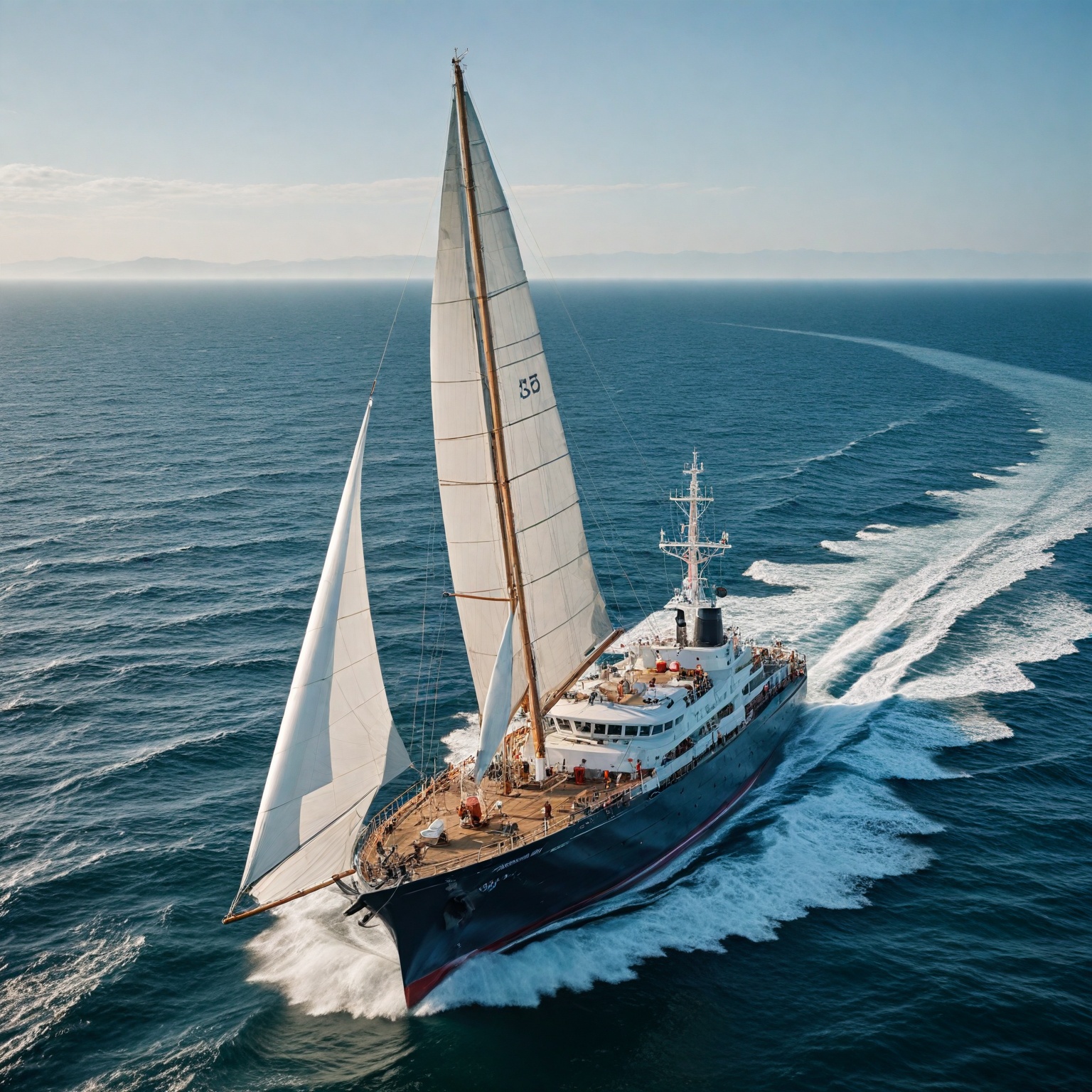
Wind propulsion has been a cornerstone of maritime travel for centuries, traditionally powering sailing ships through the harnessing of natural wind energy. Although largely supplanted by steam and diesel engines during the 20th century, wind-assisted ship propulsion systems (WAPS) have experienced a recent resurgence as the shipping industry seeks cleaner and more sustainable alternatives to reduce greenhouse gas emissions and fuel consumption. This revival is driven by advances in materials science, aerodynamic design, and automation technology, enabling modern vessels to integrate wind power either as an auxiliary force or, increasingly, as a primary propulsion source.
Contemporary wind-assisted technologies include Flettner rotors, kite sails, and wing sails, each employing innovative methods to convert wind energy into thrust with reported fuel savings ranging from 15% to 25% in operational trials. These systems contribute to significant environmental benefits, notably lowering carbon dioxide emissions and other pollutants, aligning with international regulatory frameworks such as the International Maritime Organization’s (IMO) strategy to halve shipping emissions by 2050. Industry adoption is expanding, with major shipping companies and technology providers actively developing and deploying wind propulsion solutions across various vessel types and trade routes.
Despite promising environmental and economic advantages, wind propulsion faces several challenges that limit widespread implementation. High initial capital costs, technical integration complexities with conventional engines, and operational considerations like altered vessel maneuverability require specialized expertise and careful management. Moreover, variability in wind conditions means that wind-assisted systems currently complement rather than fully replace traditional propulsion methods, necessitating hybrid approaches and continued innovation.
Looking ahead, wind propulsion is positioned to play a pivotal role in the maritime industry’s transition toward decarbonization. Ongoing research and development initiatives, supported by collaborative projects and evolving policy frameworks, aim to optimize vessel designs and operational strategies to maximize wind power’s potential. While further socio-economic and technical studies are needed to overcome existing barriers, wind-assisted propulsion represents a promising and transformative pathway to achieving cleaner, smarter, and more sustainable shipping.
Historical Background
Wind has been a fundamental source of propulsion for ships for centuries, with traditional sailing vessels relying entirely on cloth sails to harness the power of the wind. These early designs, such as clipper ships, utilized simple structures that enabled long-distance maritime travel long before the advent of mechanized propulsion systems. However, as steam and diesel engines became prevalent, the use of wind as a primary means of propulsion declined significantly.
In the early 20th century, some experimental vessels sought to integrate wind power in novel ways. For instance, a ship renamed *Baden Baden* after the German spa town undertook voyages in the 1920s, including a journey to New York via South America in 1926. Despite the innovative use of large 15-metre tall rotating drums intended to harness wind power, the ship proved inefficient compared to conventional propeller-driven vessels, with its power consumption outweighing the propulsive benefits.
The recent resurgence of interest in wind-assisted propulsion marks a significant departure from these early attempts. Modern developments benefit from advanced materials, innovative sail designs, and integration with autonomous control and weather optimization systems that greatly enhance efficiency and operational capabilities. This evolution has been supported by forward-looking leadership willing to invest substantial resources in vessel design and stakeholder engagement, exemplified by projects such as Neoline, which mobilized both internal and external expertise to develop viable wind-powered cargo ships.
Contemporary efforts also include sophisticated numerical modeling of wind power technologies, such as Flettner rotors and towing kites, applied along major trade routes to evaluate their performance and emissions reduction potential. Moreover, initiatives like the EU-funded OPTIWISE project focus on optimizing overall vessel design to maximize wind-assisted propulsion. Although wind propulsion alone may not yet serve all shipping needs, it forms a critical component of broader strategies combining alternative fuels, hybrid systems, and energy storage to reduce the shipping industry’s carbon footprint.
Thus, the historical background of wind propulsion in shipping reflects a journey from traditional sails to experimental hybrid systems, culminating in today’s innovative, technology-driven approaches that promise cleaner and smarter maritime transport.
Modern Wind-Assisted Propulsion Technologies
Wind-assisted propulsion systems (WAPS) represent a transformative approach in the maritime industry, aimed at reducing fuel consumption and emissions by harnessing wind energy directly to generate thrust. These systems can function either as assisted propulsion, supporting the main engine, or as main propulsion, where wind power is the primary source of propulsion.
Several leading designs have emerged in modern wind-assisted propulsion, including the Flettner rotor, kite sails, and wing sails. The Flettner rotor, named after German aviation engineer Anton Flettner who developed it in the 1920s, utilizes vertically mounted rotating cylinders to generate lift perpendicular to the wind direction, propelling the ship forward. These rotors are powered by the ship’s engines and have demonstrated fuel savings between 15% and 25% during trials on commercial vessels. The ultramax bulk carrier Afros, for example, is equipped with four rotors that can be retracted during port operations to maintain maneuverability.
Kite sails capture wind energy at higher altitudes where wind speeds are stronger and more consistent. This technology gained popularity due to its relatively low retrofitting cost and minimal interference with existing ship structures. The MS Beluga Skysails, chartered by the US Military Sealift Command, was a pioneering vessel testing this concept. Kite systems are highly automated, employing computer controls to optimize kite angle and position, which allows for efficient thrust generation without increasing crew workload. Typically, these systems achieve fuel efficiency gains of 15–20%, with potential improvements up to 25% when integrated into new builds designed for wind propulsion.
Wing sails, another emerging concept, involve rigid or soft aerodynamic sails mounted on the ship. These sails provide propulsion by generating lift and are being explored in projects such as the Swedish Oceanbird and the Japanese Wind Challenger. Wing sails offer the advantage of automated control and minimal crew involvement, addressing the critical design considerations of economic viability and ship stability.
Modern WAPS increasingly integrate advanced aerodynamics, intelligent control systems, and automation to ensure safe operation without requiring additional crew members. This integration addresses concerns related to maneuverability, such as the impact of sails on steering characteristics and stopping distances, by providing ship officers with precise control and decision-support tools. Technological integration also involves the seamless interfacing of wind propulsion systems with traditional engines, which is crucial to avoid technical disruptions during operation.
Beyond these main technologies, other approaches include the use of ventilated foils and marine wind turbines that generate electrical power, either supplementing propulsion or supplying onboard energy. The broader adoption of wind-assisted propulsion is driven by increasing regulatory pressures to reduce carbon emissions, rising fuel costs, and the maritime sector’s transition toward sustainable and carbon-neutral propulsion solutions.
Environmental Impact
Wind-assisted ship propulsion systems (WAPS) have demonstrated significant potential in reducing greenhouse gas (GHG) emissions and fuel consumption within the maritime industry. Studies indicate that these technologies can cut GHG emissions and fuel use by up to 30–40%, contributing substantially to efforts aimed at decarbonizing shipping operations. For example, a wind-powered cargo ship’s maiden voyage resulted in an estimated reduction of 200 tons of CO2 emissions, aligning with the International Maritime Organization’s (IMO) objective to halve greenhouse gas emissions from international shipping by 2050 relative to 2008 levels.
Fuel savings achieved through WAPS vary depending on the type of technology installed and operational conditions. Vessel operators have reported fuel reductions between 4.5% and 9%, with the potential for savings to reach 25% if these systems are retrofitted effectively. Even higher margins are anticipated for newbuilds explicitly designed to integrate sail systems. These bunker fuel savings not only reduce carbon footprints but also mitigate other harmful emissions such as sulfur oxides, which are commonly released by heavy fuel oil used in traditional shipping.
Innovations such as rotor sails have shown particular promise as efficient solutions to lower fuel consumption and emissions, supporting the maritime industry’s broader transition toward carbon-neutral propulsion. The adoption of such technologies is expected to increase as shipping companies seek to comply with increasingly stringent environmental regulations and climate policies. Moreover, the industry is exploring complementary cleaner fuels like ammonia and methanol, which, when combined with wind propulsion, could further reduce carbon emissions.
Despite these advances, realizing the full environmental benefits of wind propulsion in shipping requires overcoming socio-economic and technical barriers. More detailed studies are needed to understand these challenges and enable step-change emissions reductions in the sector. Nonetheless, wind-assisted propulsion represents a promising and sustainable path forward for reducing the environmental impact of maritime transport.
Technological Challenges and Limitations
The adoption of wind-assisted ship propulsion (WASP) technologies faces several significant technological challenges and limitations that affect their widespread implementation. One of the primary barriers is the high capital cost associated with the installation of these systems, combined with uncertainties regarding their impact on fuel consumption reduction. These factors contribute to a slow diffusion of the technology within the shipping industry. Additionally, the integration of wind propulsion systems with traditional engine setups requires specialized engineering and design expertise to ensure seamless operation and to prevent unforeseen technical issues during voyages.
Operational considerations further complicate the deployment of WASP technologies. For instance, the presence of sails or rotor systems may influence a vessel’s manoeuvrability, affecting steering characteristics such as rate of turn and stopping distances. Ship officers must account for these changes when making navigational decisions, which necessitates thorough training and familiarity with the technology. Moreover, since many wind propulsion solutions are still in early stages or prototype phases, they carry higher risk exposure during initial operations. To mitigate this, risk management strategies often recommend deploying these technologies on identified safe routes and ports until crews and ship owners gain adequate experience.
From a technical perspective, different wind propulsion methods exhibit variability in power output due to dependencies on wind speed and direction. For example, Flettner rotors generally provide a more stable power contribution compared to towing kites, which, despite producing greater towing force per unit area, are more challenging to control and deploy consistently on commercial vessels. This variability implies that while wind propulsion can deliver a significant share of power on certain routes, it is unlikely to serve as the sole propulsive energy source for most international cargo shipping operations.
Automation has been introduced in some rotor sail systems to enhance operational safety; these systems can automatically shut down in harsh conditions that exceed operational limits, eliminating the need for manual reefing common in traditional sails. Nevertheless, the need for robust control systems and continuous monitoring remains critical to prevent damage and ensure optimal performance.
Case Studies and Industry Adoption
The adoption of wind-assisted propulsion technologies (WAPT) in the shipping industry is increasingly gaining traction, with several pioneering firms and projects demonstrating their practical applications and benefits. Analytical frameworks distinguish between incumbent and newcomer firms in this niche, focusing on their roles in developing and implementing wind propulsion solutions that can significantly reduce CO2 emissions in deep-sea shipping. These firms, identified through purposeful sampling for their innovation in the field, are early movers harnessing wind power as a main propulsion source rather than merely as an auxiliary system.
One notable example is Mitsui O.S.K. Lines (MOL) and their “Wind Challenger” system, which integrates proprietary lightweight sails optimized for stability and expanded effective wind direction, alongside advanced control systems and weather routing technology to maximize fuel efficiency. This holistic approach exemplifies how technology, operational strategy, and environmental considerations are combined to enhance wind propulsion’s viability.
Rotor sails, an innovation leveraging the Magnus effect, have also seen commercial deployment. Norsepower, a leading sail technology provider, has installed its rotor sail systems on various cargo ships, including tankers and passenger vessels. Their solution is the first commercial mechanical sail system to receive third-party verification, highlighting its maturity and effectiveness in real-world applications. Industry estimates suggest that as many as 20,000 vessels worldwide could benefit from rotor sail technology, with market projections indicating the installation of between 3,700 and 10,700 wind-assisted propulsion systems by 2030, across newbuilds and retrofits in container ships, tankers, and bulk carriers.
Innovative vessel designs are being developed through initiatives such as the CHEK Horizon 2020 project, coordinated by the University of Vaasa, which combines wind energy optimization with hydrogen power for zero-emission shipping solutions. This platform aims to showcase distinct ship designs tailored to bulk cargo and cruise transport, further pushing the boundaries of sustainable maritime technology.
Additionally, technological advancements have expanded beyond traditional sails. Kite propulsion systems utilize high-altitude kites to harness stronger winds, achieving up to a 20% reduction in fuel consumption, while rotor sails continue to improve in design and application. These innovations, coupled with supportive regulatory frameworks and market drivers like subsidies and rising fuel costs, are expected to accelerate the adoption of wind propulsion technologies in commercial shipping, with forecasts anticipating standardization of wind propulsion features by 2030.
Industry forums such as the International Wind Propulsion for Shipping Forum and conferences like GST2020 emphasize the importance of operational, economic, and environmental impact assessments for wind-assisted ship propulsion systems, underscoring their growing relevance in maritime strategy discussions. Collectively, these case studies and industry trends reflect a dynamic shift towards cleaner, smarter propulsion methods that leverage wind power to reduce greenhouse gas emissions and improve shipping sustainability.
Regulatory and Policy Framework
The transition towards wind-assisted ship propulsion (WASP) and other sustainable maritime technologies is strongly influenced by an evolving regulatory and policy landscape aimed at reducing the shipping industry’s environmental impact. Central to this framework is the International Maritime Organization’s (IMO) strategy to cut greenhouse gas emissions from international shipping by at least 50% by 2050 compared to 2008 levels, which drives the adoption of innovative propulsion methods such as wind power.
Regulatory agencies, including the European Maritime Safety Agency (EMSA), play a crucial role in enforcing relevant legislation designed to enhance maritime safety and reduce pollution from ships within the European Union. EMSA’s efforts contribute to the reduction of marine pollution and ensure compliance with environmental standards, thereby supporting the broader decarbonization goals of the shipping sector.
Market mechanisms and regulatory drivers are key considerations in the development and deployment of WASP technology. These include economic incentives, operational considerations, and emerging market alternatives that encourage shipowners to invest in wind propulsion systems. Such factors were highlighted during the International Wind Propulsion for Shipping Forum at the GST2020 conference, emphasizing the importance of aligning policy with technological innovation to facilitate widespread adoption.
Organizations like DNV are actively involved in bridging the gap between regulatory requirements and technological implementation. By offering advisory services and technical standards, DNV supports clients in navigating the complex regulatory environment associated with WASP installations, ensuring compliance and operational efficiency throughout the vessel lifecycle.
Despite progress, further detailed studies on socio-economic and technical barriers are necessary to fully realize the potential of wind propulsion in shipping. These studies will help to inform policy development and foster step-change emissions reductions within the sector, ensuring that regulatory frameworks continue to evolve in tandem with technological advances.
Future Prospects and Innovations
The future of wind propulsion in shipping is poised for significant growth as technological advancements and sustainability priorities align within the maritime sector. Analysts predict that wind propulsion will become a standard feature in commercial shipping by 2030, driven by innovative vessel designs and supportive regulatory frameworks that encourage cleaner energy solutions. This anticipated expansion reflects a broader industry shift toward integrating renewable energy sources alongside conventional propulsion methods.
Currently, the deployment of wind-assisted propulsion systems (WAPS) is gaining momentum, with at least 49 vessels, representing 3.3 million deadweight tons (dwt), expected to be retrofitted with such technologies within 2024. These systems typically function by harnessing wind energy directly to generate propulsion thrust, either as an assistive mechanism complementing traditional engines or as the vessel’s primary propulsion source. Efficiency gains from wind propulsion assistance mechanisms generally range from 15% to 20%, contributing to substantial fuel savings and emission reductions.
Technological innovations are at the core of these
The content is provided by Jordan Fields, Brick By Brick News