Summary
The advent of technology is revolutionizing the real estate sector, making modern homes smarter, more energy-efficient, and tailored to the needs of their inhabitants. This article discusses the transformative influence of emerging technology on the real estate industry, from advancements in visualization software to the integration of smart home technologies. The content draws on reliable sources, including white papers, government data, original reporting, and interviews with industry experts. It also delves into the potential and challenges of blockchain technology in the real estate sector, the economic impact of these advancements, and the shift in consumer behavior. Additionally, it explores the historical trends and future prospects of the technologically driven real estate market. The article further explores the role of technology in promoting energy efficiency in modern homes, focusing on innovations like smart thermostats and automated lighting systems. These technological advancements have led to a seismic shift in the real estate sector, driving its evolution towards a more sustainable and tech-savvy future.
See also
3D Visualization in Real Estate: The use of 3D visualization technology is changing the way potential buyers, stakeholders, and investors interact with property. This technology allows users to take a virtual tour of a property before construction begins, providing a detailed look at the aesthetics, layouts, and spatial arrangements. As a result, decision-making is expedited as buyers can assess the layout, dimensions, and features of the property without needing to physically visit the location.
Challenges in Granular Mapping: In projects that incorporate detailed visualization, limitations may arise when attempting to add a high level of granularity, such as zooming in to view specific counties or cities. This issue was identified during the testing phase of a project utilizing Tableau for visualization, underlining the need for thorough testing to identify and address such issues in a timely manner.
Introduction
The real estate industry is in a period of transformation due to the influence of emerging technology. Advancements in visualization software like Tableau have allowed for more accurate and visually engaging presentations of property data, aiding in the buying and selling process. The availability of authoritative sources like government data, original reporting, and interviews with industry experts also offers a wealth of information that can be utilized for these technological developments. Furthermore, technology has been successfully integrated into energy-efficient solutions for U.S. buildings through initiatives such as the ABC Initiative, demonstrating the potential for technology to not only enhance the property buying experience but also to improve the functionality and sustainability of the buildings themselves. This revolution in the real estate sector, driven by technology, is making modern homes smarter, more energy-efficient, and tailored to the needs of their inhabitants.
References
The information presented in this article has been collated from a variety of reliable sources, including white papers, government data, original reporting, and interviews with industry experts. Additionally, we’ve conducted direct discussions with scientists and CEOs spearheading sustainable home technologies to further enrich the content. Our editorial policy dictates a commitment to accurate, unbiased content, drawing from reputable publishers whenever appropriate.
Our initial project vision underwent changes, but our final representation stays true to the original concept, despite the alterations. During the course of the project, certain limitations were identified in terms of granularity within map visualization. We discovered that the inability to zoom in for viewing counties and cities was a cartographic limitation in the software, Tableau, we were using. However, this was an outcome of rigorous user testing and as a result, gave us the opportunity to identify and adequately address the issue within the time frame of the project. We, therefore, consider this change in project scope to be a success.
Challenges and Opportunities in Integrating Smart Home Technologies
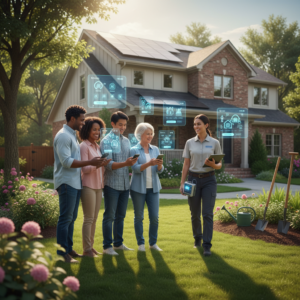
Smart home technology is an emerging sector that holds promise for enhancing convenience, security, and energy efficiency while also promoting sustainable living . These innovations are primarily designed to optimize energy consumption and minimize waste, thereby supporting sustainable living practices . As these technologies become more prevalent, homeowners can transform their living spaces into more efficient, eco-friendly, and energy-conscious environments .
However, despite the many advantages, integrating smart home technologies into current home and grid infrastructures is not without its challenges. Even for those with the means to adopt these technologies, the existing infrastructures often pose significant barriers . This is where scientific research and innovation play crucial roles in creating solutions that will facilitate the seamless incorporation of these technologies into homes, thereby reducing the carbon footprint and waste generation .
The Energy Efficiency and Renewable Energy (EERE) office, for instance, is promoting the growth of energy-efficient solutions through initiatives like the Lab-Embedded Entrepreneurship Program and the Energy Innovator Fellowship . By pairing innovators with experts across various fields, they are working towards stimulating economic growth, enhancing energy independence, and improving the overall health and well-being of the population .
This surge in smart home technology also represents a transformative force in the real estate industry. Embracing these changes, educating oneself about these trends, and staying ahead of the curve are key to leveraging these technologies effectively . Smart home products, designed for all generations , are considered a priority area in strategic energy planning and national policy . Successful adoption relies on prospective users perceiving clear benefits with acceptable levels of risk .
Initiatives for Advancing Building Technologies
The Building Technologies Office of the Office of Energy Efficiency and Renewable Energy plays a crucial role in the innovation and development of cost-effective, energy-saving solutions for modern homes . It operates in three primary areas: research and development (R&D), market stimulation, and the creation and enforcement of building codes and equipment standards .
These efforts are continuously reshaping architectural design and the construction industry. For example, advances in window technology, facilitated by the Office’s work, have expanded the use of large panes of glass (or “glazing”) in residential construction, even without necessitating the usage of cost-prohibitive commercial-grade windows . Such technologies also enhance energy efficiency in homes, reducing the need for artificial lighting and promoting access to nature .
One of the Office’s notable initiatives is the $8.8 billion program aimed at providing Home Energy Rebates to households in select states . The Department of Energy estimates that this program will save households up to $1 billion annually on energy bills and support over 50,000 U.S. jobs . States, territories, and Tribes are responsible for applying for this grant funding to implement Home Energy Rebate programs . The Weatherization Assistance Program (WAP) is another federal initiative targeted towards low-income households, providing them with solutions to reduce their energy costs and make their homes healthier and safer .
Moreover, the integration of smart home technology, such as the Tempest Weather System, further exemplifies how technology advancements are influencing modern homes . This system uses real-time weather data to provide accurate readings without the need for multiple weather instruments .
Impact of Specific Technologies on Modern Homes
The modern home has been significantly impacted by several emerging technologies. A key focus has been on increasing environmental consciousness through design and architecture. This has resulted in a shift towards sustainable living practices, which is largely facilitated by smart home technology.
Smart home technology is designed to optimize energy consumption and reduce waste. This not only contributes to the preservation of the environment but also enhances convenience and security. The use of advanced AI algorithms is expected to revolutionize home buying experiences, as they analyze the lifestyles and preferences of homebuyers to predict their future needs.
One specific technology that has gained popularity in modern homes is the smart thermostat. These devices connect to the internet and allow settings to be controlled from anywhere. They gather and analyze data over time, adjusting demand accordingly and encouraging efficient behavior. This significantly reduces the need for human intervention and drives predictable energy savings.
In addition to energy efficiency, smart thermostats offer a degree of luxury and convenience, as they can learn the preferences of occupants and maintain a desirable home temperature without the need for constant adjustments. These devices range from basic models to high-end ones, such as those from Google Nest and Ecobee, which attempt to learn user habits and routines to further optimize energy usage and cost savings.
Technological advancements have also led to the development of shape-shifting apartments and maximum security mansions, demonstrating the remarkable potential of innovative home technology. These dwellings adapt to the ever-changing needs of occupants and safeguard valuable possessions, representing the pinnacle of technological advancement in modern homes.
Impact of Blockchain Technology on Real Estate
The blockchain technology, combined with smart contracts, has potential to revolutionize the real estate sector. This technology offers a multitude of benefits, such as efficiency, transparency, and process automation, which can reshape the traditional real estate transactions by increasing efficiency and reducing costs.
Benefits of Blockchain Technology in Real Estate
Blockchain technology brings a decentralized ledger system, which introduces an unparalleled level of transparency and efficiency in real estate transactions. Each transaction recorded on the blockchain is accessible and verifiable, thereby reducing the chances of fraud and disputes. The immutable nature of blockchain records further helps prevent fraud related to property value manipulation. The enhanced accuracy and transparency foster a higher level of trust among buyers, sellers, and investors, thereby transforming the traditional real estate operations and ownership.
Challenges and Opportunities
Despite the potential benefits, the implementation of blockchain technology in real estate also faces challenges. The sector needs to explore the prospective challenges, limitations, and opportunities of implementing this technology. The traditional intermediaries, including notaries, land registries, real estate agents, and lawyers, need to consider the potential of blockchain technology in validating transactions, checking encumbrances, and other applications.
Economic Impact
The application of blockchain technology in the real estate sector could drive significant cost savings. Goldman Sachs predicts that blockchain-driven property records could result in up to $4 billion in cost savings in the U.S. alone due to reductions in headcount and actuarial risk.
Technological Advancements in the Real Estate Industry
In a world increasingly shaped by technology, the real estate industry has not remained unscathed. Real estate plays a significant role in driving national economies, but the process of transferring properties and engaging with various stakeholders can be complex and burdensome. The emergence of digital real estate has revolutionized the industry, providing much-needed efficiency and transparency to the sector.
One of the most prominent ways technology has transformed the industry is through the advent of smart homes. One standout feature of smart home automation is video analytics. This technology can decipher movement, differentiate among images of animals, humans, or vehicles, and prevent false notifications and alarms. Such advanced features can act as an additional security layer, further enhancing the attractiveness of a property.
The future of real estate technology looks promising. In the coming three to five years, the industry could witness hyper-personalized homebuying experiences, driven by advanced AI algorithms. Additionally, the fusion of luxury and technology is expected to shape the future of luxury real estate. Future luxury homes will likely incorporate sustainable features, smart home integration, and health-focused amenities, offering a living experience like no other.
The combination of luxury and technology signifies the dawn of a new era in real estate, with smart homes emerging as a permanent fixture in the industry. As a result, the real estate industry stands at the cusp of a technological revolution, one that promises to redefine traditional concepts of home and property.
Historical Overview
The impact of technology on the real estate market has been transformative, with a historical overview revealing rapid changes and advancements in recent years . From the earliest architectural marvels like the stepped pyramids of ancient Egypt, technology has played an integral role in shaping our built environment . In the modern era, technology has revolutionized the real estate industry in various ways.
Over the past decade, real estate technology has seen exponential growth, with the introduction of “prop tech” devices and cloud-based software significantly transforming the industry . From simple monitoring and data logging, the industry has moved towards hyper-personalized home buying experiences powered by advanced AI algorithms, which analyze homebuyers’ lifestyles and preferences to anticipate their future needs .
Emerging technologies such as AI and blockchain have not only transformed the way the market operates but have also shaped consumer behavior and industry operations . Even luxury real estate, often seen as more traditional, has embraced this shift towards a technologically driven future .
As the adoption rate of these technologies continues to rise, the real estate sector is expected to witness even more changes in the next three to five years . The role of governments in promoting innovation and encouraging the use of digital technologies cannot be overstated, as this helps overcome barriers to adoption and further reshapes the real estate sector .
Role of Technology in Revolutionizing Energy Efficiency in Modern Homes
In modern times, technology has played a significant role in improving energy efficiency in homes. Today, homes use 37% more energy than they did in the 1980s, a number that would have been considerably higher if not for the advancements in technology and energy conservation standards.
Energy-Efficient Solutions
Modern technology has paved the way for energy-efficient solutions in homes. For instance, smart thermostats and solar panels help to tap into renewable energy sources. These technological features make homes more appealing to tech-savvy buyers, thus adding value and making them a more attractive investment for homeowners.
Smart Thermostats
Smart thermostats significantly reduce the need for human intervention, driving more predictable energy savings. These devices connect to the internet and allow control of settings from anywhere. Over time, they gather and analyze data, adjusting demand accordingly. These smart devices also learn the preferences of the inhabitants and nudge them towards more efficient behavior. At peak times of energy use, prices, and emissions, some smart thermostats reduce consumption. Overall, they save about 10-15% of energy needs while improving comfort and convenience.
Integration of Technology in Real Estate
The integration of technology in real estate has extended to creating more energy-efficient and sustainable living spaces. Along with smart thermostats, automated lighting systems ensure that lights are only on when needed, further reducing electricity consumption. The integration of smart appliances, smart plugs, and water-saving systems significantly optimize energy usage in homes.
The Future of Energy-Efficient Homes
With the continuous innovation in technology, we can expect to see more energy-efficient solutions in the marketplace in the coming years. These solutions will revolutionize the way people interact with their living spaces, providing valuable insights into consumer preferences, and offering enhanced functionality and appeal. This revolution is not only beneficial to homeowners who enjoy enhanced comfort, convenience, and savings, but also contributes to a greener future by reducing carbon emissions.
The content is provided by Harper Eastwood, Brick By Brick News