Summary
Unlocking the 425B Home Remodeling Revolution: How America’s Aging Homes Are Driving Change explores the transformative trends reshaping the U.S. residential remodeling industry amid a rapidly aging housing stock. Since the Great Recession, new home construction has lagged behind demand, resulting in an increasingly older inventory of owner-occupied homes—now averaging over 40 years old—which has propelled a widespread shift toward remodeling rather than relocation. This trend is notable for its scale, with the home improvement sector contributing roughly $566 billion annually to the U.S. economy and showing robust growth projected to exceed $700 billion within the coming decade.
Central to this remodeling revolution is the emphasis on modernizing aging homes to meet contemporary needs, including energy efficiency upgrades, safety enhancements, and “aging in place” adaptations that enable seniors and individuals with mobility challenges to remain in their homes longer. The market is increasingly dominated by specialized service providers who deliver comprehensive remodeling solutions, reflecting homeowner preferences for professional expertise over do-it-yourself projects. Innovations in smart home technology, universal design, and project management tools further bolster industry capacity to address these evolving demands while contending with workforce aging and material cost pressures.
However, the remodeling boom is not without challenges and controversies. Rising costs fueled by tariffs and supply chain disruptions, labor shortages exacerbated by an aging construction workforce, and regional disparities in access to affordable remodeling services pose significant hurdles for both homeowners and contractors. Additionally, the social equity implications of the remodeling revolution have drawn attention, as lower-income households often spend a disproportionate share of income on essential home improvements yet may lack access to sufficient financial assistance. These issues underscore the need for expanded public policies and targeted incentives to ensure broad-based benefits and to sustain the industry’s growth.
Ultimately, the remodeling revolution driven by America’s aging homes reflects profound social and cultural shifts that prioritize aging with dignity, functional independence, and community stability. The industry’s ongoing adaptation—through innovation, consolidation, and a growing focus on accessibility—positions it as a critical component of the nation’s housing landscape, meeting the demands of current and future generations in an era defined by demographic change and evolving residential priorities.
Background
Home improvement and remodeling have become increasingly significant in the United States, driven largely by the aging housing stock and changing consumer needs. The popularization of home improvement on television began in 1979 with the premiere of This Old House, starring Bob Vila on PBS, which helped spark widespread interest in do-it-yourself projects and professional remodeling alike. Since then, channels such as HGTV and the DIY Network have expanded this trend by featuring numerous home renovation shows, while personalities like Danny Lipford have contributed through nationally syndicated programs such as Today’s Homeowner with Danny Lipford.
The U.S. housing stock is rapidly aging, especially following the Great Recession, during which new residential construction significantly lagged behind demand. This shortage of new homes has resulted in a median home age that is now nine years older than it was in 2012. Consequently, many homeowners are opting to remodel and update their existing properties rather than move to new ones. This shift has helped fuel a booming remodeling market aimed at adding modern amenities and repairing or replacing outdated components in older homes.
This trend is further supported by the nature of construction financing in the U.S., where construction loans play a vital role in both rehabilitating existing homes and supporting new development projects. However, new home construction currently faces challenges such as rising material costs, labor shortages, and higher interest rates. These factors intensify the focus on remodeling as a practical alternative to new builds.
Remodeling increasingly emphasizes “aging in place” adaptations, which modify homes to be safe and manageable for residents with physical limitations. A survey by the National Association of Home Builders (NAHB) found that 98% of remodelers report familiarity with aging-in-place design ideas among their clients. Such modifications enhance the livability and accessibility of homes for seniors and others with mobility concerns.
The home improvement industry in the U.S. encompasses a wide range of activities, including remodeling interior spaces and external structures like gardens, garages, and lawns. The industry involves general contractors and subcontractors responsible for building and remodeling both single-family and multifamily residential buildings. Annual expenditures on home improvement have reached approximately $566 billion, reflecting the sector’s substantial economic impact.
Drivers of the Remodeling Revolution
The remodeling revolution in the United States is primarily driven by the rapid aging of the owner-occupied housing stock, a trend that has intensified since the Great Recession. As new residential construction continues to lag, fewer new homes are being built, resulting in an increasing demand for remodeling existing homes to meet modern standards and homeowner needs. The median age of owner-occupied homes has reached 40 years, underscoring the pressing need for upgrades, repairs, and the addition of new amenities to aging structures.
Rising home costs encourage homeowners to invest more in remodeling rather than relocating. Renovations increase home value and improve comfort without the financial and emotional costs associated with moving. Emotional ties to a home and lifestyle preferences also play a significant role in the decision to remodel, as homeowners seek to enhance their living environments to better suit current and future needs.
The nature of remodeling itself is evolving—not merely completing more projects but transforming homes into smarter, safer, and more functional spaces that align with contemporary lifestyles. This includes modernizing kitchens and bathrooms, upgrading windows and doors, and incorporating accessibility features that improve long-term usability and comfort.
Furthermore, the remodeling industry encompasses a broad range of activities, including additions, alterations, maintenance, and repairs conducted by remodeling general contractors, design-build firms, and project management companies. External home improvements such as garden, garage, and lawn renovations also contribute to the booming market, with total U.S. home improvement expenditures reaching $566 billion.
Market Overview and Economic Impact
The U.S. residential remodeling market is experiencing robust growth, driven largely by the aging housing stock and increasing consumer demand for home improvements that enhance energy efficiency and reduce costs. In 2023, the market size was estimated at USD 527.36 billion and is projected to reach USD 716.18 billion by 2030, growing at a compound annual growth rate (CAGR) of 4.6% from 2023 to 2030. This expansion reflects both the rising need for renovation in older homes and the increasing preference for specialized services over do-it-yourself (DIY) approaches.
The market is predominantly led by specialized service providers, who accounted for 81.8% of the revenue share in 2023. These providers are favored because they ensure the use of high-quality and durable materials, which is critical in remodeling projects that require longevity and safety. While the DIY sector holds a significant share due to the appeal of low-cost and energy-efficient home projects, the labor- and time-intensive nature of remodeling often necessitates professional contractors.
Economic factors such as tariffs on key building materials, including lumber, flooring, and tiles, are influencing market dynamics by increasing project costs. Additionally, logistical challenges and longer lead times have introduced delays and raised expenses, affecting operational efficiency and the consistency of project quality across the industry.
Regionally, the demand for accessibility improvements is particularly acute in the Northeast and Midwest, where older homes predominate. These modifications often come at high costs, necessitating greater investment in programs that provide grants or low-cost loans to lower-income households. Despite significant growth in remodeling activities during the COVID-19 pandemic, many homes still require substantial investment to meet modern standards and safety requirements.
The remodeling industry is also characterized by medium to high innovation levels, with technological advancements playing an increasingly important role in addressing workforce challenges and improving productivity. Tools such as project management and site safety platforms like HammerTech help enhance safety and efficiency on construction sites, mitigating the impact of an aging workforce and skills shortages. Moreover, a strategic focus on quality workmanship over discount pricing has emerged as a crucial factor for sustaining revenue growth and maintaining profitability in the sector.
The market is further shaped by significant merger and acquisition activity, which companies pursue to diversify offerings, expand geographic reach, reduce competition, and cut costs. For example, in July 2023, A Groundworks Company acquired Bay Area Underpinning to extend its customer base in California’s key metropolitan areas including San Francisco, San Jose, and Sacramento.
In terms of project types, the market is bifurcated into DIY and Do-It-For-Me (DIFM) segments, with the DIFM segment expected to grow from USD 361.2 billion in 2024 to USD 591.7 billion by 2034, reflecting the ongoing preference for professional remodeling services.
Common Remodeling Projects in Aging Homes
Aging in place remodeling has become a central focus for homeowners seeking to adapt their living environments to the needs of seniors and individuals with varying abilities. Among the most prevalent modifications are the installation of grab bars, which are considered essential for enhancing bathroom safety. Studies indicate that having a grab bar in the shower increases the likelihood of maintaining balance when transitioning from a slippery surface by 75% compared to bathrooms without one. Reflecting their importance, 93% of remodelers reported installing grab bars in projects over the past year, making it the most common aging-in-place upgrade.
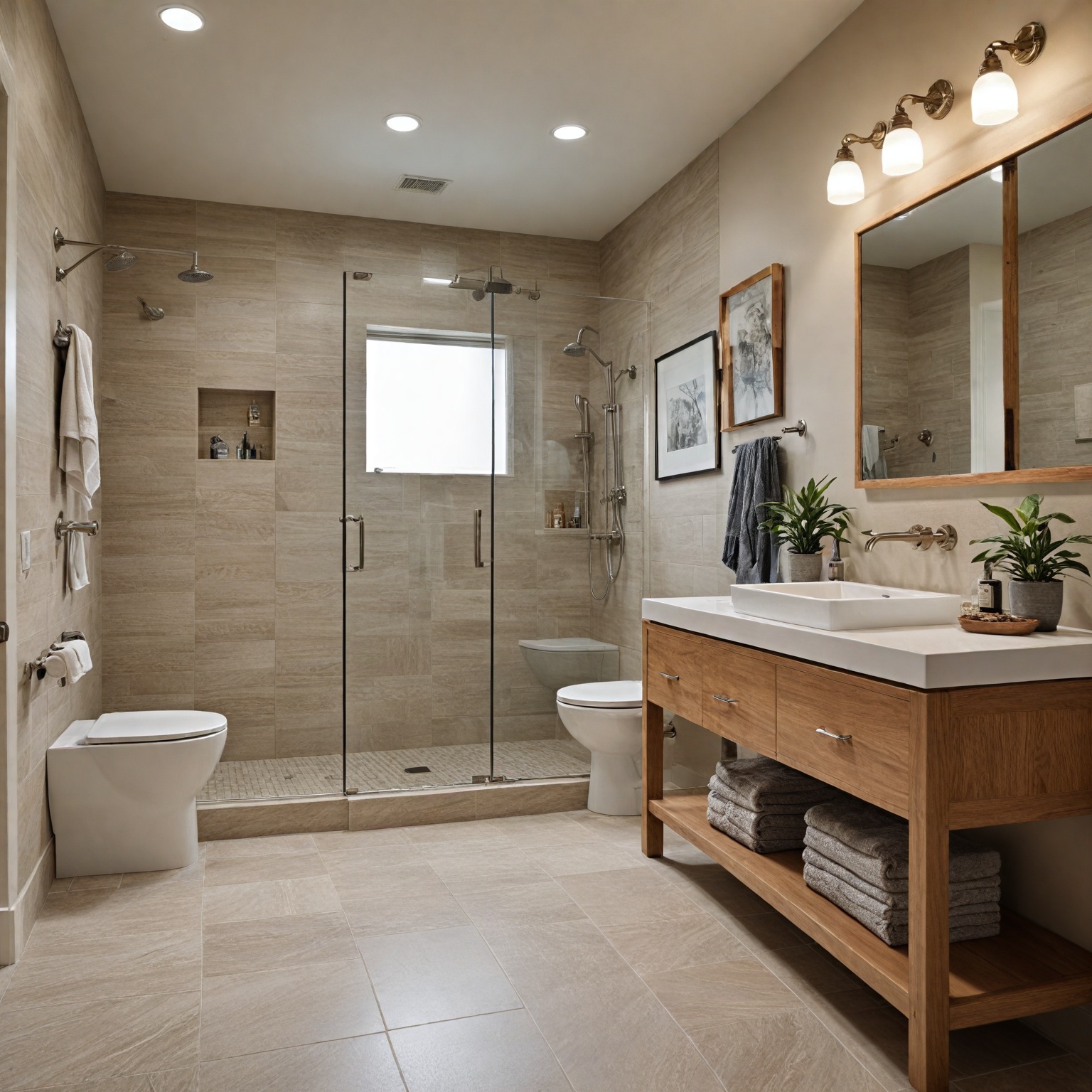
Other frequently undertaken remodeling projects include the installation of curbless showers (83%), higher toilets (77%), and widening doorways to improve accessibility (63%). Additionally, adding or improving lighting, especially task lighting, was reported by 49% of remodelers, highlighting the role of visibility in senior safety and comfort. Bathrooms remain a primary focus area, with nearly 60% of renovating homeowners addressing aging-related needs in their bathroom remodels as of 2023. Besides grab bars and non-slip flooring, curbless showers are among the top features incorporated to facilitate safer and easier use.
In addition to bathrooms, kitchens and doorways or corridors are key areas considered for aging-in-place modifications. Even small upgrades such as improved lighting or better flooring can significantly enhance daily living for seniors. While some renovations involve full room remodels, many experts recommend targeted improvements—such as replacing a bathtub with a zero-entry shower and adding grab bars—to achieve safety goals without the need for extensive construction. These targeted changes can save substantial costs and are often more feasible, especially if the home’s structure cannot support major renovations.
Homeowners are also encouraged to integrate aging-friendly features during initial construction or when undertaking other planned renovations like kitchen remodels or additions. Combining aging-in-place modifications with general renovation projects not only enhances comfort and safety but can also increase property value when done professionally. As technology evolves, future investments in assistive tools and smart home innovations may further support aging residents in maintaining independence.
Demographic and Regional Remodeling Trends
The U.S. residential remodeling market is significantly influenced by demographic shifts, particularly the aging of the homeowner population and the increasing age of the housing stock. The median age of homes in America has surpassed 40 years, which, combined with a slowdown in new residential construction, has accelerated the need for remodeling and renovations to maintain and modernize existing homes. This aging inventory drives demand for upgrades that improve efficiency, aesthetics, and functionality.
One notable demographic trend is the rise in remodeling projects tailored to aging in place. As the average age of homeowners rises, there is a growing awareness of the benefits of modifying homes to accommodate the needs of older residents. According to Alan Archuleta, Chair of the NAHB Remodelers Council, more homeowners are undertaking renovations designed to support aging in place, ensuring homes remain safe and accessible for longer periods. In fact, 88 percent of remodelers report that customers plan ahead for future needs related to aging, with 50 percent also renovating to accommodate living with older parents.
Income levels also play a role in remodeling spending patterns. Homeowners earning less than $32,000 annually spent about 20 percent of their income on home improvements and maintenance in 2021, nearly double the share of all homeowners. Despite challenges such as rising interest rates, declining home sales, and supply chain constraints, the remodeling market remains resilient due to a strong focus on essential, need-driven projects rather than discretionary upgrades typical of previous housing booms.
Regionally, the remodeling market is shaped by varying housing stock ages and local economic conditions, although specific regional data were not detailed in the available information. However, it is evident that nationwide, the combination of aging homes and an older homeowner demographic is fueling sustained demand for residential remodeling, with particular emphasis on adaptations for longevity and changing household compositions.
Workforce and Industry Adaptations
The home remodeling industry is undergoing significant workforce and operational changes to address the challenges and opportunities presented by an aging population. One of the key issues is the aging construction workforce, with the average age of workers in the U.S. currently at 42.5 years. This demographic shift presents risks but also opportunities to harness the experience of older workers through proper planning and strategic adaptation.
Technology plays a critical role in bridging the skills gap and enhancing productivity on construction sites. Tools such as HammerTech improve project management and site safety, enabling companies to streamline processes and make work environments safer for older employees. Industry leaders are beginning to adopt innovative methods to accommodate an aging workforce, including new ways of working and technology integration, rather than postponing adjustments that will become increasingly difficult to implement later.
The remodeling market itself is also evolving to better serve the needs of an aging population. Specialized service providers dominate the sector, accounting for 81.8% of market revenue in 2023, reflecting the growing demand for coordinated, full-service remodeling projects that focus on accessibility and aging-in-place modifications. These providers emphasize teamwork and integration, contrasting with companies that offer only kits or materials for contractors.
Remodelers have noted a significant increase in requests for aging-in-place features, with 76% reporting such demand has grown over the past five years. This trend is driven mainly by homeowners aged 55 and older, who seek to plan ahead for future needs or accommodate older family members living in their homes. The industry has responded by offering cost-effective services, enhanced design options, and demonstrating quality and efficiency to stay competitive in a market increasingly focused on accessibility and long-term usability.
Consumer awareness of aging-in-place concepts has also surged, with 98% of remodelers indicating that their customers are now familiar with these ideas, up from 75% in 2004. This heightened awareness presents substantial growth opportunities but also underscores ongoing challenges related to labor availability and material supply, which remodelers continue to navigate.
Government Policies and Incentives
Government policies and incentives play a crucial role in driving the home remodeling revolution in the United States, particularly as the nation’s housing stock ages and homeowners seek to improve safety, efficiency, and accessibility. Various federal, state, and local programs are designed to support homeowners in making necessary upgrades, often with a focus on energy efficiency and aging-in-place modifications.
At the federal level, several programs provide financial assistance and incentives for home remodeling projects. The U.S. Department of Housing and Urban Development (HUD) offers home improvement loan programs that can help with repairs and improvements nationwide, while some initiatives operate at the state or county level to target specific community needs. Additionally, the USDA’s Section 504 Single Family Housing Repair Loans and Grants program specifically assists low-income seniors living in rural areas, offering grants of up to $10,000 to address health and safety hazards in their homes. Tax credits are also available for homeowners who make qualified energy-efficient improvements; for example, changes made after January 1, 2023, may qualify for tax credits up to $3,200.
Local governments contribute by implementing housing programs that focus on proactive inspections and rehabilitation initiatives. These efforts encourage timely property improvements, which can enhance community sustainability, safety, and affordability. Homeowners can also benefit from assistance provided by Area Agencies on Aging (AAA), which often distribute funds under the Older Americans Act and can connect seniors to local resources such as community college carpentry programs, volunteer groups, or state-funded repair initiatives.
Energy efficiency remains a key target of remodeling incentives. Adding features like skylights to reduce artificial lighting or installing energy-efficient appliances not only lowers utility bills but can also reduce remodeling costs due to available government incentives. Staying informed about evolving energy-saving programs and best industry practices helps homeowners and contractors maximize these benefits.
Furthermore, government support facilitates aging-in
Innovations and Future Directions
The home remodeling industry in the United States is experiencing a surge of innovation driven by evolving homeowner preferences, demographic shifts, and technological advancements. One of the key trends is the integration of smart home technologies into modification projects, particularly those aimed at supporting independent living and aging in place. Recent research highlights a growing number of innovative technology terms and strategies designed to create personalized, technology-driven, and long-term adaptable home environments that enhance safety and independence for seniors.
Smart home modifications often focus on universal design principles, which promote living spaces usable by people of all ages and abilities. Examples include widened doorways, wheelchair ramps, curbless showers, touchless faucets, motion sensor lighting, and easily accessible cabinetry. These adaptations not only improve accessibility but also contribute to greater comfort and convenience for homeowners. Targeted improvements such as replacing traditional bathtubs with zero-entry showers and installing grab bars are frequently preferred over full room remodels, offering cost-effective solutions that preserve structural integrity while enhancing usability.
Technological advancements are also playing a pivotal role in transforming the residential remodeling process itself. Project management and site safety technologies like HammerTech are improving construction safety, efficiency, and productivity, which is particularly important as the industry contends with an aging workforce. These tools help bridge the skills gap and streamline complex remodeling projects, allowing for safer and more efficient delivery.
The market’s medium to high level of innovation is further supported by active merger and acquisition activity among leading players, aiming to diversify offerings, expand geographic reach, and reduce costs. For example, the 2023 acquisition of Bay Area Underpinning by A Groundworks Company exemplifies how firms are positioning themselves to better serve growing customer bases in key metropolitan areas.
Looking forward, the future of home remodeling lies in interdisciplinary approaches that combine architecture, gerontology, and smart technology to create sustainable aging-in-place solutions. Research suggests that embracing these innovations, along with exploring policy implementation feasibility, will be essential to meet the rising demand for homes that are not only aesthetically pleasing but also smarter, safer, and better suited to the needs of today’s and tomorrow’s residents. Remodelers who offer cost-effective, efficient services and demonstrate quality through design samples are expected to maintain competitiveness in this evolving market landscape.
Social and Cultural Implications
The aging of America’s housing stock and the growing trend of home remodeling carry significant social and cultural implications, particularly in the context of an increasingly older population. Home modifications aimed at enabling aging in place not only enhance physical safety but also support functional independence, improve quality of life, and alleviate caregiving burdens. These interventions are crucial as they address the complex interplay between age-related physical changes—such as muscle weakness and balance impairments—and environmental adaptations, requiring a holistic and continuous approach to maximize benefits for older adults.
Culturally, there is a growing awareness and acceptance of remodeling as a proactive strategy to accommodate the needs of an aging population. As the average age of homeowners rises, more individuals recognize the value of adapting their living environments to maintain autonomy and social participation. This shift reflects a broader societal emphasis on dignity and inclusivity for seniors, as well as the desire to remain connected to familiar communities rather than relocating to institutional care settings.
However, these social benefits are not uniformly accessible. Regions with older homes, particularly in the Northeast and Midwest, face higher demands for accessibility improvements, often constrained by the high costs associated with remodeling. Addressing these disparities requires increased investment in financial assistance programs, such as grants and low-interest loans, to ensure that lower-income households can also benefit from aging-in-place modifications. Without such support, there is a risk of deepening social inequities as vulnerable populations remain in inadequate housing conditions.
Moreover, the remodeling trend is influencing cultural notions of homeownership and residential stability. Despite some older adults opting to relocate, a significant portion prefer in-place housing adjustments, reflecting a cultural preference for continuity and attachment to long-term residences. Rising home values further incentivize investments in remodeling over relocation, emphasizing a cultural shift toward enhancing existing homes rather than pursuing new construction.
In sum, the remodeling revolution driven by America’s aging homes is reshaping social dynamics by promoting independence, inclusion, and equitable access to safe living environments. It also reflects evolving cultural values that prioritize aging with dignity within one’s own community, underscoring the need for integrated policies and programs to support this transition.
Challenges and Opportunities
The U.S. home remodeling industry faces a complex landscape shaped by both significant challenges and promising opportunities. One of the primary challenges is the rising cost of materials, exacerbated by tariffs on essential items such as lumber, flooring, and tiles, which contribute to higher expenses for remodelers and consumers alike. Additionally, longer lead times and logistical barriers have disrupted operational efficiency and quality consistency, causing project delays and increased costs that push deadlines to their limits.
The labor market presents another critical challenge. The industry is grappling with an aging workforce, creating a risk that needs to be addressed proactively to avoid future shortages and maintain the quality of the built environment. Moreover, labor and material supply constraints, combined with rising interest rates and declining home sales, pose short-term headwinds for remodeling activity.
Despite these challenges, the remodeling market offers significant growth potential. The sector is expected to expand at a compound annual growth rate (CAGR) of around 5% from 2025 to 2034, reaching an estimated USD 812.8 billion by 2034. This growth is driven partly by a shift toward need-to-do projects, where homeowners invest in essential repairs and improvements rather than discretionary upgrades. The Do-It-For-Me (DIFM) segment, which includes professional contractors performing remodeling work, dominates the market and is projected to grow substantially, reflecting homeowners’ preference for specialized services over DIY approaches.
The industry is also characterized by a high level of innovation and consolidation. Leading players engage in mergers and acquisitions to diversify their portfolios, expand geographically, reduce competition, and cut costs. For example, recent acquisitions in California aim to broaden customer bases and enhance service offerings. Remodelers differentiate themselves by providing cost-effective services, demonstrating quality workmanship, and offering design samples to attract and retain clients.
An important opportunity lies in addressing the needs of an aging population wishing to age in place. Many seniors and their families seek remodeling solutions that enable continued residence in familiar homes with adaptations for safety and accessibility. This trend aligns with the growing availability of social assistance programs that support aging at home in a more natural and cost-effective manner.
Finally, equity concerns and affordability issues highlight the need for expanded public funding and workforce development to ensure that remodeling benefits reach a broader demographic, including lower-income households that currently spend a higher proportion of their income on home improvements. Strategic planning and investment in the remodeling workforce, materials supply chain, and innovative service delivery models will be essential to harness the industry’s full potential amid these evolving dynamics.
The content is provided by Avery Redwood, Brick By Brick News