Highlights:
– Warren Buffett's announcement of stepping down as CEO of Berkshire Hathaway by 2025 marks the end of an exceptional six-decade tenure during which he transformed the struggling textile firm into a trillion-dollar diversified conglomerate, delivering extraordinary returns unparalleled in the market.
– Greg Abel's appointment as Buffett's successor, backed by Berkshire Hathaway's founder himself, signifies a meticulously planned and smooth transition, promising a continuation of the company's legacy of value investing and corporate integrity under new leadership.
– Despite the challenges and controversies faced by Berkshire Hathaway throughout its journey, including recent concerns over wildfire risks and antitrust investigations, Buffett's enduring influence on the global financial landscape and his deliberate pledge to donate his entire stake further emphasize his unparalleled commitment to sustainable growth and long-term vision.
Summary
Warren Buffett, the legendary investor often referred to as the “Oracle of Omaha,” announced at Berkshire Hathaway’s 60th annual shareholder meeting that he will step down as CEO by the end of 2025, ending a remarkable six-decade tenure. Under Buffett’s leadership, Berkshire Hathaway evolved from a struggling textile firm into a diversified conglomerate with a market capitalization exceeding $1 trillion, making it the first U.S. non-technology company to reach this milestone. Buffett’s stewardship delivered extraordinary returns, with Berkshire’s Class A shares appreciating approximately 5,500,000% between 1965 and 2024, vastly outperforming the broader market.
Buffett named Greg Abel, Vice Chairman and CEO of Berkshire Hathaway Energy, as his successor, signaling a carefully planned and orderly transition. Abel, who oversees the company’s non-insurance businesses, faces the challenge of following Buffett’s legendary leadership, but enjoys Buffett’s explicit confidence and endorsement. Despite stepping down as CEO, Buffett will remain chairman of the board and continue to provide guidance, while retaining his entire stake in Berkshire Hathaway, valued at around $164 billion, which he intends to eventually donate rather than sell.
The announcement drew a standing ovation from shareholders and was widely viewed as a pivotal moment in American business history, symbolizing both the end of an era and the beginning of a new chapter for Berkshire Hathaway. Buffett’s tenure was not without controversy; the company faced scrutiny over its utilities’ role in wildfire risks and antitrust investigations, highlighting challenges the new leadership must address. Nevertheless, Buffett’s legacy of disciplined value investing, corporate integrity, and long-term vision has profoundly influenced global markets and investment philosophy.
As Berkshire Hathaway prepares for this significant leadership transition, industry observers recognize the magnitude of Abel’s upcoming role and Buffett’s enduring impact on the company and the broader financial world. The move reflects Buffett’s confidence in sustainable growth under new leadership while cementing his own legacy as one of the most successful and respected investors in history.
Background
Warren Buffett, widely known as the “Oracle of Omaha,” has served as the CEO of Berkshire Hathaway for an extraordinary 60 years. During his tenure, he transformed the company from a struggling textile manufacturer in the 1960s into one of the world’s most formidable economic enterprises, reaching a market capitalization of $1 trillion—the first U.S. non-technology company to achieve this milestone. Buffett’s investment acumen led to an astounding approximate 5,500,000% gain in Berkshire Hathaway’s Class A stock between 1965 and 2024, significantly outperforming the S&P 500’s 39,000% gain during the same period. The stock compounded in value by an average of 19.9% annually, nearly doubling the benchmark’s 10.4% annual return, which contributed to Buffett’s exceptional personal wealth.
Throughout his leadership, Buffett became known for his folksy wisdom and long-term investment strategies, predominantly focusing on U.S. companies. However, his tenure was not without controversy; Berkshire Hathaway has faced antitrust investigations and criticism related to the management of its utilities. Notably, the company’s PacifiCorp utility was scrutinized after failing to shut off power lines during a 2020 Labor Day weekend windstorm, which contributed to deadly wildfires in Oregon and northern California. In response to these risks, Buffett’s designated successor, Greg Abel, stated that preventing wildfires has become a higher priority than merely “keeping the lights on” for Berkshire’s utility operations.
As Buffett prepared to step down, he announced that Greg Abel, the current head of Berkshire Hathaway’s non-insurance businesses, would succeed him as CEO. Abel’s succession places him in a challenging position, as observers noted the difficulty of following Buffett’s legendary leadership. The announcement marked the end of an era for Berkshire Hathaway and the investment world alike.
Announcement Details
At Berkshire Hathaway’s 60th annual shareholder meeting, Warren Buffett, then 94 years old, announced his plan to step down as CEO by the end of 2025, marking the conclusion of his remarkable tenure leading the company. The announcement came as a surprise to many, including several board members and Greg Abel, Berkshire’s Vice Chairman and CEO of Berkshire Hathaway Energy, who Buffett named as his successor with the expectation that Abel would assume full operational control of the conglomerate.
Buffett emphasized that he has no intention of selling any of his approximately 14 percent stake in Berkshire Hathaway, which is valued at around $164 billion. Instead, he intends to eventually donate his shares after his death, a decision he framed as an economic one, expressing confidence that the company’s prospects would improve under Abel’s leadership. Despite stepping down as CEO, Buffett stated he would remain chairman of the board and continue to be involved with the company, maintaining a presence to provide guidance when needed.
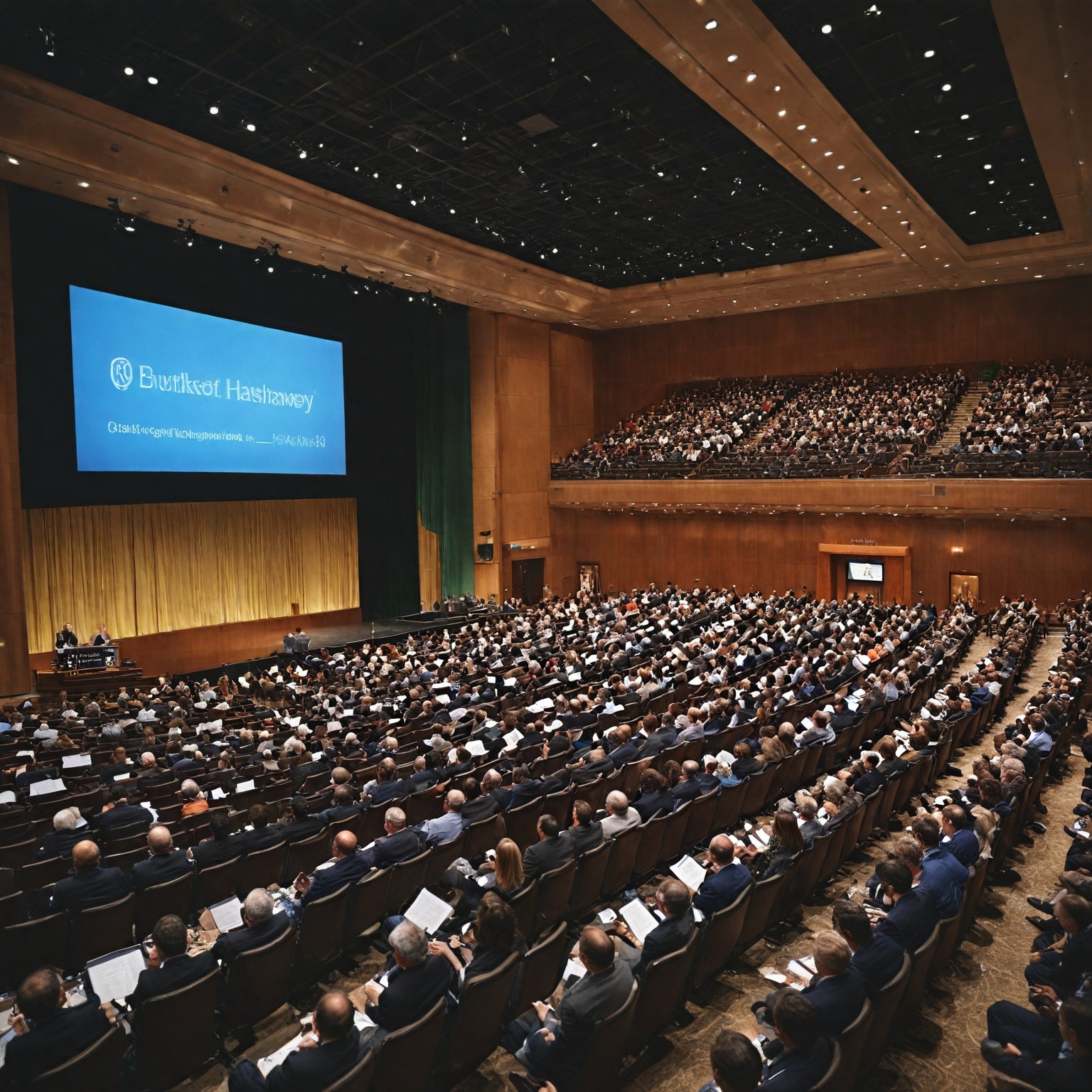
The announcement was met with a prolonged standing ovation from shareholders present at the Omaha meeting, reflecting both respect for Buffett’s legacy and optimism about the future under Abel’s management. This transition plan, known only to a few of Buffett’s children who serve on the board, marked a significant moment for Berkshire Hathaway, signaling a planned and orderly succession for the investment giant.
Succession Plan
Warren Buffett revealed his intention to retire as Chairman and CEO by the end of 2025. He plans to recommend to the company’s board that Greg Abel, the current Vice Chairman and CEO of Berkshire Hathaway Energy, succeed him as the new CEO and Chairman. Buffett emphasized that this decision was an economic one, expressing confidence in Abel’s ability to lead Berkshire’s future operations and investments more effectively than himself.
Buffett disclosed that only two of his children—Howard and Susan Buffett, both board members—were aware of the succession plan prior to the announcement. The revelation was met with a standing ovation from shareholders, underscoring the significance of the transition for the company. Abel, who has spent over 20 years with Berkshire and currently oversees its non-insurance businesses, appeared surprised but poised to take on the challenge.
Industry observers have noted the difficulty of following in Buffett’s footsteps, highlighting the magnitude of Abel’s upcoming role. Despite the daunting expectations, Buffett’s endorsement signals strong confidence in Abel’s capabilities to maintain and grow Berkshire Hathaway’s diverse portfolio.
Market and Industry Reactions
Warren Buffett’s announcement that he will step down as CEO of Berkshire Hathaway by the end of 2025 and his endorsement of Greg Abel as his successor elicited a significant response from both the market and industry observers. At the company’s 60th annual meeting, Buffett’s revelation came as a surprise to many investors, despite previous indications that Abel, who oversees Berkshire’s non-insurance businesses and Wall Street investments, was the likely heir apparent.
The announcement was met with a prolonged standing ovation from the audience in Omaha’s CHI Health Center, reflecting widespread respect and appreciation for Buffett’s decades of leadership. Buffett himself noted the enthusiasm, quipping that it could be interpreted in multiple ways as he left the stage. Industry experts recognized the difficulty Abel faces in following in Buffett’s footsteps; Erik Gordon, an entrepreneurship professor at the University of Michigan’s Ross School of Business, remarked that “it’s easier to follow Bruce Springsteen on stage than to follow Buffett”.
From a financial perspective, Buffett’s confidence in Abel’s management was underscored by his decision to retain all of his Berkshire shares rather than sell them, citing economic reasons and a belief that Berkshire’s prospects would improve under Abel’s leadership. This decision was viewed positively by investors as a strong signal of stability and continuity within the conglomerate’s management structure.
Legacy and Impact
Warren Buffett’s announcement that he will step down as CEO of Berkshire Hathaway by the end of 2025 marks the end of an extraordinary era in American capitalism. Over six decades, Buffett transformed Berkshire Hathaway from a struggling textile company into a colossal conglomerate with a market capitalization exceeding $1 trillion, establishing it as one of the world’s most formidable economic enterprises. His remarkable investment acumen and leadership earned him the nickname “the Oracle of Omaha,” symbolizing his status as one of the most successful and respected investors in history.
Buffett’s stewardship was characterized not only by his business success but also by his distinctive folksy wisdom and long-term value investing philosophy, which influenced countless investors and shaped the broader financial landscape. His annual shareholder meetings became a cultural phenomenon, attracting diverse groups of investors from around the world and fostering a unique community of dedicated shareholders.
Despite his advanced age, Buffett’s decision to retain every share of Berkshire Hathaway and eventually donate them rather than sell underscores his confidence in the company’s future under new leadership. He explicitly stated that this choice was an economic decision based on his belief that the company’s prospects would improve under the stewardship of his successor, Greg Abel, who currently manages Berkshire’s non-insurance businesses. Abel’s appointment is viewed as a pivotal moment, with analysts noting the challenge of following in Buffett’s footsteps but recognizing Abel’s capability to lead the conglomerate forward.
Buffett’s legacy extends beyond financial metrics; his principles of integrity, patience, and prudence have left an indelible mark on corporate governance and investment philosophy. The standing ovation he received upon announcing his retirement is a testament to the deep respect and admiration he commands from investors, board members, and the broader financial community. As Berkshire Hathaway prepares to enter a new chapter, Buffett’s enduring influence continues to shape the company and the wider world of investment.
The content is provided by Jordan Fields, Front Signals