Summary
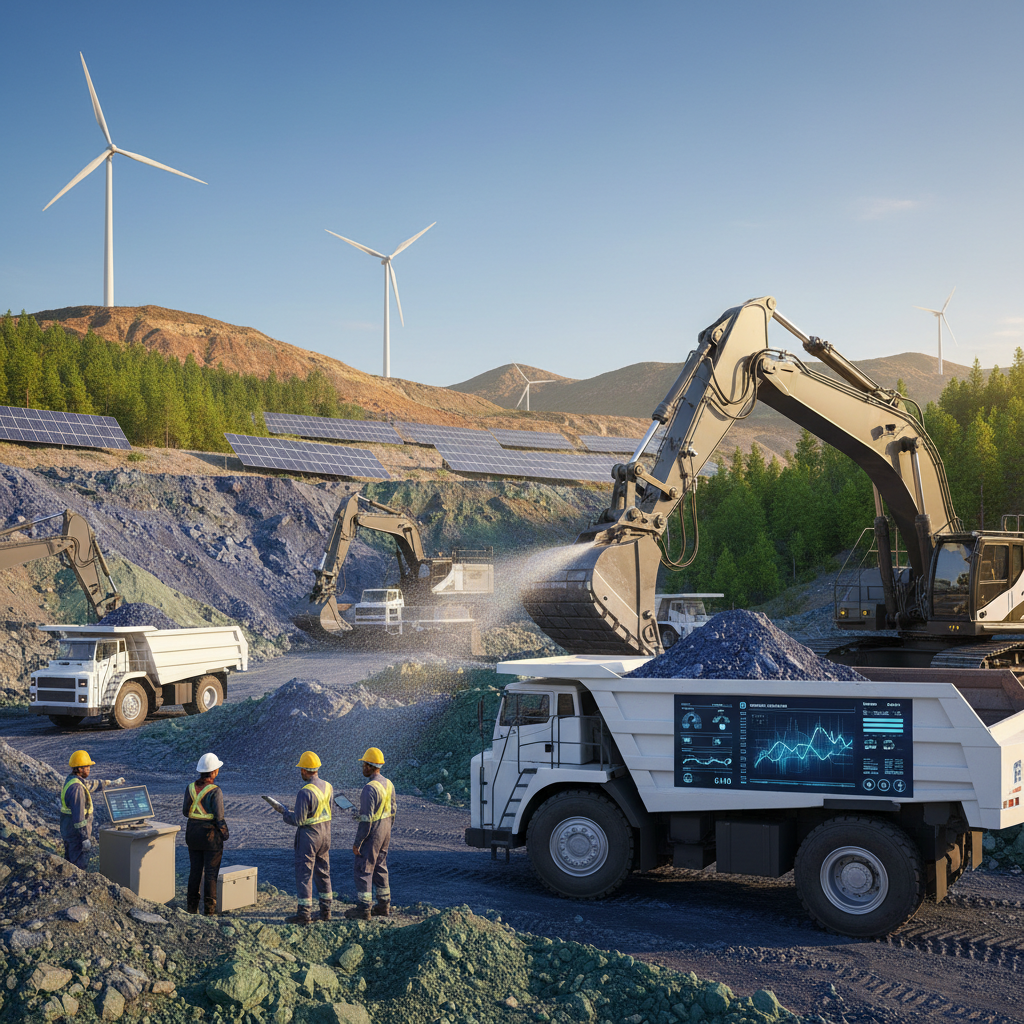
Navigating New Frontiers: How Mining Lubricants Evolve from Coal Decline to the Electric Vehicle Metals Surge explores the transformative shifts in the mining lubricant industry amid the global transition from coal mining to the extraction of critical metals essential for electric vehicles (EVs) and renewable energy technologies. Historically, mining lubricants developed to meet the demanding conditions of coal extraction machinery, focusing on durability and protection under extreme mechanical stress. However, declining coal demand in many regions and the rising importance of metals such as lithium, cobalt, nickel, and copper have redefined lubricant requirements, spurring innovation in formulations, environmental sustainability, and technology integration.
The article examines the evolution of mining lubricants from traditional mineral oil-based products to advanced synthetic and biodegradable formulations designed to enhance equipment reliability, reduce environmental impact, and support new mining challenges. It highlights how the surge in EV-related metal mining has driven demand for lubricants that can withstand intensified operational conditions while aligning with stricter environmental regulations. Additionally, it addresses the growing role of sensor-enabled “smart” lubricants that enable predictive maintenance, reducing downtime and improving resource efficiency in increasingly automated mining operations.
Significant attention is given to the economic and environmental implications of this industry shift. While the transition supports global decarbonization goals, it raises concerns over the environmental footprint of critical metal extraction, including deforestation and social responsibility issues. The article also explores the strategic collaborations between lubricant manufacturers and mining equipment producers to develop solutions optimized for electrified and hybrid mining fleets, reflecting the broader industrial move toward sustainability and operational efficiency.
By tracing these interconnected developments, the article underscores how the mining lubricants sector is adapting to a rapidly changing landscape driven by energy transition imperatives and technological advances. It provides a comprehensive overview of the challenges, innovations, and future trends shaping lubricant technologies as the mining industry pivots from fossil fuels to the minerals underpinning clean energy systems.
Historical Context
Coal mining has a history that spans thousands of years, with evidence of early mines in ancient China, the Roman Empire, and other early civilizations. Its significance surged during the Industrial Revolution of the 19th and 20th centuries, where coal served as a primary energy source to power steam engines, heat buildings, and generate electricity. This period marked a rapid expansion in coal mining activities, accompanied by increasing mechanization that necessitated the use of specialized lubricants to maintain mining machinery.
The development and use of lubricants in mining can be traced back to innovations such as the early mixture of mineral oil and sperm oil used to lubricate mill spindles in the 19th century. This innovation paved the way for the widespread adoption of petroleum-based lubricants following the drilling of the first oil well in Pennsylvania. Over time, mining lubricants evolved to include various formulations—mineral oil-based, synthetic, biodegradable, and semi-fluid greases—each designed to meet the demanding operational conditions of mining equipment.
Coal mining’s reliance on heavy machinery such as draglines, hydraulic shovels, loaders, continuous miners, and haul trucks created substantial demand for durable lubricants capable of withstanding extreme pressures, high temperatures, and abrasive environments. These lubricants play a critical role in reducing equipment wear, enhancing reliability, and improving energy efficiency.
However, despite the historic centrality of coal mining, the industry has begun to experience decline in certain regions due to environmental concerns and the growing global emphasis on reducing carbon emissions. While coal production remains strong in countries like China, India, Indonesia, and Australia, a global peak in coal usage is anticipated, which is expected to reduce employment and mining activity in the sector over coming decades. This transition has influenced the mining lubricants market, driving innovation toward synthetic and bio-based lubricants and shifting demand patterns as the mining industry increasingly focuses on metals critical for electric vehicle technologies and renewable energy systems.
Evolution of Mining Lubricants
Mining lubricants have undergone significant evolution driven by changes in the mining industry’s demands, environmental regulations, and technological advancements. Traditionally, lubricants in mining consisted of mineral oil-based formulations designed to reduce friction, wear, and heat in heavy equipment such as turbines, compressors, hydraulic systems, and gearboxes. These lubricants played a crucial role in protecting mining machinery under harsh conditions characterized by high loads, abrasive environments, and extreme temperatures.
As mining activities expanded and equipment complexity increased, lubricant formulations advanced to include synthetic oils and greases with enhanced thermal stability, load-carrying capacity, and oxidation resistance. Synthetic lubricants, in particular, extended change intervals and improved viscosity indices, enabling better performance in severe mechanical conditions while reducing the risk of equipment failure. Meanwhile, greases with extreme pressure additives and water resistance properties became essential for components exposed to harsh mechanical stress and environmental contaminants, such as walking cams on draglines.
The global energy transition has profoundly influenced the evolution of mining lubricants. The decline of coal mining in developed economies, driven by the rise of electric vehicles (EVs) and renewable energy, has shifted lubricant demand away from traditional fossil fuel-related applications toward the extraction of critical metals like lithium, copper, nickel, and cobalt. These metals are vital for clean energy technologies, creating a growing market for lubricants tailored to mining operations targeting EV battery metals and renewable infrastructure minerals.
This shift has also encouraged innovation in lubricant technology, including the development of bio-based and biodegradable lubricants. Although still in early stages, these environmentally conscious formulations aim to reduce harmful emissions and contaminants, helping mining companies meet increasingly stringent environmental regulations and minimize their ecological footprint. Advances in additives, high-performance formulations, and the ability to certify biodegradability are expected to accelerate the adoption of greener lubricants in the mining sector.
Moreover, the integration of sensor technology into lubricants is enabling predictive maintenance, reducing downtime, and enhancing operational efficiency. Such smart lubricants provide real-time data on equipment condition, facilitating timely interventions and contributing to sustainability goals by optimizing resource use and extending machinery lifespan.
The evolving lubricant market also reflects broader industry dynamics, including pricing pressures due to base oil volatility and ongoing consolidation among manufacturers. Key players like TotalEnergies, ExxonMobil, Shell, and Chevron leverage extensive technological expertise and distribution networks, while specialized companies focus on niche applications and novel lubricant solutions.
Transition to Electric Vehicle Metals Mining
The global shift toward electric vehicles (EVs) and renewable energy sources is profoundly transforming the mining industry, driving a significant transition from traditional coal mining to the extraction of critical metals such as lithium, cobalt, nickel, and copper. This evolution is fueled by the increasing demand for these metals, which are essential components in EV batteries and other clean energy technologies.
As coal mining declines in regions like Europe and North America due to environmental concerns and decreasing demand, the mining of EV-related metals is expanding rapidly. Lithium, in particular, has experienced a surge in demand linked to the growth of electric vehicles and grid-scale energy storage, with prices of lithium carbonate rising by over 400% since 2021 amid constrained supply. Cobalt, despite ethical sourcing challenges and concerns about child labor in some mining regions, remains vital for high-performance lithium-ion batteries. Nickel and copper are also critical due to their roles in battery chemistry and electrical infrastructure.
Mining operations have scaled up globally to meet this rising demand, intensifying the use of heavy machinery such as excavators, haul trucks, and drilling rigs. This increased mechanization and automation directly support the growing market for mining lubricants, which are indispensable for maintaining equipment reliability under high-load and abrasive conditions. Moreover, advances in technologies like ultra-fast charging stations and wireless charging solutions aim to keep electric mining vehicles operational with minimal downtime, further optimizing productivity in this sector.
In addition to hard rock mining, alternative extraction methods such as saline water mining are being explored as potential sources for critical metals, addressing concerns over resource depletion. However, the mining industry’s expansion also raises environmental and social responsibility issues, necessitating the adoption of stricter regulations and higher industry standards to ensure sustainable and ethical practices.
Adaptation of Lubricants to Meet New Mining Challenges
The mining industry is undergoing significant transformation driven by the decline of coal mining and the rapid rise in demand for critical metals used in electric vehicles (EVs) and clean energy technologies. This shift is prompting a fundamental evolution in the role and formulation of mining lubricants to address emerging operational and environmental challenges.
Mining lubricants continue to be essential for reducing friction, wear, corrosion, and energy losses in heavy machinery operating under harsh conditions such as extreme temperatures, heavy loads, moisture, and particulate contamination. However, the growing extraction of metals like lithium, copper, nickel, and cobalt, vital for the energy transition, requires lubricants with enhanced performance characteristics to sustain the intensified mining activity and protect equipment reliability.
To meet these new demands, lubricant formulations are increasingly incorporating advanced additives that provide superior extreme pressure and anti-wear protection. High-viscosity greases designed for heavily loaded components, such as walking cams in draglines, offer improved boundary film lubrication and water resistance under severe mechanical stresses. These specialized greases extend lubrication intervals and reduce downtime by maintaining integrity in conditions with shock loads, abrasive particulates, and corrosive environments.
The development of synthetic lubricants plays a pivotal role in this adaptation. Synthetic base oils deliver enhanced viscosity stability, lower oxidation rates, and improved thermal stability compared to conventional mineral oils. This results in longer service intervals, better fuel efficiency, and greater resistance to mechanical and chemical degradation of critical components like bearings and gears. Furthermore, semi-solid greases continue to provide essential lubrication where thick films or hard-to-reach points require sustained protection.
In addition to performance improvements, environmental considerations are increasingly shaping lubricant evolution. Modern formulations aim to reduce harmful emissions and contaminants, aligning with stricter regulations and sustainability goals within the mining sector. Some lubricants now integrate sensor technologies enabling predictive maintenance, which minimizes unplanned downtime and environmental impact. These innovations contribute to more efficient extraction of critical minerals while supporting cleaner mining operations.
The transition to electric mining fleets, particularly in iron ore operations, is also influencing lubricant needs. Although electric haul trucks significantly increase electricity demand, they reduce direct emissions from diesel engines. Lubricants for electric-powered equipment must accommodate different thermal and mechanical profiles, leading to ongoing research and development in this area.
Collaboration Between Mining Equipment Manufacturers and Lubricant Developers
The evolving demands of the mining industry have fostered closer collaboration between mining equipment manufacturers and lubricant developers to enhance equipment performance and reliability. Mining machinery operates under extreme conditions such as high loads, abrasive environments, and fluctuating temperatures, which necessitates lubricants with specialized formulations tailored to these challenges. To meet these stringent requirements, manufacturers and lubricant developers work together to design advanced lubrication technologies that improve wear protection, energy efficiency, and equipment lifespan.
This partnership is especially critical as the industry transitions from traditional diesel-powered fleets to electrified mining equipment. While diesel engines have historically dominated due to their robustness and cost-effectiveness, the rise of battery-operated mining machines demands new lubricant solutions that accommodate electric drivetrains and associated systems. Lubricant formulations are being adapted to optimize performance in these emerging technologies, including addressing issues related to diesel particulate filters (DPFs) and reducing ash accumulation caused by lubricant additives, which can affect emissions control systems in diesel-powered equipment.
Furthermore, joint efforts focus on extending service intervals and improving fuel efficiency through the development of innovative additives and cleaner formulations. This is in line with sustainability regulations and the broader shift towards bio-based and synthetic lubricants that minimize environmental impact while maintaining high performance. Collaboration also includes sharing insights to address the challenges posed by Industry 4.0, such as integrating smart monitoring systems that predict lubricant degradation and equipment maintenance needs, thereby reducing unplanned downtime.
Economic and Environmental Implications
The mining industry is undergoing significant transformation driven by the decline of coal and the surge in demand for metals essential to electric vehicle (EV) technologies. This transition carries profound economic and environmental consequences, especially concerning resource extraction and lubricant use.
From an environmental perspective, fossil fuel mining remains a major contributor to global greenhouse gas emissions, accounting for approximately 34 billion tonnes of CO2 equivalent annually. In contrast, the extraction of energy transition minerals (ETMs) critical to low-carbon energy systems often takes place in biodiverse and carbon-rich forest regions. This mining activity can cause deforestation and associated greenhouse gas emissions, potentially undermining the climate benefits of clean energy technologies. Thus, while the shift towards EV metals supports decarbonization goals, it also necessitates careful management of environmental impacts to ensure net positive outcomes.
Economically, the mining sector faces increasing pressure to adopt advanced, sustainable lubricant technologies that enhance operational efficiency and reduce environmental harm. Improved lubricant formulations contribute to extended drain intervals and reduced maintenance costs, which are crucial as infrastructure development and raw material demand rise globally. However, cost remains a significant challenge, particularly for biobased lubricants whose ester and biodegradable hydrocarbon chemistries command premium prices. This cost factor is especially acute in financially strained sectors such as coal mining.
Emerging innovations in mining lubricants integrate sensors and support predictive maintenance, reducing equipment downtime and improving reliability. These advancements not only enhance productivity but also align with broader sustainability objectives by enabling more efficient extraction of critical minerals for clean energy technologies. Additionally, the industry is exploring shifts towards battery-electric and hydrogen-powered mining machines to further reduce emissions and operational costs, although adoption is currently limited by technological maturity and economic considerations.
Future Trends and Developments
The mining lubricants industry is poised for significant transformation driven by the accelerating global shift from coal-based energy toward electric vehicles (EVs) and renewable energy technologies. As demand for critical metals such as lithium, cobalt, nickel, copper, and graphite surges—projected to increase by nearly 500% by 2050—lubricants must evolve to meet the more intense operational and environmental demands of expanded mining activities.
One prominent trend is the increasing integration of advanced lubrication technologies that enhance equipment reliability and efficiency under harsher conditions. Synthetic lubricants, which offer extended change intervals, improved viscosity indices, and reduced oxidation rates, are gaining traction, especially in regions with strict performance and environmental standards like North America and Europe. Conversely, mineral-based lubricants continue to serve as cost-effective options in markets with cost sensitivity, such as Asia and parts of Latin America and Africa, where mining activity remains robust.
Another critical development is the growing role of smart lubricants embedded with sensor technologies. These innovations enable predictive maintenance by monitoring equipment conditions in real time, thereby reducing downtime and extending machinery life—an essential factor as mining operations scale to meet clean energy mineral demands. Additionally, lubricant formulations are increasingly designed with sustainability in mind, focusing on biodegradable components and advanced chemistries that minimize environmental impact while ensuring peak performance.
The surge in mining for EV metals also highlights the necessity of robust lubricants tailored for a diverse range of heavy-duty equipment, including turbines, compressors, hydraulic systems, and transmissions. Lubricants must provide high load-carrying capacity, thermal stability, and protection against wear, moisture, and particulate contamination to optimize equipment lifespan and reduce operational costs.
From a market perspective, the volatility of crude oil prices continues to influence lubricant production costs and pricing strategies. This dynamic reinforces the importance of innovation to balance performance with affordability in different regional contexts. Moreover, the anticipated long-term decline of coal mining in Europe and North America is expected to reshape demand patterns, shifting focus toward the efficient extraction of critical minerals essential for the energy transition.
Finally, addressing supply risks associated with critical minerals involves complementary strategies such as improved recycling, substitution through technological innovation, and enhanced manufacturing efficiency. Lubricant advancements are part of this broader ecosystem, supporting sustainable mining operations that align with global climate goals and responsible resource management.
The content is provided by Sierra Knightley, Brick By Brick News