Summary
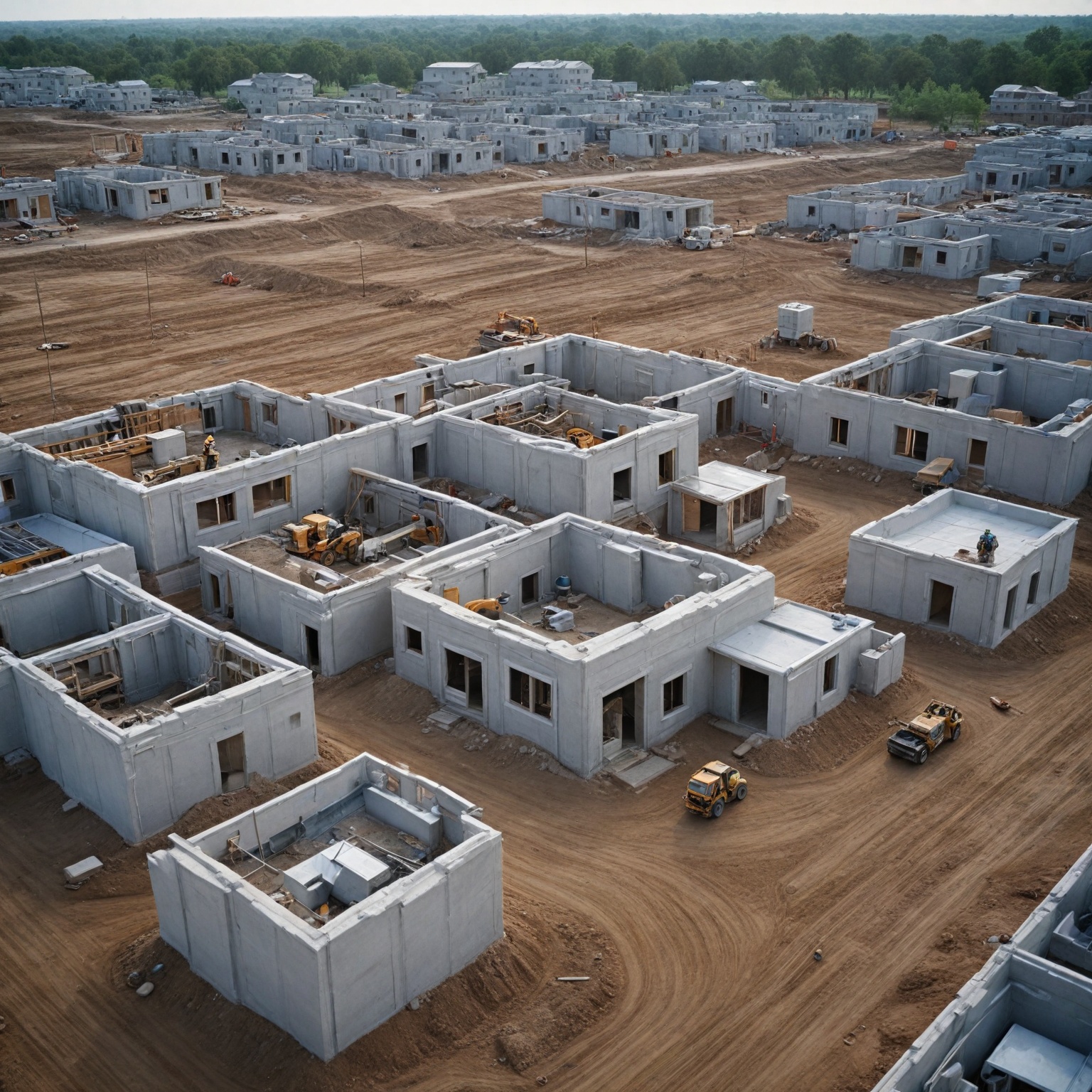
3D-printed housing represents a groundbreaking innovation in prefabricated construction, employing 3D-printing technology to build homes with reduced costs and increased efficiency. This technology utilizes automated robotics to construct three-dimensional objects by adding layers of material, addressing challenges such as remote housing needs. It also significantly minimizes construction waste, in stark contrast to traditional building methods, thus contributing to environmental sustainability. The 3D-printed homes market has attracted considerable interest due to its potential to transform traditional construction methodologies and address housing shortages.
However, despite the potential, the adoption of 3D-printed homes is currently challenged by regulatory hurdles, public perception, material limitations, and economic factors. The market also requires continuous innovation, substantial investment, and adaption of regulatory frameworks to unlock the full potential of this transformative construction method.
The advantages of 3D-printed housing are numerous, including its cost-effectiveness, reduced environmental impact, rapid deployment, and design flexibility. Several companies are investing in partnerships and innovative solutions to enhance the sustainability of 3D-printed houses. Nevertheless, the sector also faces several challenges such as regulatory barriers, material and design limitations, and environmental and economic impacts.
Although the technology of 3D-printed housing is still emerging, it holds great promise in addressing significant social issues like affordable housing and housing shortages, especially in disaster-stricken or developing regions. Despite the existing challenges, stakeholders are exploring ways to overcome these obstacles through collaboration, innovation, and sustainable practices. Continued research and advancements in this field are expected to contribute to its growing acceptance and application in residential construction.
Overview of 3D-Printed Housing
The market for 3D-printed homes represents a novel approach to prefabricated housing that harnesses 3D-printing technology, with the potential to significantly reduce the carbon footprint of the construction industry. This technology employs automated robotics to construct three-dimensional objects by adding layers of material, a process that has the potential to both lower manufacturing costs and boost the overall efficiency of home building.
3D-printing of concrete has been explored as a solution to challenges associated with remote housing. A noteworthy benefit of this technology is its contribution to housing sustainability, as the 3D printing process yields virtually no waste. In contrast, traditional construction methods often lead to a substantial accumulation of waste from wood and metal at the construction site. Beyond its environmental and sustainability benefits, 3D-printed housing can also be instrumental in addressing housing needs and shortages.
In the dynamic field of construction and architecture, 3D-printed houses have emerged as a revolutionary concept that challenges conventional building methodologies. This ground-breaking technology, which has captured the interest of homeowners, architects, and builders, could fundamentally redefine the construction of living spaces. In terms of speed, 3D printed houses offer a distinct advantage over traditional construction methods. Additionally, these houses are more environmentally friendly as they require less material and energy to build.
Although 3D-printed homes are not yet mainstream, their potential to reshape the housing market is undeniable. Continued innovation, investment, and the adaption of regulatory frameworks are critical to unlocking the full potential of this transformative construction method.
The Current State of 3D-Printed Housing
The current market acceptance of 3D printed homes is still under consideration. There are potential risks associated with the adoption of this new technology. Regulatory changes in the construction industry have been slow, which represents a significant barrier to the adoption of 3D printed homes. In addition, there are other challenges impeding widespread adoption, such as public perception issues, skilled labor shortages, material limitations, and economic factors.
Despite these obstacles, the potential of 3D printed homes to revolutionize the housing market is undeniable. The promise for growth in this sector is substantial as advancements continue to unfold. Therefore, the importance of continued innovation, investment, and adaptation of regulatory frameworks cannot be overstated, as they are key to unlocking the full potential of this revolutionary construction method.
Potential Advantages of 3D-Printed Housing
Efficiency and Cost-effectiveness
3D-printed homes provide a cost-effective and efficient solution for housing, primarily through reduced labor costs and accelerated construction times. With the construction industry accounting for approximately 6% of global GDP, incorporating efficient and cost-reducing techniques like 3D-printing could potentially yield significant economic benefits. This technology also allows for the creation of customized designs, offering a level of flexibility that surpasses traditional construction methods.
Environmental Sustainability
In a comparative study, conventional construction methods were found to have higher environmental impacts than 3D-printing techniques, including higher global warming potential, non-carcinogenic toxicity, and water consumption. Furthermore, the precision of 3D printing significantly minimizes construction waste, making it a more sustainable choice.
Rapid Deployment and Affordability
The rapid construction process of 3D printed homes makes it an ideal solution for addressing housing shortages or providing emergency shelter in disaster-stricken areas. The reduced costs associated with 3D printed homes also make homeownership more accessible to a wider population, particularly in regions with housing shortages or for first-time homebuyers.
Design Flexibility and Material Innovation
The use of 3D-printing in housing also offers unparalleled design flexibility, overcoming limitations associated with traditional construction methods. Moreover, 3D-printing can promote the development of a circular economy within the construction industry by recycling and reusing materials, reducing reliance on virgin resources, and minimizing waste.
Collaborations for Sustainability
Companies like Mighty Buildings are partnering with other firms to develop sustainable materials for 3D-printed houses. These collaborations aim to revolutionize how construction materials like concrete are made, aiming to reduce the carbon footprint of construction.
Potential Challenges and Limitations of 3D-Printed Housing
Regulatory Barriers
Navigating the complex landscape of building regulations and obtaining necessary permits can be time-consuming, which hinders the widespread adoption of 3D printed homes. Legal disputes may arise due to errors in software, hardware, or printing elements, necessitating an evolution of construction contracts and liability rules to consider the responsibility of software companies and technology providers.
Material and Design Limitations
Material properties, such as strength and durability, may not always match those of traditional construction materials. Designing complex 3D-printed structures requires expertise in both architecture and 3D printing technology. Despite the benefits of alternative construction methods using sustainable materials, their widespread use still requires support from regulators, customers, and builders.
Environmental and Economic Impacts
Despite these benefits, unintended consequences may include potential workforce displacement, impacts on trade volumes and supply chains, and potential legal violations.
Future Prospects
Despite current challenges, continuous research into improving materials used in construction will contribute significantly toward overcoming existing barriers related to durability and performance. As technology advances and public awareness grows, a shift toward more widespread acceptance of this method in residential construction is anticipated. However, the viability of 3D-printed construction as a replacement for conventional construction methods, specifically in remote, isolated, or expeditionary environments, remains an active area of research.
Initiatives to Address Challenges and Limitations
The future of 3D-printed housing relies on overcoming significant challenges and barriers. Stakeholders, comprising of industry leaders, innovators and regulatory bodies, are focusing on collaboration, innovation, and sustainability to overcome these hurdles. Addressing the scaling difficulties in 3D printing necessitates a blend of technological advancement, strategic alliances, and process enhancements.
Industry associations are orchestrating collaborative efforts, fostering platforms to discuss issues and promote growth. These strategies, often funded by the EU, aim to address technical, regulatory, and awareness barriers. The initiatives focus on fostering innovation, strategic collaborations, efficient processes, and sustainability.
However, regulatory barriers often pose formidable challenges. For example, ICON Technologies, a 3D printing innovator, faced regressive housing codes that were ill-equipped for major technological advances. Fortunately, Trust Ventures, a venture capital firm specializing in helping startups navigate regulatory barriers, was able to assist ICON Technologies. Access to technical, regulatory, and certification information and potent compliance management software is crucial in navigating these hurdles.
The potential of 3D printed homes in revolutionizing the construction industry is immense. For instance, SQ4D leads the industry in 3D printing residential homes, reflecting the pioneering innovation in the field. Collaboration is vital in overcoming the housing and climate crisis. Mighty Buildings has partnered with Fortera to create low carbon concrete, aiming to reduce the impact of construction and bring sustainability to the market at scale.
While the achievements of 3D-printing technology are remarkable, such as the ability to efficiently construct complex shapes, reduce costs and minimize construction errors, the field still faces significant challenges to overcome. Through strategic alliances, technological advancement, and sustainable practices, stakeholders aim to make 3D printing a viable option for mass production across various industries.
Social Benefits and Impacts of 3D-Printed Housing
According to the National Low Income Housing Coalition’s March 2020 report, there is a shortage of 7 million affordable rental homes for extremely low-income renters, defined as households with incomes at or below the poverty level or 30 percent of the area median income. This shortage is particularly prevalent in communities of color, with 71 percent of Black, extremely low-income renters spending more than half of their income on housing. 3D printed housing could potentially alleviate this issue by providing a more cost-effective alternative to traditional construction methods.
The affordability of 3D printed homes could also play a significant role in addressing the housing crisis in developing countries, where urban settlements are growing at a faster rate than in developed countries. The first applications of 3D printed housing are predicted to be in emergency shelter and low-income housing in these countries.
Beyond affordability, 3D printed homes are quicker to construct than traditional homes, which could help address housing shortages more efficiently. However, to fully realize the cost-saving potential of 3D-printed homes, further use and development of this construction method will be necessary.
While the 3D-printed homes market is still not mainstream, businesses and lawmakers are exploring alternative ways to build homes to address the U.S. affordable housing crisis, including 3D printing houses out of concrete, building homes in a factory and shipping them to their final destination, and even using the hemp plant in construction.
Future Perspectives of 3D-Printed Housing
Potential Solutions to Housing Challenges
Concrete 3D printing has been investigated as a potential solution to overcome remote housing challenges. This approach is aligned with a significant step toward sustainable housing – the low-waste process of 3D printing. With advanced technology, 3D printing allows for homes to be designed and printed to exact specifications, resulting in almost zero waste. This is a stark contrast to traditional construction methods, which often result in substantial amounts of wood and metal waste.
Addressing Housing Needs and Shortages
Businesses and lawmakers are considering alternative home building methods such as 3D printing houses out of concrete, building homes in factories and then shipping them to their final destination, and even utilizing the hemp plant in construction to combat the U.S. affordable housing crisis.
The content is provided by Blake Sterling, Brick By Brick News