Summary
Chinese manufacturers are utilizing the social media platform TikTok as a tool to bypass U.S. tariffs implemented by the Trump administration. This strategy involves manufacturers sharing videos, often filmed at their factories, revealing the production costs behind high-end consumer goods and encouraging American consumers to purchase directly from China. These videos, referred to as “trade war tiktok” and “Chinese Manufacturer tok” on the platform, have proliferated and gained considerable attention, triggering concerns about the influence of Chinese creators on American audiences and the transparency of content distribution on TikTok.
The trend has implications for international trade policies, raising questions about the efficacy of U.S. tariffs and prompting a reevaluation of supply chain strategies by major brands. Furthermore, it shines a spotlight on the role of social media in influencing trade dynamics and consumer behavior, as U.S. consumers show increasing interest in direct purchasing and supply chain transparency due to heightened retail prices. The use of TikTok to sidestep tariffs also carries potential legal implications, which further complicates the ongoing international debate about TikTok’s future and its relationship with its Chinese parent company, ByteDance Ltd.
Despite this, talks led by the White House suggest that the biggest non-Chinese investors in ByteDance may be allowed to increase their stakes and take over the app’s U.S. operations. The Chinese embassy in Washington has reiterated that China has expressed its stance on TikTok on numerous occasions.
This novel use of social media within the context of international trade and tariff policies exemplifies the complexity of modern global trade dynamics and the innovative strategies employed to navigate them. The trend not only tests the efficacy of U.S. tariffs but also signals a shift in consumer behavior and international trade relationships, challenging traditional retail intermediaries and pushing for increased supply chain transparency.
Overview of TikTok
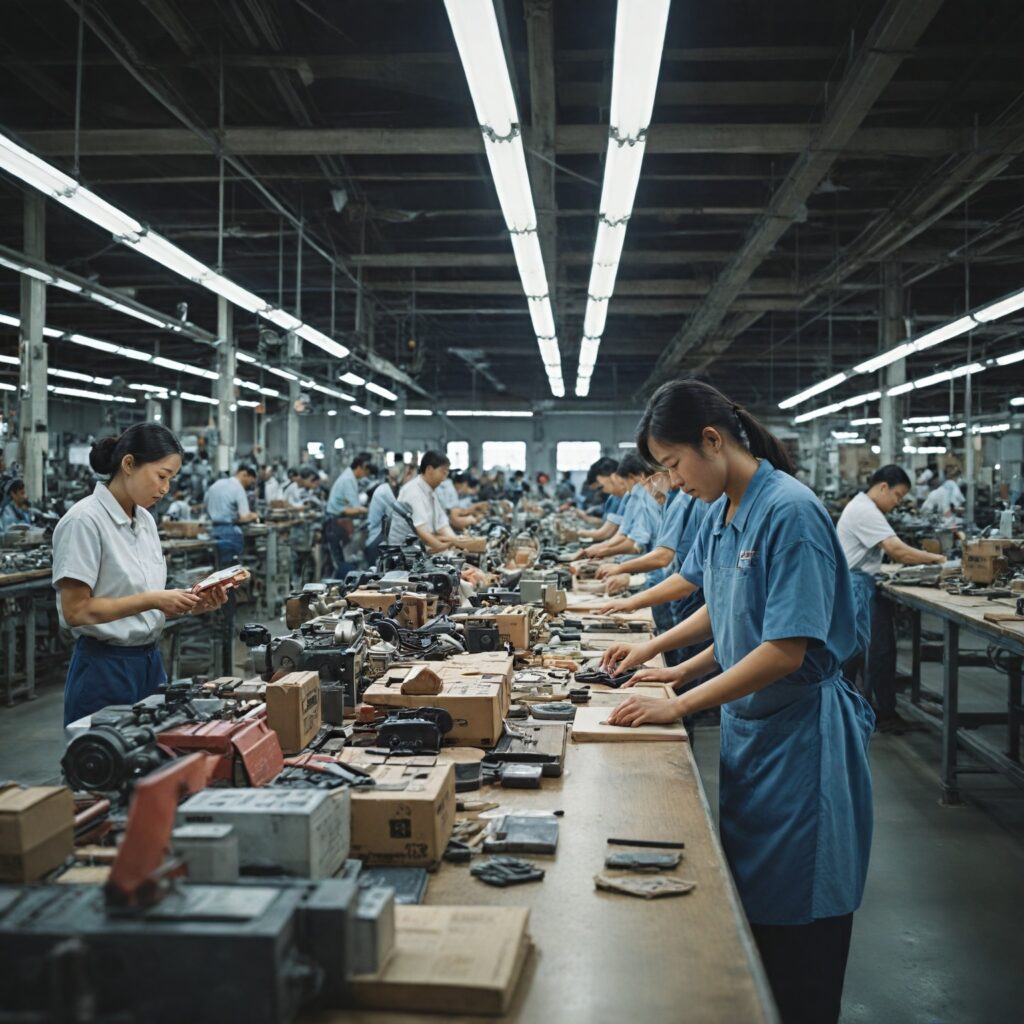
TikTok, a popular social media platform, has recently been leveraged by Chinese manufacturers to encourage American buyers to purchase goods directly from China. This appears to be a strategy to bypass the tariffs implemented by the Trump administration. A surge of videos from Chinese content creators, filmed often at manufacturing facilities that allegedly produce goods for major US brands like Lululemon Athletica Inc., are becoming increasingly prevalent on the platform.
On TikTok, this content is colloquially referred to as “trade war tiktok” and “Chinese Manufacturer tok”. In these videos, manufacturers often expose the production costs behind high-end consumer goods, providing insight into how luxury goods can be made cheaply even as US tariffs push prices higher. The response from American audiences to this content has been reminiscent of their behavior during the short-lived TikTok ban in January, when they mass-downloaded and promoted the Chinese social media app Rednote.
This trend has sparked concerns about the influence of Chinese creators on American audiences and raised questions about the transparency of content distribution on the platform. These concerns have fueled ongoing efforts in Washington to enforce a separation between TikTok’s Chinese parent company, ByteDance Ltd., and its global operations. Beyond trade policy, these videos may also carry legal implications.
Despite the international debate surrounding its future, discussions led by the White House are currently leaning towards a plan that allows the biggest non-Chinese investors in ByteDance to increase their stakes and acquire the app’s U.S. operations. The Chinese embassy in Washington has indicated that China has expressed its stance on TikTok on multiple occasions.
Historical Context of US-China Trade Relations
The relationship between US and China’s trade has been shaped by tariffs and trade barriers. This narrative took a crucial turn under the Presidency of Donald Trump who imposed a 125% tariff on Chinese goods imports . This move was driven by his belief in reducing trade imbalances and restoring America’s manufacturing industry. He presented the tariffs as a “declaration of economic independence”, much to the concern of many Americans, including some Republicans, who had misgivings about the economic consequences .
Trump’s tariffs led to a decrease in the US’s reliance on Chinese imports, from a 21% share of America’s total imports in 2016 to 13% in the following years . Additionally, tariffs introduced by Trump were not only retained but also augmented by his successor, President Joe Biden. It’s worth noting that while this had led to an overall reduction in direct imports from China, some of these Chinese goods were rerouted through Southeast Asian countries .
These trade restrictions did not spare Chinese consumers. Retaliatory tariffs imposed by China increased the cost of US imports in the Chinese market, creating similar economic strain . In response, China was reportedly not included among the nations that received a temporary suspension on additional tariffs for 90 days, unlike some select countries .
In an unexpected twist, Trump announced a drop in reciprocal tariffs on all other countries to 10% for the next 90 days, while hitting China with 125% tariffs . This move, he argued, was due to the “lack of respect” that China had shown to the World’s Markets . However, this escalating trade war between the two global powers raised questions about the efficacy of the tariffs and their broader impact on American consumers .
It is within this complex landscape of US-China trade relations that Chinese manufacturers have allegedly found ingenious ways to sidestep tariffs through leveraging the TikTok platform, a phenomenon that warrants further exploration .
Chinese Manufacturers’ Tactics on TikTok
Direct Purchases and Tariff Avoidance
The central tactic employed by these Chinese manufacturers involves promoting direct factory purchases to sidestep the U.S. tariffs. Videos filmed at factories that claim to produce goods for top brands like Lululemon and Nike highlight the significantly lower prices of direct purchases. One viral TikTok video featured a creator showcasing a factory that purportedly produces Lululemon yoga leggings for $5 to $6, compared to U.S. retail prices that exceed $100. This direct-to-consumer strategy, while legally murky, appears to undermine tariff policies and promote Chinese manufacturing.
Impact and Implications
Experts suggest this trend undermines U.S. tariff policies, questions their effectiveness, and highlights TikTok’s powerful influence on content distribution. Chinese manufacturers’ strategy on TikTok poses significant implications for both smaller businesses, particularly those reliant on Chinese fulfillment, and larger brands like Nike that heavily rely on Chinese and Southeast Asian supply chains. As U.S. tariffs push prices higher, these businesses face increased operational costs and compliance requirements, prompting them to reassess their strategies. For consumers, this phenomenon results in higher retail prices and sparks renewed interest in supply chain transparency and cost-saving alternatives. Furthermore, the trend raises questions about the influence of Chinese content creators on American audiences and the opaque nature of content distribution on TikTok.
Reaction and Response
The Chinese Embassy in Washington, when asked about the status of a deal for TikTok, said in a statement: “China has stated its position on TikTok on multiple occasions”. Meanwhile, U.S.-led talks on TikTok’s future revolve around a plan for the non-Chinese investors in parent company ByteDance to increase their stakes and acquire the app’s U.S. operations. The Trump administration’s tariffs have been a contentious issue, with a massive third round affecting more than 6,000 products across many industries, including consumer goods, textiles, and agricultural products. Despite this, Chinese factories continue to flood TikTok with videos encouraging Americans to buy directly from them, offering a chance to undercut the sweeping U.S. tariffs.
Implications for US Economy and Global Trade Dynamics
The use of tariffs by the US on Chinese imports and the corresponding Chinese response has led to a complex interplay between both economies. The imposition of tariffs by former US President Trump and their extension by his successor Joe Biden reduced the share of goods imported from China by the US from 21% in 2016 to 13% in the last year. Despite this reduction, it is challenging for US importers to find alternatives to Chinese products. Interestingly, only 10% of Chinese imports from the US are dependent on American suppliers, indicating a potential power dynamic.
The impact of these tariffs on the US economy has been multilayered. While the former president lauded these tariffs as a means to restore America’s manufacturing industry and counter trade imbalances, many Americans, including Republicans, expressed apprehensions about the economy’s health post tariffs implementation. According to the Federal Reserve’s Beige Book, manufacturers had to raise prices because the cost of raw materials rose due to the US-China tariffs, causing anxiety among retailers about cost increases. These tariffs resulted in Wall Street having its worst week in five years, indicating the market’s reaction.
Furthermore, the tariffs led to the loss of the small-parcel duty exemption, leading to tighter margins, higher compliance costs, and increased competition in the US market. Some companies heavily reliant on Chinese and Southeast Asian manufacturing, such as Nike, have been shaken by these changes, prompting them to consider reshoring parts of their supply chain.
In response to these dynamics, Chinese manufacturers have been exploiting social media platforms like TikTok to sidestep US tariffs. This trend, observed by intelligence analysts like Alex Goldenberg, is viewed as a deliberate move to weaken President Trump’s tariff policies and boost Chinese manufacturing. This phenomenon raises questions about tariff efficacy and its broader impact on American consumers. However, the actual legal aspects of avoiding tariffs through direct-to-consumer purchases are still unclear.
In a recent development, the US announced tariff exemptions on several Chinese products, including electronics, computers, and semiconductors. Despite this, it won’t affect the bulk of goods exported by China to the US, such as the clothing and accessories featured in TikTok videos. This situation shows how geopolitical maneuvers can lead to intricate trade dynamics, impacting companies and consumers alike.
Influence on Consumer Behavior and Purchasing Decisions in the US
As a result of heightened tariffs on Chinese imports by the Trump administration, US consumers have faced higher retail prices. This pressure on discretionary spending has sparked renewed interest in supply chain transparency and cost-saving alternatives. A novel approach by Chinese manufacturers, shared through TikTok videos, encourages US consumers to purchase directly from them, effectively bypassing the tariffs.
These videos are primarily filmed in Chinese factories that purport to supply top US brands such as Lululemon Athletica Inc. and Nike Inc., aiming to reveal that a significant portion of consumer goods originate from the world’s second-largest economy. One video, for instance, showcases a factory purportedly producing Lululemon yoga leggings for $5 to $6, starkly contrasting the retail prices exceeding $100 in the US.
While this strategy of promoting factory-direct purchases may have legal consequences, including potential violations of NDAs with global brands, it has been welcomed by some American TikTok users who appreciate the transparency in revealing the hidden side of the luxury goods industry. Others have embraced this method for its potential to undercut tariffs by eliminating the need for US-based intermediaries.
This trend, however, has implications beyond consumer behavior and purchasing decisions. It raises questions about the efficacy of tariffs, puts pressure on brands to reconsider their supply chain strategies, and shines a light on the broader global sourcing shift from traditional retail intermediaries to factory-direct models. Furthermore, it highlights the role of social media platforms like TikTok in influencing international trade policies and consumer habits.
Effect on International Trade Relationships
Interestingly, some companies have also considered strategically shifting part of their manufacturing process to other countries, therefore making their products no longer considered of Chinese origin and avoiding the tariff. However, it should be noted that any deal related to the shift of business operations between China and the U.S. would likely require Chinese government approval.
The content is provided by Sierra Knightley, The True Signal