Highlights
- The Baraboo Hills feature rich biodiversity and are a haven for outdoor enthusiasts.
- Experience the cultural significance and geological wonders of Wisconsin’s Baraboo Hills today!
Summary
The Baraboo Hills in south-central Wisconsin, covering around 144,000 acres, are notable for their dramatic quartzite ridges, diverse ecosystems, and cultural history. This region serves as a geological boundary and is home to over 1,800 species of plants and animals, prompting significant conservation efforts led by organizations like The Nature Conservancy. The Baraboo Hills are not only significant for biodiversity but also cultural heritage, holding archaeological sites important to the Indigenous Ho-Chunk Nation, emphasizing the importance of stewardship to protect these valuable resources.
Geography
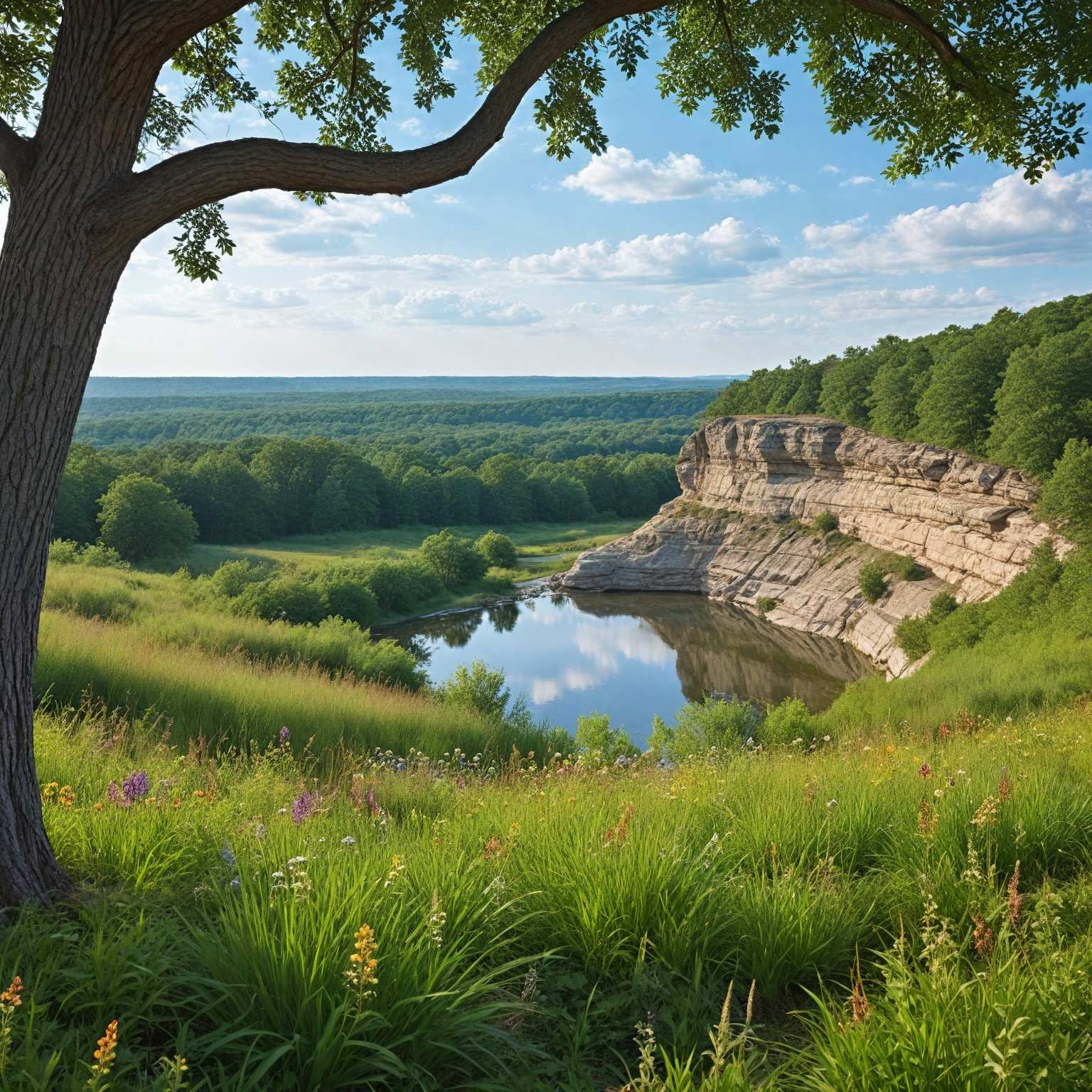
The Baraboo Hills stand out as a prominent canoe-shaped feature that rises above the surrounding landscape, characterized by stunning peaks, canyons, and waterfalls. The boundaries between glaciated and unglaciated terrains contribute to the region’s geological uniqueness, which includes significant exposures of Baraboo quartzite, impacting the understanding of structural geology. The Nature Conservancy has recognized the ecological and geological importance of this area, indicating conservation efforts are necessary to protect its diverse habitats while enabling visitor engagement.
Geology
Renowned for its Precambrian quartzite, the Baraboo Hills showcase geological formations that have provided insights into the area’s tectonic and metamorphic history. This distinct dark purple to maroon quartzite formed from ancient sandstone and underwent significant transformations due to tectonic pressures. The unique relationships between quartzite and overlying Cambrian strata can be observed at key landmarks, contributing to a greater understanding of geological processes crucial for both research and resource management.
Ecology
The ecological diversity of the Baraboo Hills is evident through its array of habitats, including forests and prairies that support over 1,800 species of flora and fauna. The area features vital habitats for various wildlife, notably several high-priority bird species, which depend on the large contiguous forest blocks for nesting and survival. While challenges such as habitat fragmentation exist, ongoing conservation efforts are focused on preserving these habitats and sustaining biodiversity through effective management practices.
History
With human occupation dating back over 12,000 years, the Baraboo Hills area reflects a rich history marked by Indigenous cultures, particularly the Ho-Chunk Nation. Archaeological findings indicate significant human activity, including effigy mounds, with ongoing preservation efforts essential post-European settlement. The interplay of scientific research and cultural heritage continues to elevate the region’s importance for both historical understanding and conservation initiatives.
Recreation and Tourism
The Baraboo Hills provide a wealth of outdoor activities and attractions, such as Devil’s Lake State Park, appealing to a diverse range of visitors. Wildlife viewing and nature conservation are enhanced by community involvement and management by organizations like The Nature Conservancy. Cultural landmarks and entertainment options within Baraboo, including the International Crane Foundation and local parks, further enrich the visitor experience while supporting local businesses across various sectors.
Economy
The economy of the Baraboo Hills thrives on a blend of tourism, conservation, and local commerce, largely driven by natural attractions that draw visitors year-round. The region’s eco-tourism supports local businesses, including arts and crafts, highlighting the influential role of conservation organizations in preserving ecological integrity while allowing for economic growth. Public facilities, such as parks and recreational amenities, enhance community life and promote outdoor activities that feed into the local economy.
Cultural Significance
The cultural heritage of the Baraboo Hills is deeply intertwined with the Indigenous peoples’ history, particularly that of the Ho-Chunk Nation. Significant archaeological sites denote longstanding human presence, while cooperative stewardship efforts aim to protect vital cultural and historical locations. The region’s natural landscapes inspire local artists and reinforce public interest in preserving both environmental features and cultural narratives.
Education and Research
The Baraboo Hills serve as a pivotal center for education and research, particularly in ecology and geology. Local institutions and community organizations offer programs aimed at fostering understanding of the area’s natural and cultural significance, acting as a catalyst for ongoing study and community engagement in preserving this unique environment.
The content is provided by Sierra Knightley, Front Signals