Summary
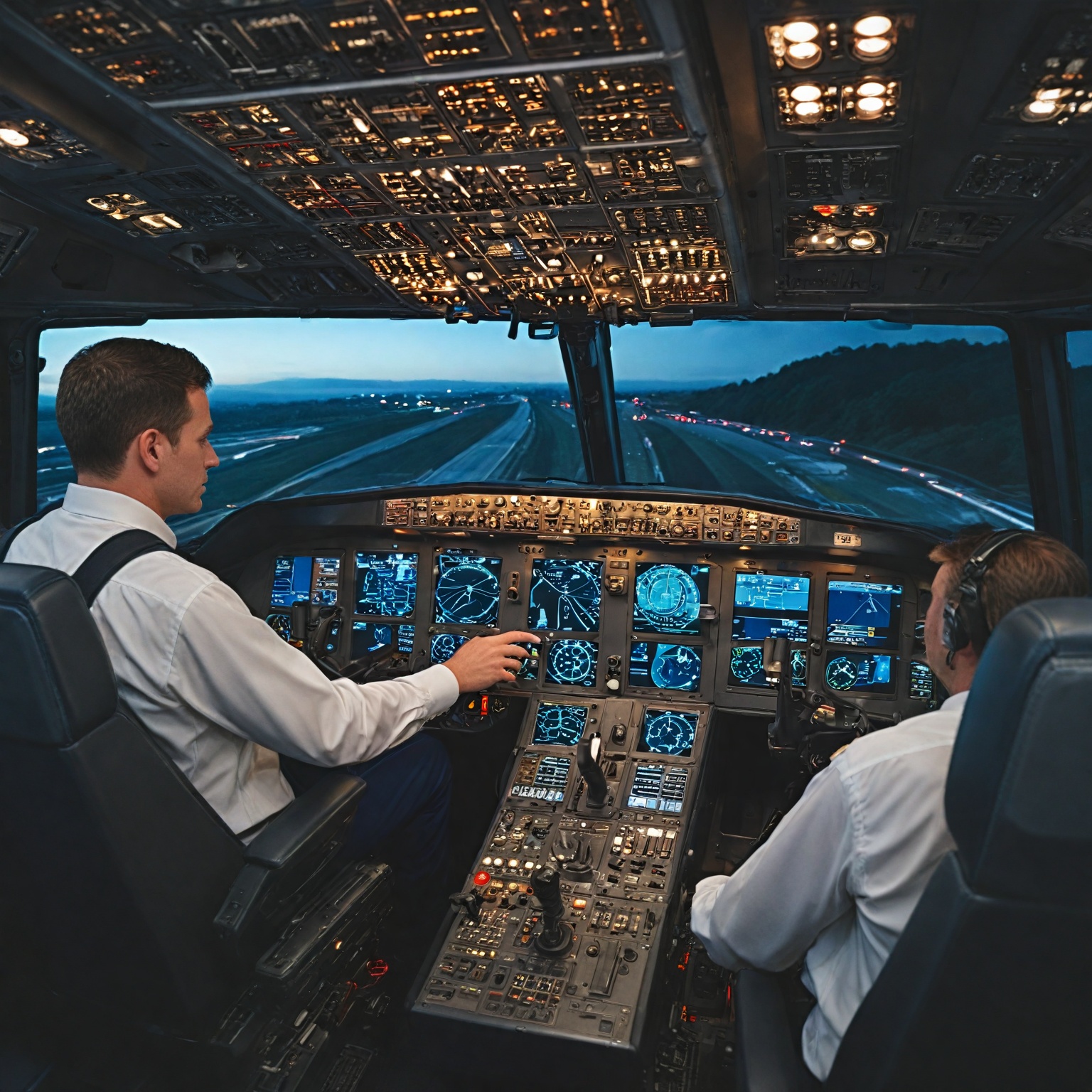
Flight simulators are sophisticated electronic and mechanical systems designed to replicate the experience of flying aircraft and spacecraft, primarily used for pilot training, certification, and research. By providing a realistic virtual environment that mimics aircraft behavior, control systems, and flight conditions, simulators enable trainees to practice procedures safely and cost-effectively, reducing the risks and expenses associated with real-world flight training. Regulated and classified by aviation authorities such as the Federal Aviation Administration (FAA) and the European Union Aviation Safety Agency (EASA), flight simulators range from basic desktop programs to full flight simulators (FFS) that replicate entire cockpits with motion and visual systems.
The development of flight simulators has a rich history dating back to early 20th-century mechanical trainers like the Link Trainer, which played a crucial role in pilot preparation during World War II. Since then, advances in computer graphics, motion systems, and aerodynamics modeling have transformed simulators into highly immersive platforms. Modern devices incorporate cutting-edge technologies including virtual reality (VR), augmented reality (AR), and artificial intelligence (AI) to enhance realism, adaptability, and training effectiveness. These innovations have expanded simulator applications beyond aviation training into entertainment, gaming, and virtual tourism, bridging the gap between professional and recreational use.
Flight simulators have profoundly impacted the aviation industry by improving safety, pilot proficiency, and aircraft development, while also reducing operational costs. Their widespread adoption by airlines, military organizations, and training centers reflects their integral role in contemporary aviation. At the same time, challenges persist, such as ensuring regulatory frameworks keep pace with rapidly evolving technologies and maintaining the fidelity of simulations to real-world flight dynamics. The integration of emerging immersive and AI-driven technologies continues to drive both opportunities and complexities within the industry.
Beyond aviation, flight simulators have influenced the entertainment sector by delivering highly realistic and engaging experiences that attract enthusiasts and casual users alike. The fusion of simulation technology with entertainment media underscores the versatile nature of flight simulators as tools for education, training, and enjoyment. As these systems evolve, they continue to shape the future of both aviation and interactive digital experiences, highlighting ongoing innovation alongside regulatory and technical challenges.
Definition and Purpose
A flight simulator is any electronic or mechanical system designed to train airplane and spacecraft pilots and crew members by replicating flight conditions. Its primary purpose is not to replace actual flight training entirely but to thoroughly familiarize students with the specific vehicle they will operate, enhancing their understanding and readiness before real-world application.
Technically, a flight simulator refers to devices that closely mimic the behavior of aircraft throughout various procedures and flight conditions. This definition may vary slightly between general usage and regulatory documents, where simulators are expected to replicate aircraft performance with high fidelity.
According to the European Union Aviation Safety Agency (EASA), a Full Flight Simulator (FFS) is a full-size replica of a specific aircraft’s flight deck or cockpit. It includes all equipment and computer programs necessary to represent the airplane in both ground and flight operations. An FFS must incorporate a visual system providing an external view from the cockpit and a force cueing motion system, meeting minimum standards for qualification. The Federal Aviation Administration (FAA) and EASA categorize Level B simulators as having three-axis motion, night visuals, and ground handling simulation, representing the lowest level of helicopter simulation.
Historical Development
Flight simulation has undergone a significant evolution since its inception in the early 20th century. The origins can be traced back to 1910 when French commanders Clolus and Laffont, along with Lieutenant Clavenad, initiated the creation of the first ground training aircraft for military use, exemplified by the “Tonneau Antoinette,” considered a precursor to modern flight simulators. The most notable early flight simulation device was the Link Trainer, developed by Edwin Link in Binghamton, New York. Link began building this basic mechanical flight simulator in 1927, patenting the design by 1929. The device, often called the “Blue Box” or “Pilot Trainer,” featured a simple metal frame painted blue and was intended to train pilots in instrument flying.
The Link Trainer gained widespread adoption during the 1930s, especially as military buildups intensified worldwide. By World War II, it was used extensively by nearly every combatant nation, becoming a crucial training tool for tens of thousands of pilots and marking one of the earliest mass uses of simulation technology in aviation. Early simulators like the Link Trainer primarily focused on teaching basic flight instruments and control skills, relying on mechanical movement systems akin to gimbals for motion simulation.
The mid-20th century brought significant technological advancements. The introduction of digital computers allowed for precise computation of aerodynamic forces, improving the accuracy and realism of flight models. Concurrently, hydraulic systems were integrated to simulate aircraft motion more effectively, and visual systems evolved from rudimentary projection methods to sophisticated displays featuring color, three-dimensional graphics, and realistic terrain and landmarks. These advances enhanced the immersive quality of simulators and broadened their applications beyond pilot training to include research and design, such as the NASA Vertical Motion Simulator used to study Space Shuttle flight dynamics.
By the late 1970s, computer-generated imagery (CGI) had begun to play a major role in flight simulation. Companies like Evans & Sutherland and Link Flight Simulation, Division of Singer Company, were pioneers in this area. For example, the Singer Link Digital Image Generator (DIG), created in 1978, was one of the first CGI systems used in flight simulators. Real-time computer graphics visualization started to resemble game engine technologies, employing methods such as levels of detail and graphics libraries like OpenGL to render virtual worlds.
A notable figure in the development of flight simulation software was Bruce Artwick, who in 1975 developed a computer-generated dynamic flight display as a graduate student. This project laid the foundation for the first home-based flight simulator running on microcomputers, which eventually evolved into Microsoft Flight Simulator. Artwick’s work merged electrical engineering with 3D graphics programming, reflecting the interdisciplinary nature of flight simulation development in the 1970s.
Today, flight simulators range from simple off-the-shelf programs to highly complex, interconnected systems replicating numerous physical and environmental characteristics of real aircraft. Regulatory bodies such as the FAA classify simulation devices according to their realism and training utility, reflecting the technology’s integral role in both aviation training and system design. Despite advancements, challenges remain, particularly in simulating automated control systems fully, with some issues only uncovered during actual flight tests leading to costly redesigns. Nonetheless, the historical trajectory of flight simulators demonstrates a continuous push towards greater fidelity, interactivity, and practical application, shaping modern aviation and entertainment alike.
Technological Architecture
Flight simulators integrate complex technological architectures that combine both hardware and software components to deliver realistic training and immersive experiences. Central to these systems are the mathematical models that simulate aircraft dynamics, including translational and rotational degrees of freedom, solved in real-time at frequencies of 50 to 60 Hz to ensure fluid motion perception. The equations of motion rely on aerodynamical models that account for the state of control surfaces, propulsion systems, and avionics, often organized in modular architectures to facilitate development and maintenance.
The visual systems of flight simulators have evolved significantly from early rudimentary projection systems to advanced real-time computer graphics that closely resemble game engines. These modern visual systems incorporate texture mapping, multiple levels of detail, and realistic terrain and landmark rendering using graphics libraries like OpenGL. The integration of virtual reality (VR) and augmented reality (AR) technologies further enhances immersion by utilizing physics engines that simulate realistic flight behavior, supported by hardware such as avionics panels, yokes, and rudder pedals to replicate cockpit controls.
Hardware architecture is designed to replicate real aircraft cockpits, including instrument panels and control interfaces, enabling pilots to train on procedures such as instrument flight and navigation with high fidelity. The system’s software architecture emphasizes extensibility, reusability, compatibility, and maintainability through object-oriented design and rapid control prototyping techniques, allowing the simulator to adapt to evolving training requirements and technological advancements.
Advanced aerodynamic modeling plays a crucial role in accurately simulating flight dynamics across extended flight envelopes, including post-stall behavior and upset recovery scenarios. This modeling is supported by experimental data from wind tunnel tests, computational fluid dynamics simulations, and professional pilot validation on specialized flight simulator platforms. Such detailed aerodynamic fidelity ensures that simulators can replicate a wide range of flight conditions, contributing to safer and more effective pilot training.
Emerging sectors such as electric vertical takeoff and landing (eVTOL) vehicles are driving the development of new flight training devices that meet stringent regulatory standards from agencies like the FAA and EASA. These devices incorporate highly realistic three-dimensional close-to-ground visuals and are being developed in partnership with original equipment manufacturers to support advanced air mobility markets. Furthermore, artificial intelligence integration in simulators is advancing adaptive training capabilities, enabling real-time adjustments tailored to individual trainee performance and enhancing the realism of computer-generated forces and environmental responses.
Types and Classifications of Flight Simulators
Flight simulators vary widely in complexity and purpose, ranging from simple off-the-shelf systems used for basic training or entertainment to highly sophisticated, interconnected networks that replicate numerous physical and environmental characteristics of real flight. The Federal Aviation Administration (FAA) categorizes flight simulation devices into multiple groups, with classifications reflecting the level of realism and training capability provided by each device.
Full Flight Simulators (FFS)
Full Flight Simulators, or FFS, represent the most advanced category of flight simulators. These devices are required to have both motion and visual capabilities, offering a highly realistic training environment. The FAA further subdivides FFS into four levels—A through D—with Level D being the most sophisticated. Level D simulators provide six degrees of motion freedom and incorporate realistic cockpit sounds, offering an immersive experience that closely mirrors actual flight conditions. According to the European Union Aviation Safety Agency (EASA), an FFS is a full-size replica of a specific aircraft’s flight deck, including all necessary equipment and software to simulate ground and flight operations, a visual system with an out-the-cockpit view, and a force cueing motion system.
Flight Training Devices (FTD)
Flight Training Devices are less complex than full flight simulators but are essential for various pilot training tasks. These devices range from fixed-base simulators without motion capabilities to more advanced systems that may replicate specific cockpit procedures or systems. For instance, CAE’s XR Series of FTDs provides a range of fixed-based training equipment covering a wide array of training tasks, enabling pilots to practice essential skills in realistic cockpit environments at a more cost-effective level than full flight simulators. FTDs are classified into different levels, with Level 4 resembling a Cockpit Procedures Trainer (CPT) that requires accurate systems modeling but does not mandate an aerodynamic model, while Level 5 includes aerodynamic programming and can simulate a family of aircraft rather than a specific model.
Advanced Aviation Training Devices (AATD) and Advanced ATDs
Advanced Aviation Training Devices (AATDs) and Advanced Aviation Training Devices (ATDs) provide training platforms suitable for both procedural and operational performance tasks. These devices support training requirements for Private Pilot, Instrument Rating, Commercial Pilot, Airline Transport Pilot (ATP), and Flight Instructor Certificates. AATDs focus on system procedures and cockpit familiarization, often without the need for aerodynamic modeling, serving as effective tools for early-stage pilot training.
Basic and Recreational Simulators
The simplest flight simulators serve purposes such as basic cockpit procedure practice, emergency checklist processing, and instrument flight training where outside visual cues are less critical. These simulators may have limited or no aerodynamic modeling and often do not simulate complex aircraft systems. Initially restricted to specialized professional use, flight simulators have since become widespread due to advances in personal computing, making them accessible on computers, arcade cabinets, and gaming consoles, thus blending aviation training with entertainment.
Specialized Simulators
Separate simulators also exist for tasks related to flight beyond piloting, such as aircraft evacuation procedures in emergencies or maintenance training. As modern aircraft systems grow increasingly complex, maintenance simulators have gained popularity to help technicians develop necessary skills in a controlled environment.
Visual and Motion Systems
The demand for highly realistic training has driven technological advancements in the visual and motion systems of simulators. High-resolution displays, realistic scenery reproduction, and sophisticated motion platforms contribute significantly to the immersive quality of training devices, enhancing both pilot proficiency and safety.
Applications
Flight simulators serve a wide range of applications across aviation training, entertainment, and technological innovation. Their use extends from initial pilot instruction to advanced scenario rehearsals, as well as immersive gaming and experiential entertainment.
Entertainment and Recreational Use
Flight simulators have a longstanding history in entertainment, providing users with realistic flying experiences for enjoyment and skill development. Expansion packs and deluxe editions of simulation software often include additional aircraft, missions, and scenery, broadening user engagement beyond training applications. Some early flight simulators even found roles in amusement parks, such as the helicopter simulator displayed at the 1964-65 New York World’s Fair, illustrating their crossover appeal.
Pilot Training and Certification
One of the primary uses of flight simulators is in pilot training and certification. Commercial airlines, military organizations, and flight schools utilize simulators to provide safe, cost-effective training environments. Advanced Flight Simulation Training Devices (FSTDs) are certified by aviation authorities such as the FAA and EASA to meet stringent standards that replicate real aircraft behavior and flight conditions. For example, CAE’s Boeing 727 simulator was the first to achieve FAA Phase III approval, allowing it to conduct complete initial, transition, and recurrent training of flight crews entirely via simulation. Military applications also leverage simulators for complex platforms like the CF-18 Hornet and Ab 205 helicopter, enabling extensive systems emulation and tactical training without the risks and costs associated with live flying.
Simulators are also approved for logging actual flight hours, providing regulatory-compliant training that counts toward pilot licensing requirements. Training regulatory standards for general aviation pilot licensing, such as those under the TCCA, broadly align with international practices, supporting the global relevance of simulation-based training. Moreover, emerging technologies like Head-Mounted Display (HMD)-based Augmented Reality (AR) are being explored as assistive tools that complement traditional in-aircraft training by enhancing routine and emergency procedure rehearsals.
Commercial and Business Aviation
Flight simulators are extensively used in commercial and business aviation for recurrent training and type-rating certification. Major manufacturers such as Airbus and Boeing operate their own training centers with advanced simulators, while companies like CAE, L3 CTS, and FlightSafety International supply a majority of the commercial airline simulators worldwide. These simulators provide highly realistic environments that support pilot proficiency, ensuring operational safety and efficiency.
Technological and Immersive Enhancements
Advances in virtual reality (VR) and augmented reality (AR) have significantly enhanced the simulation experience. VR offers a fully immersive environment with 360-degree cockpit views, allowing pilots to practice complex maneuvers and emergency scenarios in a risk-free setting. AR technology integrates computer-generated images with real-world views, enabling training scenarios where pilots interact with physical cockpit controls augmented by virtual displays and external views, thus blending real and simulated environments.
Applications of VR and AR are not limited to professional training; they also extend to consumer flight simulation software and hardware. Tools like Air Manager enable users to create custom 2D flight panels compatible with popular simulators such as MSFS, X-Plane, and Prepar3D, often running across multiple devices on a local network to enhance realism. RealSimGear offers turnkey packages that include multi-screen setups designed to deliver highly immersive experiences, useful both for serious flight training and entertainment purposes.
Regulatory Framework and Certification
Flight simulators are subject to rigorous regulatory frameworks established by aviation authorities to ensure their fidelity, safety, and effectiveness as training tools. These frameworks categorize simulators into different certification levels that reflect their ability to accurately replicate the flight characteristics and systems of real aircraft. The most recognized certification standards are maintained by agencies such as the Federal Aviation Administration (FAA) in the United States and the European Union Aviation Safety Agency (EASA) in Europe.
The FAA
Recent Innovations and Emerging Technologies
Recent advancements in flight simulators have been driven by the integration of virtual reality (VR), augmented reality (AR), artificial intelligence (AI), and improved hardware systems, all of which contribute to increasingly immersive and realistic training environments. VR technology, in particular, has revolutionized flight simulation by enabling trainees to experience fully immersive 360-degree cockpit views that closely replicate real-world flying conditions. This enhanced visual fidelity is supported by high-resolution displays, realistic graphics, and accurate scenery reproduction, which together improve the effectiveness of pilot training and safety outcomes.
Augmented reality (AR), also known as mixed reality, blends computer-generated imagery with real-world views, allowing students to train in physical cockpits while computer-generated data augments their surroundings. This hybrid approach contrasts with VR’s fully synthetic environments, offering complementary training modalities that enhance situational awareness by overlaying critical flight information within the pilot’s field of vision. The combined use of VR, AR, and mixed reality—collectively termed extended reality (XR)—is becoming a standard in aviation training, offering adaptive, immersive experiences that adjust in real time to trainee performance.
Artificial intelligence further enhances flight simulation by enabling adaptive and personalized training. AI-driven simulators can analyze pilot inputs and behaviors rapidly, adjusting scenarios dynamically to tailor the learning experience. This includes more realistic behavior of computer-generated forces and AI avatars that support employee training through interactive and responsive simulation environments. The use of AI in conjunction with XR technologies facilitates real-time adaptation and comprehensive feedback, helping trainees to develop skills more efficiently.
Hardware innovations complement these software advancements. Modern flight simulators incorporate sophisticated avionics panels, realistic control interfaces such as yokes and rudder pedals, and advanced motion systems that simulate the complex dynamics of flight. Collimated displays used in high-end simulators eliminate parallax effects to provide accurate visual perspectives across cockpit seats, enhancing realism for multi-crew training scenarios. Additionally, beginner-friendly tools like FlightSimBuilder integrate with professional simulators such as Microsoft Flight Simulator (MSFS) and X-Plane, expanding accessibility and ease of use.
Taken together, these innovations mark a significant evolution in flight simulation technology, offering immersive, adaptive, and highly realistic training platforms that prepare pilots for the complexities of modern aviation while simultaneously driving regulatory and industry efforts to keep pace with emerging technological capabilities.
Impact on Aviation Industry
Flight simulators have profoundly transformed the aviation industry by enhancing pilot training, improving safety, and supporting aircraft development. Initially developed to address the high risks and costs associated with training pilots in real aircraft, simulators provide a controlled and safe environment where trainees can learn and practice essential skills without endangering lives or equipment.
Today, flight simulation serves multiple purposes, including pilot training, aircraft design and development, and research into flight characteristics and control handling qualities. The technology has evolved from mechanical trainers in the 1930s to sophisticated AI-driven systems that closely replicate real flying conditions. This evolution has led to increased adoption and integration of simulators by commercial airlines, military organizations, and regulatory bodies worldwide.
Major companies dominate the market, with CAE holding 56% of the commercial airline simulator installed base, followed by L3 CTS with 20% and FlightSafety International at 10%. These organizations provide a wide range of simulation equipment and training services, from full-flight simulators (FFSs) to fixed-base flight training devices (FTDs), enabling comprehensive pilot instruction tailored to various aircraft types and operational needs. For instance, CAE’s XR Series offers highly realistic and flexible training environments that help pilots master essential skills in conditions mirroring actual flight.
The integration of emerging technologies such as virtual reality (VR) and augmented reality (AR) is reshaping pilot training methodologies. The US Air Force’s Pilot Training Next program demonstrated that VR combined with AI biometrics can drastically reduce training time and costs—cutting a year-long traditional training cycle to just four months at a fraction of the usual expense. Moreover, studies indicate that AR-based tools can serve as complementary aids to conventional training, improving both routine and emergency procedure training effectiveness, particularly in general aviation.
Furthermore, airlines and aircraft manufacturers are increasingly investing in in-house training centers, aiming to enhance margins and maintain competitive advantages against traditional suppliers. This trend reflects the growing recognition of simulation’s role not only in training but also in ongoing pilot proficiency, maintenance training, and safety protocol rehearsals, including evacuation procedures.
Impact on Entertainment Industry
Flight simulators have significantly influenced the entertainment industry by providing immersive and realistic experiences that blend cutting-edge technologies such as virtual reality (VR) and augmented reality (AR). These immersive technologies, originally developed for aviation training, have found a new avenue in entertainment, enabling users to experience the thrill of piloting an aircraft in a highly engaging and safe virtual environment.
The integration of VR and AR into flight simulators enhances the realism of the experience by offering high-fidelity graphics, accurate scenery reproduction, and immersive cockpit environments. This technological advancement not only elevates pilot training but also revolutionizes flight simulation as an entertainment medium, attracting aviation enthusiasts and gamers alike. The use of AR allows users to interact with physical cockpit replicas augmented with digital overlays, creating a mixed-reality experience that bridges the gap between virtual and real worlds.
Moreover, the entertainment industry benefits from the rapid advancements in flight simulator technologies driven by demands for increasingly realistic and immersive experiences. As these technologies evolve, flight simulators are becoming more accessible to the public, expanding their appeal beyond professional training to include theme parks, gaming, and virtual tourism. The fusion of AI, VR, and AR continues to open new possibilities, transforming flight simulation into a versatile platform that entertains while educating users about aviation.
Challenges and Limitations
Flight simulators, while increasingly sophisticated and essential for pilot training and aviation development, face several challenges and limitations that impact their effectiveness and regulatory oversight. One significant issue is the regulatory pacing problem, where the rapid advancement of simulation technologies outpaces the ability of regulatory bodies to keep up. Ensuring that regulations evolve promptly to address emerging technologies is critical for safeguarding public interests and fostering innovation in the field.
From a technical perspective, modern flight simulators represent complex integrations of software and hardware systems that must meet high standards of fidelity, real-time performance, and overall quality. Achieving extendibility, reusability, compatibility, and maintainability in such systems requires advanced architectural designs and development techniques, such as object-oriented programming and rapid control prototyping. However, maintaining these standards across evolving hardware and software components remains a continuous challenge.
Another limitation lies in the stringent qualification and validation processes that flight simulators must undergo to be certified for use by Civil Aviation Authorities (CAAs) worldwide. The process involves submitting a Master Qualification Test Guide (MQTG) ahead of qualification dates and conducting a variety of objective and subjective tests to ensure the simulator accurately represents the aircraft it is simulating. These tests rely on flight test data or proof of match data provided by aircraft manufacturers, which can be resource-intensive and time-consuming. Moreover, simulators must maintain a high level of representativeness to be useful for pilot training, which can be difficult to achieve given the complexity of modern aircraft systems.
Visual and sensory realism is another area where limitations persist. Although advancements in graphics technology, such as high-resolution displays and accurate scenery reproduction, have enhanced immersion, replicating all real-world flying conditions and sensory cues remains a technical hurdle. This can affect the quality of training, particularly for emergency scenarios and complex maneuvers that rely heavily on nuanced environmental feedback.
Finally, while flight simulators provide a safer and more cost-effective training environment compared to real aircraft, their ability to fully replace in-flight training is still limited. Pilot training regulatory standards vary internationally, and although simulators serve as valuable complementary tools, they do not yet encompass all aspects of practical flight experience, particularly in general aviation contexts. The integration of new technologies, such as head-mounted display (HMD) based augmented reality, shows promise but also introduces new challenges in acceptance, standardization, and effective usage within existing training frameworks.
Future Trends
The future of flight simulators is poised for significant transformation driven by rapid technological advancements and increasing demand, particularly in regions like the Asia Pacific, which is expected to generate the highest growth in pilot training needs with an estimated demand for around 91,000 new pilots. This surge in demand is further fueling the expansion of the flight simulators market.
Emerging technologies such as Virtual Reality (VR), Augmented Reality (AR), Mixed Reality (MR), and Artificial Intelligence (AI) are at the forefront of this evolution. VR enhances the flight simulation experience by providing pilots with an immersive 360-degree cockpit view that closely replicates real-world flying conditions. AR and MR technologies augment this experience by overlaying critical flight data within the pilot’s field of vision, thereby improving situational awareness and training effectiveness.
AI integration is becoming increasingly vital in flight simulation, offering adaptive and personalized training environments that respond in real time to the trainee’s performance. This allows simulations to adjust dynamically, tailoring scenarios to individual learning curves and making training more efficient and realistic. The use of AI also improves the behavior of computer-generated forces, rendering them more human-like and enhancing the overall quality of simulation-based instruction.
Major aerospace companies such as Airbus and Boeing are actively exploring ways to embed these immersive technologies into various operational facets, including flight training, engine maintenance, and ergonomic studies. The ability to safely practice riskier maneuvers in virtual environments is revolutionizing pilot preparation and training protocols.
In parallel with technological advancements, the flight simulation industry is witnessing institutional adoption of AI-powered simulators and learning platforms, as seen in organizations like Pan Am Flight Academy, which recently acquired a Level D Boeing 737-NG full flight simulator to enhance training capabilities.
The content is provided by Avery Redwood, Brick By Brick News