Summary
The pre-2025 housing market and its continued evolution into 2025 are notable for their distinct trends reshaping both urban and suburban living spaces. A significant trend is the increasing attractiveness of suburban living and single-family homes, complemented by changing homebuyer preferences such as a preference for mid-century modern or minimalist décor and integrated smart home technology. Conversely, affordable housing in urban areas remains scarce, prompting a rise in sustainable construction and design to mitigate the issue and shift urban development towards a greener model. This evolving landscape of housing has been impacted by factors such as the shift towards remote work, sustainability concerns, economic changes, and lifestyle adjustments.
Critics point to the potential environmental impacts of unchecked suburban growth and the continued shortage of affordable urban housing. Innovations such as the use of renewable energy sources and sustainable design strategies have been integrated to mitigate these issues, contributing to cleaner, healthier living conditions. The housing market trends are expected to continue evolving based on lifestyle needs and personal preferences, pointing towards a dynamic future interplay between home size, occupancy, and price. Notably, controversies and criticisms around these trends highlight potential long-term impacts and question the sustainability of the ongoing shift from urban to suburban living, pointing towards the need for further research and policy interventions.
Pre-2025 Housing Trends
The pre-2025 housing market is characterized by significant trends, reshaping both urban and suburban spaces. Among the most salient trends is the increasing appeal of suburban living and single-family homes. This trend is also mirrored in the types of features new home buyers seek. These features range from aesthetic choices such as mid-century modern or minimalist décor to the integration of smart technology into homes.
Despite the surge in suburban living, the lack of affordable housing in urban areas remains a persistent problem. This issue seems unlikely to change in the immediate future, pointing towards a long-standing housing trend. A direct response to this challenge is the rise of sustainable construction and design in urban spaces. This approach towards urban housing emphasizes buildings with low environmental impact, leading to a shift in urban development to a greener, more sustainable model.
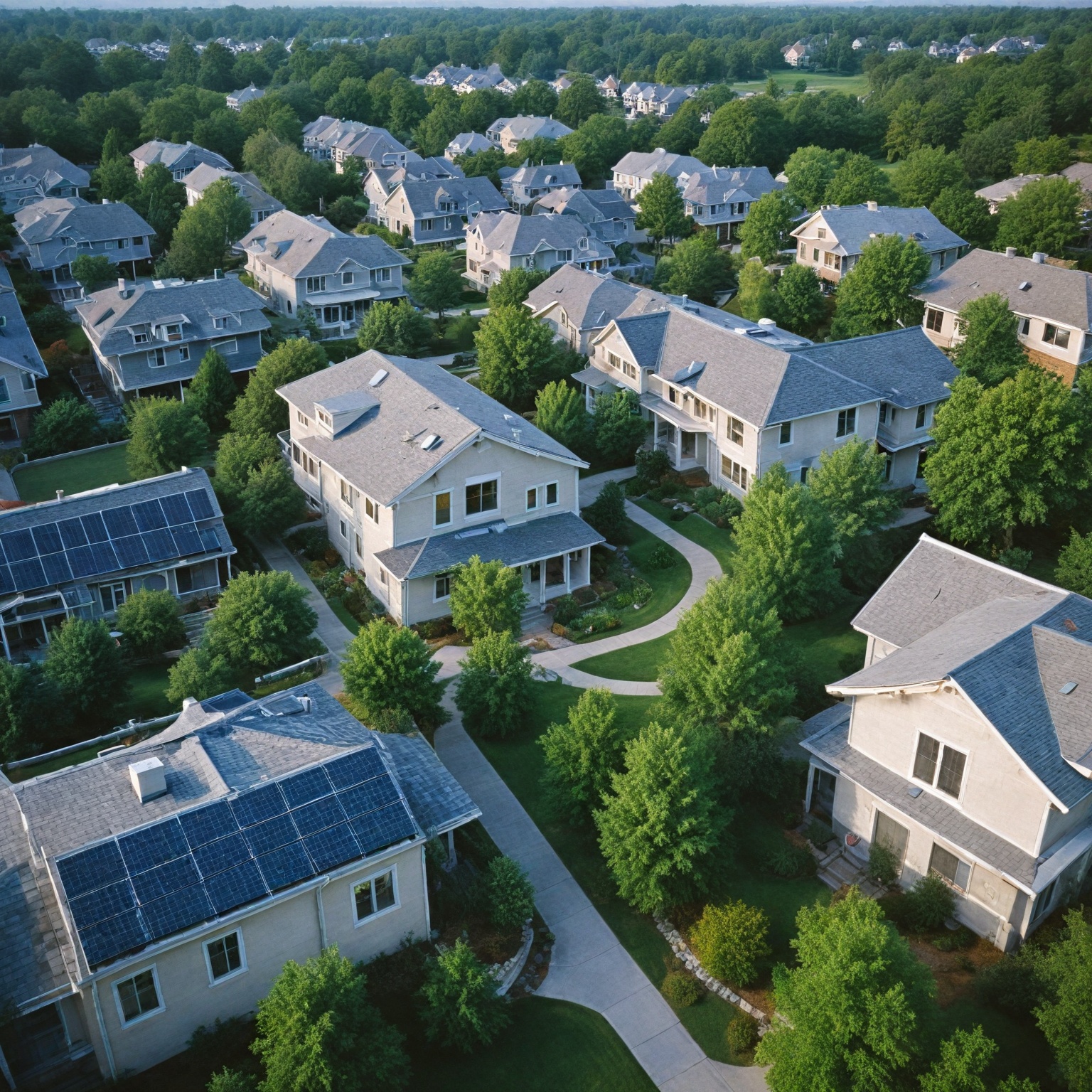
An underlying concern associated with the rise in suburban living is the potential environmental impact. Irresponsible suburban growth could significantly impact climates locally and globally. To mitigate these problems, it is critical to integrate sustainable practices into housing development and create equitable housing solutions. The transition to renewables as the world’s cheapest energy source is a significant development for suburban construction, allowing for more cost-effective integration of cleaner energy sources and processes. This trend indicates a shift towards cleaner neighborhoods and reduced pollution, contributing to healthier living conditions.
Current Housing Trends (2025)
As of 2025, several significant shifts in housing trends are emerging that have begun to reshape the urban and suburban housing markets.
Urban Housing Trends
The demand for affordable urban housing has surged by 25%, despite the challenge of urban home prices increasing by 12%. The push for sustainability in urban areas has resulted in innovations in green building materials and renewable energy sources. These innovations aim to reduce the environmental footprint of urban spaces and make these areas more sustainable and livable.
Suburban Housing Trends
A noticeable migration towards suburban locales has been observed, driven by various factors including changing housing preferences. Suburban housing trends reveal that there is a greater demand and lesser supply for rural and suburban neighborhoods, with home prices increasing by 6.7%. This trend can be attributed to changing homebuyer preferences influenced by recent world events.
In suburban areas, there has been a noticeable rise in sustainable construction, largely facilitated by the fall in price of renewable energy sources. These sustainable practices aim to create cleaner neighborhoods with reduced pollution.
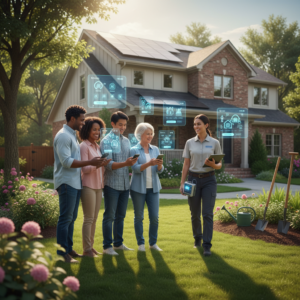
Suburban homes are now often integrated with smart technology and are designed to be trendier, with popular choices being mid-century modern or minimalist décor. There has also been a significant increase in mixed-use suburban developments, particularly in “15-minute suburbs,” areas that are attractive to millennials and Gen Z homebuyers who value convenience and sustainability.
Innovations in property technology (PropTech) have made suburban home buying more straightforward and transparent, reshaping the suburban market. Despite the sprawl of suburban development into rural areas, the usage of renewable energy resources and sustainable design strategies help to reduce the environmental impact.
Personal Preferences and Lifestyle Needs
Ultimately, the choice between urban and suburban living depends on individual preferences and lifestyle needs, thus shaping the demand in these markets. The current housing trends of 2025 reflect these choices, showcasing a dynamic interplay between home size, occupancy, and price.
Factors Influencing Current Housing Trends
There are numerous factors contributing to the current trends in housing, particularly in the dynamic interplay between urban and suburban living.
Shift Towards Remote Work and Larger Living Spaces
One of the most influential factors is the shift towards remote work, a trend accelerated by the COVID-19 pandemic. The increasing feasibility and necessity of remote work have led many workers to prioritize larger living spaces, home offices, and outdoor areas, which are more readily available in suburban and rural properties. As a result, there has been a noticeable increase in demand for houses located in areas with lower population density.
Impact of Sustainability and Climate Change
Sustainability and climate change are other factors significantly shaping the housing market. The future of housing in the era of remote work is increasingly intertwined with sustainability. Homes that use energy and water efficiently are viewed as more desirable, particularly as they can help lower- and moderate-income households cope with potential economic impacts related to climate change. The trend towards sustainable spatial planning and land use has also been identified as a key part of addressing housing trends, with efforts to promote compactness, polycentrism, contiguity and walkability of urban development, as well as containing urban sprawl and creating eco-friendly cities.
Economic Factors and Demographic Shifts
Economic factors also play a pivotal role in the changing housing landscape. Urban neighborhoods experience constant demographic shifts, new constructions, and changes to infrastructure and zoning laws. Military housing allowances can influence the housing market in suburban areas, where many military families choose to live. Moreover, government economic policies providing incentives for companies to build new structures and a lack of incentives to build on Brownfield land contribute to the flight of industrial development from major cities to surrounding suburban areas.
Impact of Lifestyle Changes and Social Trends
Changes in lifestyle and social trends are other contributing factors. Homebuyers’ preferences have shifted towards certain features and styles, such as mid-century modern or minimalist décor, and the integration of smart technology. The influence of social relations, public health, and environmental conditions on population growth and economic activity can also affect suburban community development.
Impacts of Current Housing Trends
Housing trends have been evolving significantly in response to various factors such as lifestyle changes, economic conditions, and societal trends. As technology, fashion, and pop culture transform, so does housing. The shift from urban to suburban living is particularly noticeable.
The appeal of urban living is being contested by the allure of suburban spaces, marking a trend that is reshaping the housing market. This trend has been especially accelerated by the advent of remote work during the COVID-19 pandemic, making location less crucial for many.
Since the inception of suburbanization in the 1950s, the economic impacts have become glaringly apparent. Infrastructure, industry, and real estate development costs have undergone significant changes, affecting the diversity and fiscal policies of cities. However, the influence of suburbanization is not limited to economics. The reduction of buffer zones due to industries moving out of cities is leading to an increase in the value of properties, prompting many landowners to sell their lands.
Moreover, sustainability is increasingly being intertwined with the future of housing. Innovations in green building materials and renewable energy sources are anticipated to reduce the environmental footprint of urban areas, offering a more sustainable future. As sustainability continues to influence consumers and businesses, real estate is undergoing a transformative shift that is redefining the landscape.
Newly built homes, particularly in suburban areas, are predicted to feature a laundry list of trendy and popular features. Home buyers are showing a preference for sustainable houses that incorporate smart technology. However, the future of housing is not merely about location or size; it’s also about sustainability. These trends represent more than just the current state of urban development; they serve as beacons guiding us towards a brighter, more sustainable future.
Future Projections and Predictions
According to a study by the Centre for Applied Macroeconomic Analysis, housing demand shifted during the COVID-19 pandemic, with many people choosing to stay at home. This trend is expected to continue into the future and significantly influence suburban and urban living dynamics by 2025.
In a business-as-usual scenario, suburban communities are expected to witness growth trends in population, economic activity, and social relations, which are anticipated to impact sustainability measures, such as greenhouse gas emissions, vehicle miles traveled, and public health. However, the future of real estate lies in striking a balance by leveraging growth opportunities in suburban markets while ensuring sustainability and accessibility for future generations.
A prediction for 2025 suggests that the appeal of suburban living may be threatened by strained infrastructure, rising home prices, and debates over land use. To prevent this, coordinated efforts from policymakers, developers, and local communities will be required. On the other hand, “15-minute suburbs,” where convenience and sustainability are prioritized, are growing increasingly attractive to millennials and Gen Z homebuyers. The Urban Land Institute predicts a 20% increase in mixed-use suburban developments by 2023, a trend expected to continue into 2025.
Furthermore, technology is expected to play a significant role in shaping housing trends. PropTech innovations like virtual tours, AI-driven home recommendations, and blockchain-based transactions are making the process of homebuying more straightforward and transparent, particularly in suburban markets.
When it comes to specific trends in suburban home construction, there is a shift towards mid-century modern or minimalist décor, along with the integration of smart technology into homes. These trends reflect the changing preferences of suburban homebuyers and are expected to dominate new home builds in 2025.
On a community level, urban planning goals are aligning with mixed-use developments, potentially earning developers support from government stakeholders. Such projects increase walkability for residents and provide convenient access to green space, public transportation, and grocery stores. As urbanization progresses, the challenge lies in planning out mixed-use developments in urban cores that are sustainable and beneficial for the people who inhabit them.
Case Studies
Studies have shown that housing preferences tend to vary greatly between suburban and urban residents. Generally, suburban residents—usually families with children—tend to prioritize larger spaces, enclosed backyards, and safer neighborhoods. In contrast, urban residents—which more often includes young adults and the elderly—tend to prefer smaller spaces with easy access to amenities and entertainment options.
Impact of Covid-19
The Covid-19 pandemic has greatly influenced housing preferences, making certain factors such as residential satisfaction less important for urban residents. With the advent of remote work and social distancing measures, some of the primary advantages of urban living, such as access to services and amenities, have been diminished.
Urban, Suburban, and Rural Comparisons
The American Housing Survey Neighborhood Study offers data that can be used to compare perceptions of urban, suburban, and rural neighborhoods. The Urbanization Perceptions Small Area Index (UPSAI) is a tool that has been developed to categorize neighborhoods based on residents’ descriptions.
Sustainable Living and Urban Spaces
The concept of sustainable living has also had an impact on the urban-suburban housing debate. Sustainable architecture necessitates a rethinking of building and design processes, from site location to end-of-life considerations. Four case studies demonstrate how emissions can be reduced by building smaller, choosing different materials, and designing spaces for adaptability within an existing suburban context.
### Suburban Construction and Sustainability
Although often overlooked, the suburban construction sector has the potential to integrate more sustainable practices. With the decrease in renewable energy costs, suburban developers can more cheaply incorporate cleaner energy sources, reducing pollution and improving environmental conditions. This is particularly relevant for young families who are attracted to the affordable housing options in suburban areas.
Housing Development and the Environment
Houses designed to use energy and water efficiently can provide a solution for lower and moderate-income households facing economic impacts related to climate change. As part of our adaptation to climate change, these types of homes, which can maintain habitable conditions in extreme weather and during power outages, are crucial for protecting inhabitants.
Criticisms, Controversies, and Challenges
The trend of suburbanization and the effects of the COVID-19 pandemic on housing preferences have been the subjects of several criticisms and controversies. There has been significant discourse about the short and long-term impacts of the pandemic on housing markets, which include not only the immediate effects of an economic downturn and contagion fears, but also policy interventions and shifts in technology.
This trend, which has been described as a shift from urban living to the allure of suburban spaces, has sparked controversy due to a multitude of factors, such as lifestyle changes, economic conditions, and societal trends. One criticism lies in the environmental impact of the growing suburban construction, which is suggested to only increase unless practices change.
There are also challenges associated with defining and categorizing different types of neighborhoods. The U.S. Department of Housing and Urban Development, for example, has constructed a model to describe neighborhood types based on responses to the American Housing Survey. The model categories include rural, suburban, and urban, and have been utilized in various housing market reports.
Further controversies emerge from the forecasted 2024 real estate trends. The shifting dynamics of suburban living are predicted to bring about unique trends within the real estate market. As more Americans move towards suburban areas, a fascinating interplay is expected to occur between home size, occupancy, and price, which will potentially reshape housing preferences.
Finally, some criticisms focus on the stability of these trends. The study “Stuck at home: Housing demand during the COVID- 19 pandemic” questions whether these changes in housing preferences are temporary reactions to the pandemic or if they signify long-term shifts in societal living preferences.
The content is provided by Jordan Fields, Brick By Brick News